- Comment
-
Subscribe
Subscribed
Already have a WordPress.com account? Log in now.
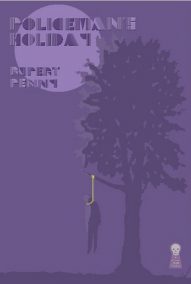 “If a man’s mind be wandering,” said Francis Bacon, “let him study the mathematics”. Well, the mathematics take up an unreasonably large amount of my time as it is, and for me nothing helps my wandering mind quite like classic detective fiction. So, with 2016 having been an underwhelming year in books so far, and coming back off a 2 month hiatus with my hand injury, I’m keen to get a bit of enthusiasm back into my reading. Hence I shall spend the next little while focussing on the sure-fire hits in my collection: expect much Max Afford, Leo Bruce, John Dickson Carr, Agatha Christie, Paul Halter and others, as well as some classic locked room nonplussing, in the weeks to come while I try to reorient myself within my chosen enthusiasm.

 The Invisible Event
I will definitely start with POLICEMAN’S EVIDENCE but glad this one is a goon one too chum – ta!
LikeLiked by 1 person
With Brad and Kate firmly not sharing my love, I’m hoping you’ll be discerning enough to find some joy in Rupert Penny, Sergio. Will be very interested in your thoughts.
LikeLike
They are available on paper too, right?
LikeLike
Oh, yes. In fact, given the need to refer to maps and diagrams I’d say they’re a far better experience in real book form.
LikeLike
Excellent news!
LikeLike
Your review of this does make it sound tempting but then I remember how painful reading The Sealed Room was (where the ending had about 7 diagrams and was reading more like a manual) and I feel less convinced. Perhaps I am once bitten, twice shy.
LikeLike
Haha, no you’re definitely misremembering – Sealed Room Murder is a puzzlers’ and plotters’ delight. Fully understand your reticence, though – plenty of authors I won’t touch again after one book by them that failed to meet my expectations/hopes/needs…
LikeLike
I’m glad YOU had fun! My copy of Policeman’s Evidence is still sitting on the shelf, glowing ominously. I need more time before I will try and tackle it again. There’s dry, and then there’s . . . dry.
LikeLike
I fully acknowledge Penny ain’t for everyone, but I just don’t see the basis for these assertions of dryness – weird, innit? We’ve read the exact same book and – fine, the plotting or the construction is a matter of taste – somehow where I find it completely charming and a textbook example of the kind of puzzle I’d expect everyone to love, you just find it a textbook. 🙂
I appreciate the characters aren’t the most fully-developed (though I think Penny actually has this in common with Christie, that they appear to be archetypes but are actually more rounded when it matters), but Beale and Tony Purdon play off each other so beautifully, with so much mutual respect and sly wit, that I’m not sure how anyone can’t love it. This happens all the time – Harriet Rutland’s Bleeding Hooks left me utterly cold amidst an online upswell of positive opinion – so it’s not like I’m stamping my foot and crying foul – it’s just one of the things I’ve come to love most about this opinion-sharing.
My point? I’m not sure I have one, I’m just sorry this one didn’t work out for you. But, hey, we’ll always have Norman Berrow…
LikeLike
More Penny to try! 😀 I was disappointed that Talkative Policeman did not receive a good rating, so I’m glad that Policeman’s Evidence turns out to be a strong entry to the series.
*scurries off to seek a cheap copy*
LikeLike
For anyone waiting to be convinced, this is a preferable place to go over TTP – but that first book is worth checking out in due course; there’s a moment of fabulous revelation, and Beale is again on quietly brilliant form putting things together in his speculative way…it has no more flaws than the typical first novel of any puzzle plotter. But it is delightful to see that promise so fully-realised in Pdeny’s later works.
LikeLike
Have you read either ‘Lucky Policeman’ or ‘Policeman’s Armour’?
LikeLike
No, only Talkative, Holiday, Evidence and Sealed Room. Trying to stretch Penny out, as I’m already halfway through!
LikeLike
Pingback: #107: Vintage Cover Scavenger Hunt Update | The Invisible Event
I’ve read your review before, but it’s nice re-reading it having just finished the novel for myself, and being able to tie specific observations you raised to concrete details.
I’ve always assumed that ‘Policeman’s Evidence’ was the second novel, and that by reading ‘Policeman’s Holiday’ after that I was adhering to the chronology of publication – only to discover that I was wrong. And so what surprised me was that ‘Policeman’s Holiday’ came across as better written and characterised of the two novels. In ‘Policeman’s Holiday’, Beale mocks Pardon for his poor grammar and syntax – if anything, Purdon’s style seems to have undergone even further degeneration in ‘Policeman’s Evidence’.
But I agree with you that ‘Policeman’s Evidence’ boasts of a better puzzle and solution; if ‘Policeman’s Holiday’ is just as convoluted, it isn’t quite as astounding. I, too, remember a key moment in Beale’s explanation in ‘Policeman’s Holiday’ where my jaw dropped and found myself ‘thoroughly hoodwinked’. I thought ‘Policeman’s Holiday’ had a very strong puzzle and solution – just not quite as excellent as what Penny would have gone on to achieve later on.
If Kate ever gets to read this message – I think she might find it worthwhile to give Penny a second shot with ‘Policeman’s Holiday’ or ‘Policeman’s Evidence’. ‘Holiday’ is probably the superior novel, while ‘Evidence’ is surely the superior puzzle – and without having to rely on innumerable floor maps!
LikeLike
One more thing – something that impressed me was the way Penny did not plump for the most obvious choice of the ‘least obvious culprit’. After reading a couple of novels by Halter, I was wondering if Penny would go for a certain individual as the culprit – but was relieved that a different rabbit was pulled out of the hat. 😀 Not sure if I’m making sense??
LikeLiked by 1 person
Nope, I know exactly what you mean — had the exact same thought, in fact 😉
LikeLike
The book is STILL sitting like a lump on my shelf. But Jonathan, you make it a bit more tempting for me to give it another try. I just found the prose at the start leaden . . .
LikeLiked by 1 person
Well, come back to it after something you really enjooy, perhaps, when you’re in the mood for a (potentially) less brilliant book. Or just stop taking my word as gospel, I suppose; look how Halter turned out, after all…
LikeLiked by 1 person
Brad, I definitely think you should give Rupert Penny another go. Am I right in thinking that the only Penny title you’ve so far read is ‘Sealed Room Murder’? The puzzles in the ‘Policeman’ series are no less intricately conceived, but the solutions are certainly not as convoluted. 😀
No doubt Penny isn’t the most eloquent or engaging writer, but there are sufficient touches of humour in both ‘Policeman Evidence’ and ‘Policeman’s Holiday’ to keep me going. I think of the two ‘Policeman’s Evidence’ is less well-written, but once I got past the first one-third I found the narrative manageable.
LikeLiked by 2 people
That’s what I need to know, Jonathan. I haven’t read ANY Penny yet, except for the first five or ten pages of “Policeman’s Evidence,” which seemed awfully dry to me. Someday I will get back to it, I promise!
LikeLike
Really pleased you enjoyed this, not least because it validates my own ;ove of Penny in the face of mounting opposition. I agree that the progression from Talkative to Holiday to Evidence is very marked in terms of puzzle — it’ll be itneresting to see how that’s maintained between here and Sealed Room Murder: is there a complete duffer in there?! The not knowing, given that so many authors have an accepted perspective on so many of their books, is actually quite exciting.
Look forward to sharing more opinions on Penny as we progress. 🙂
LikeLike
JJ, regarding the message about “least likely culprit”, I was probably feeling sensitive as that particular category of character turned out to be the culprit for a few Halter, Queen, even *gasp* Carr books I read recently.
I still have ‘Lucky Policeman’, ‘Policeman in Armour’ and ‘Sealed Room Murder’ on the shelf. 😀
LikeLike
Ha, yeah, the natire of this type of book does tend to lead to some repetition in that regard, doesn’t it? I’ve been there before, where the same type of character is carefully exposed to and shielded from suspicion in the same kind of way…so clearly they’re the guilty one. BUt I’m glad it orked in your favour this time, always nice when that happens (I had he same experience with Murder at the Vicarage, in fact).
LikeLike
Pingback: #187: Policeman in Armour (1937) by Rupert Penny | The Invisible Event
Pingback: #210: The Golden Age of the Golden Age of Detective Fiction… | The Invisible Event
I’ve been too busy to review this one, so you get my comments.
Penny’s a great author – I seriously don’t get where any negative opinion comes from – and in a sense, this feels like the most “detective” novel of the four that I’ve read. I love the setup in the country house and the way that the investigation unfolds. The first third in particular is Penny in top form.
Penny’s writing is engrossing, as always (perhaps best in The Lucky Policeman). If this falters it’s in that the core mystery appears to be wrapped up a third of the way through, and the subsequent investigation really doesn’t contribute much for the rest of the novel. There’s no big puzzle to hang things on (as opposed to The Sealed Room or Policeman’s Evidence) and the core mystery is just that things don’t quite fit.
Of course, it pays off with a complete twist in the end – and a big laugh when you think about how things unfolded – but as you say, there’s no “wow” moment. Still better than at least 80% of what I read that isn’t by Carr, Brand, or Christie.
LikeLike