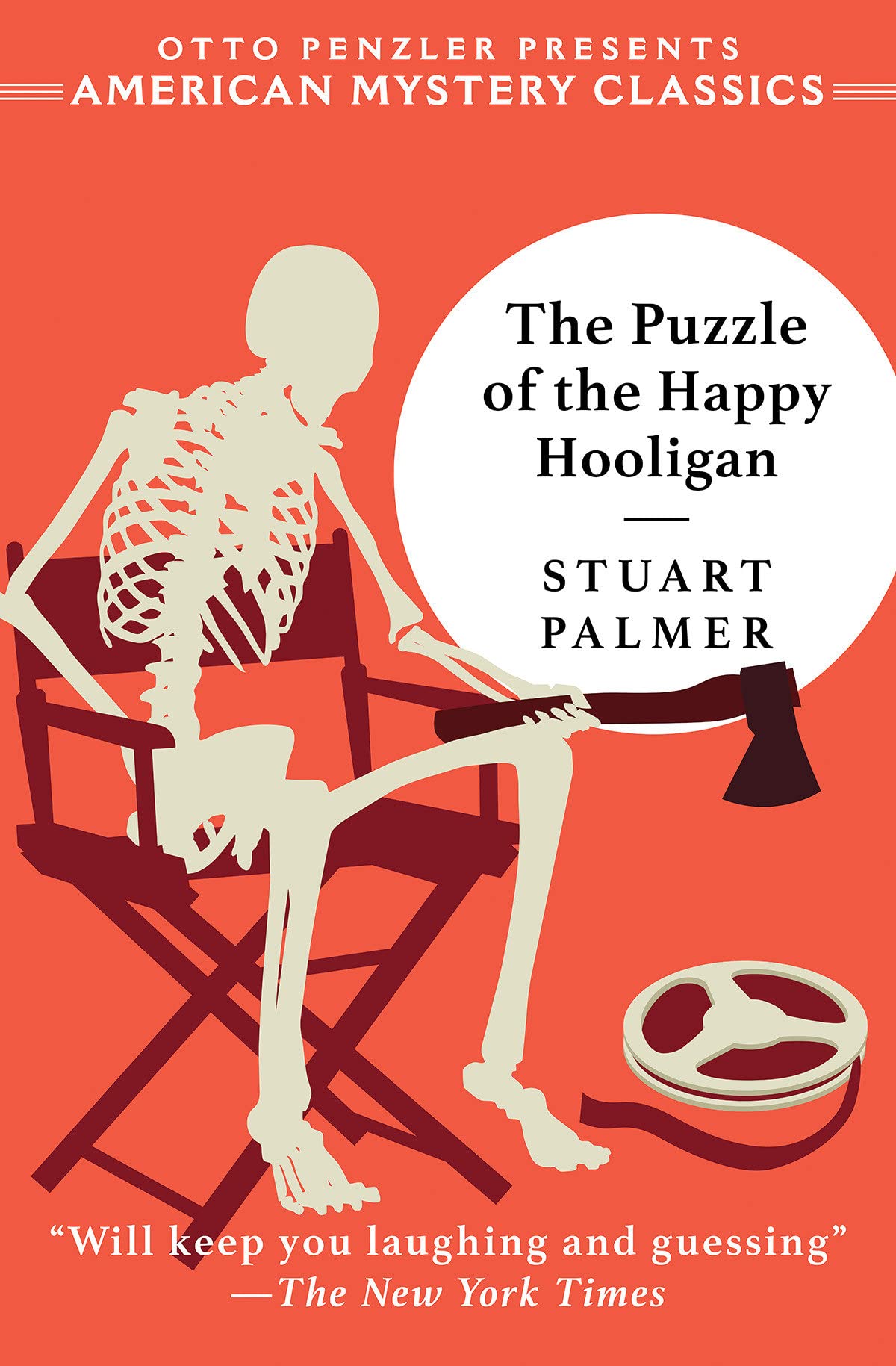


With “Europe [having] exploded”, crime-solving New York schoolteacher Hildegard Withers is holidaying in Los Angeles and, by dint of being recognised from a photo in the paper, is hired by a film studio as a consultant on a new film about Lizzie Borden. When, on her first day, the man in the office next to hers dies from a broken neck, Miss Withers becomes — for reasons that completed eluded this reader — convinced that he was murdered and sets about trying to find his killer. Thankfully, plenty of suspicious types present themselves for consideration, as the prospect of blackmail, secrets, and a general dissatisfaction with the victim’s comportment all float to the surface.


 Summoned by a distant relative to a secluded family pile, a young(ish) man finds himself isolated with a fixed cast of closely-related characters as money-hungry relatives, murder, and all other sorts of puzzle plotting chicanery inveigle themself onto the scene. Yes, in many ways No Flowers By Request takes the exact same ingredients as
  A little charm goes a long way – ask any bank teller or helpline operative, or indeed any fan of Golden Age crime fiction. Because, while a lot of absolutely wonderful books came out of this genre at that time, the fact is that a lot of what was published then and is popular now adhered to a particular school of writing and runs on very familiar rails. But the key thing is that so much of it is charming without having to innovate, and once you jettison any notions about every single book from the Golden Age being a complete game-changer you find a lot of joy there. Which astonishingly back-handed praise brings us to my first (but the chronological second) Hildegard Withers mystery by Stuart Palmer, possibly the first book I’ve really enjoyed for a long time in 2016 even though it does very little new or surprising.
 The Invisible Event