#84: The Tuesday Night Bloggers – The Sherlockian Impossibilities of John Dickson Carr – II: ‘The Adventure of the Sealed Room’ (1953)

TNBs JDC

I’m guilty of sedition here: this isn’t technically part of the Tuesday Night Bloggers – they’re looking at travel in classic crime this month – but rather my own delayed TNB post on John Dickson Carr from March before I was sidelined.  But, y’know how it is, it’s the second one looking at Carr’s Sherlock Holmes stories and so I feel I should probably post it on a Tuesday if only for internal consistency…my apologies for any confusion (though I suppose I cam writing about a Carr trip…).  Just look upon this as my Never Say Never Again.

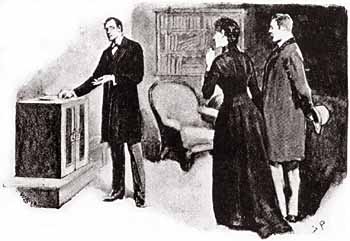
I talked about the origin of these stories in my first post on this topic, so let’s get straight on with it: this story is built on the reference to a case “of Colonel Warburton’s madness” made at the start of ‘The Engineer’s Thumb’ and so it’s appropriate that it begins in much the same way: someone in distress seeks out Watson (then for his doctoring, now seemingly because he knows Holmes) and is thus ushered into the Great Presence.  It’s here that the story plays its most interesting card, as Holmes is rather short with the unfortunate Cora Murray who has just had a Colonel Warburton seemingly shoot himself and his wife while locked together in his study in the house where they all reside:

Continue reading

#79: The Tuesday Night Bloggers – The Sherlockian Impossibilities of John Dickson Carr – I: ‘The Adventure of the Highgate Miracle’ (1953)

TNBs JDC

In the early 1950s, John Dickson Carr collaborated with Sir Arthur Conan Doyle’s youngest son Adrian on six stories featuring Sherlock Holmes and Dr. John Watson. These were published in various magazines before being collected together and published as either The Exploits of Sherlock Holmes (as my edition – featured below – is, also containing six stories solely from the pen of Conan Doyle, Jr.) or The Further Exploits of Sherlock Holmes, separate from Conan Doyle, Jr.’s stories which were themselves published as The Exploits. Are you keeping up?

Continue reading

#77: The Tuesday Night Bloggers – An appeal to the senses in Carter Dickson’s ‘Blind Man’s Hood’ (1938)

The Tuesday Night Bloggers, you’ll doubtless be aware, is an opt-in group of Golden Age crime fiction enthusiasts who look at the work of a different classic author each month.  And with (Colonel) March being dedicated to John Dickson Carr – the single finest proponent of detective fiction ever to take up the craft, no arguments – I thought it about time I rolled up my sleeves and contributed something to this superb endeavour (also, two people asked me if I was going to get involved and I am nothing if not helpless in the face of my own vanity).

The difficulty is knowing quite where to start.  I am an avowed disciple of Carr, but a lot of his work is still ridiculously out of print and so if I’m recommending something you then have to search for months to find it may dampen your enthusiasm for it somewhat.  And then I remembered that the recently-published compendium of impossibilities that is The Black Lizard Big Book of Locked Room Mysteries contains two stories by Carr and that the second of these – ‘Blind Man’s Hood’, first published in 1938 under his Carter Dickson pseudonym – highlights much of what I love about his writing.

Continue reading

#38: Five to Try – Short Story Collections

Following my torrent of Sherlock Holmes I was tempted to do a ‘Five to Try’ on the short story collections, picking my favourite story from each.  But it’s not as if the Holmes canon doesn’t have enough words dedicated to it already, and thus I thought I’d opt for collections by other authors instead.

So, the rules: collections of short stories by a single author (no compendiums, wherein the quality always varies horrendously), readily available today…that just about covers it.  And so, alphabetically by author, we have:

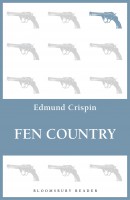
Fen Country (1950-79) by Edmund Crispin

Fen CountryThe second of Crispin’s two short story collections, published posthumously.  My choice of the two because of the way a lot of the stories hinge on a very simple core idea – homonyms, for example – that might come across a gimmicky but manage in about six or seven pages to communicate setting, setup, event, outcome and misdirection.  Frankly no small feat! Yes, consequently the characters tend to suffer (the ebullient Fen is a curiously neutered presence in the stories in which he features) but for sheer inventive interpretation after inventive interpretation this is hard to beat.  And as an example of Crispin’s tight hold on the reins of his plots (which could, let’s face it, get a bit beyond him in his novels) this reinforces his reputation in a form that has often proved the undoing of lesser talents. [Available in ebook and thoroughly unattractive print form from Bloomsbury]

Recommended reading: ‘Death and Aunt Fancy’, ‘The Hunchback Cat’, ‘Outrage in Stepney’ Continue reading

#36: The Impossible Crimes of Sherlock Holmes – III: The Problem of Thor Bridge

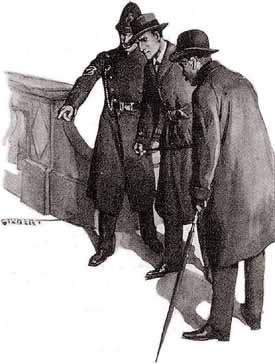
Thor Bridge 1‘The Problem of Thor Bridge’ gives us the classic impossible crime setup of a body that has been shot in the head but without any sign of a weapon to hand…and then manages to appear not at all impossible by finding the murder weapon hidden in the most likely suspect’s room, also throwing in a note from the suspected murderer arranging to meet the victim at the place of their demise and at around the time they are suspected of being having died.  True, there are no footprints anywhere near the body, but – before you get too excited – “The ground was iron-hard, sir.  There were no traces at all.”  Oh, so that takes care of that, then.

Continue reading

#35: The Language of Sherlock Holmes – A Study in Consistency

Holmes profile

In an attempt to broaden my approach to this blogging lark, I thought I’d turn my hand to some linguistic analysis.  This presents a problem in the form of my being a qualified mathematician and therefore acutely aware of how easy it is to skew any set of data based on the interpretation it’s given, and thus how pointless it becomes to really bother.  Nevertheless, I shall sally forth into the Sherlock Holmes canon with a quick sweep over some of the main points, and I can always come back to it later if I feel it warrants further investigation.

Continue reading

#32: The Impossible Crimes of Sherlock Holmes – I: The Adventure of the Speckled Band

Speckled Band 1Since I can’t quite go the Full Sherlock – he’s out of my era, after all – I thought I could at least have a look at the three Arthur Conan Doyle-penned short stories that comprise the (official) entirety of his impossible crimes: ‘The Adventure of the Speckled Band’, ‘The Adventure of the Empty House’, and ‘The Problem of Thor Bridge’ (I’m excluding novella The Valley of Fear because it’s not technically an impossible crime, and remains a mystery for all of about six lines).  It’s also a lovely excuse to get some of Sidney Paget’s gorgeous illustrations out for airing, too, and I don’t think anyone is going to mind that.  So, first up going chronologically, is my least favourite of these three: nonsense-fest ‘The Adventure of the Speckled Band’.

Continue reading

#10: The Incredible Adventures of Rowland Hern [ss] (1928) by Nicholas Olde (Part 2 of 2)

Ready?  Okay, deep breath, here we go…

9: The Man with Three Legs

I was sold on this before the end of the first page.  It’s a wonderfully-realised story that, had Olde written more like this, would have us dismissing the later Father Brown tales as an attempt to recreate the spirit of Rowland Hern.  My one niggle is that the mystery of three disappearing left boots hardly seems worthy of the supposed genius of Hern, but everything else – from the hinted wider setting to the chrarmingly philosophical nature of the solution, and putting aside a single incongruity – works very well indeed.  Oh, and the penis joke you want to make was made here in 1928 (by the bishop of Wimbledon, no less), so you may wish to consider working on some new material…

star filledstar filledstar filledstar filledstar filled

Continue reading

#9: The Incredible Adventures of Rowland Hern [ss] (1928) by Nicholas Olde (Part 1 of 2)

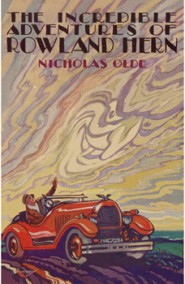
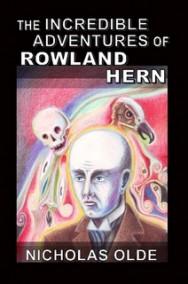
Incredible Adevnture of Rowland Hern, TheNicholas Olde, who presumably published this under a pseudonym because his real name was Amian Lister Champneys and that’s simply too awesome, left us only this one work of crime fiction to remember him by.  It’s presented in 17 chapters of about ten pages each with most being a distinct story, except ‘The Two Telescopes’ which has three chapters to itself. To avoid hideous verbosity, I shall split this review over two posts and rate each story separately to see how I like doing things that way.  No spoilers, of course.  Both covers I’ve seen for this book – my Ramble House edition (shown here) and the Heineman first edition I’ll attach to the next post – have a semi-supernatrual flavour that isn’t really accurate.  Hern is a genius detective in the classic mould, fond of obscure pronouncements and startling logical connections and always privy to more information than he lets on to his unnamed chronicler, and therefore the reader, until the closing explanation.  It would be very easy to compose him of shades of other fictional detectives, but these stories are interesting enough that they really should be allowed to stand on their own.  That said, I may need to make some such comparisons below just to give you an appropriate flavour without spoiling anything…

Continue reading