Sherlock Holmes
#35: The Language of Sherlock Holmes – A Study in Consistency
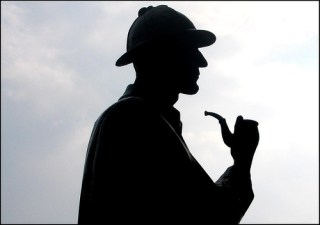
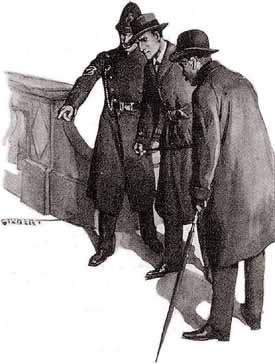 ‘The Problem of Thor Bridge’ gives us the classic impossible crime setup of a body that has been shot in the head but without any sign of a weapon to hand…and then manages to appear not at all impossible by finding the murder weapon hidden in the most likely suspect’s room, also throwing in a note from the suspected murderer arranging to meet the victim at the place of their demise and at around the time they are suspected of being having died. True, there are no footprints anywhere near the body, but – before you get too excited – “The ground was iron-hard, sir. There were no traces at all.” Oh, so that takes care of that, then.

 It is difficult to believe that Arthur Conan Doyle ever intended for his Sherlock Holmes stories to be as influential as they have proven to be. Not only are we still churning out variations on his characters in print and on radio, television and film but such is the fascination with his detective that something published before Conan Doyle even put pen to paper can achieve retrospective interest because of the similarities between the two. And so Locked Room International published this translation of Henry Cauvin’s debut novel The Killing Needle, wherein a skeleton-thin genius master of disguise who shuns social norms, declares “In my case, the brain dominates everything and is continually boiling over. This fire is eating me up and doesn’t leave a moment’s peace. The mind! The mind is a vulture that’s eating me alive” and takes opium (though in this case “to help me get some much-needed sleep”) has his adventures in crime-solving related by a doctor who becomes his confidant after being introduced by a mutual friend …yeah, okay, that’s a lot of overlap right there.
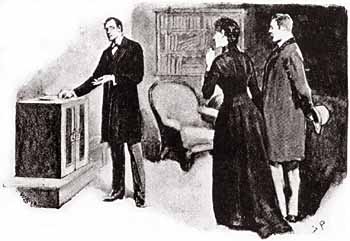 Since I can’t quite go the Full Sherlock – he’s out of my era, after all – I thought I could at least have a look at the three Arthur Conan Doyle-penned short stories that comprise the (official) entirety of his impossible crimes: ‘The Adventure of the Speckled Band’, ‘The Adventure of the Empty House’, and ‘The Problem of Thor Bridge’ (I’m excluding novella The Valley of Fear because it’s not technically an impossible crime, and remains a mystery for all of about six lines). It’s also a lovely excuse to get some of Sidney Paget’s gorgeous illustrations out for airing, too, and I don’t think anyone is going to mind that. So, first up going chronologically, is my least favourite of these three: nonsense-fest ‘The Adventure of the Speckled Band’.
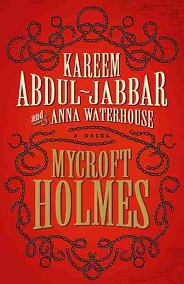 I wouldn’t call myself die-hard Sherlockian enough to immediately sign
  The Invisible Event