-
Subscribe
Subscribed
Already have a WordPress.com account? Log in now.
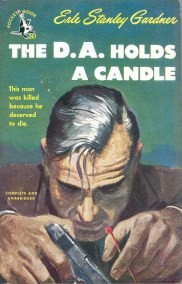 After the disappointment of last week, I should dive straight back in to another dense impossibility and to hell with any lingering doubts. But, well, my meretricious moods find me yearning for a little comfort reading, and so it’s back to Doug Selby and the gang. Here we find newly-elected D.A. Selby and Sheriff Rex Brandon contending with obstreperous reporters, influential businessmen, political opportunism, and a host of tangled stories and motives when trying to unpick the riddle of a dead body found bearing a note that states the intention of the possessor to have killed someone else…but no second body to back up the claim. And hold onto your hats, because that’s not the only thing that doesn’t add up.
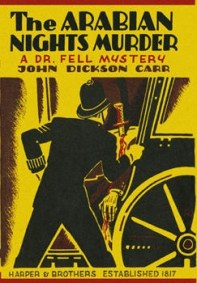 In the orchestra of John Dickson Carr’s detective fiction, his early years from It Walks by Night (1930) up to arguably The Arabian Nights Murder (1936) are very much the accordion section. Events occur in concentrated bursts, with clues and characters squeezed together to make the notes of the plot emerge, only to then be drawn apart before inexorably squeezing together again for another dense exposit you must pore over in order to follow the necessary developments. From The Punch and Judy Murders (1936) until the 1940s he wrote in the fine, clean, overlapping lines of the harp, and then the violins took over… but enough of this analogy, back to this book and the wheeze of a bellows working overtime.
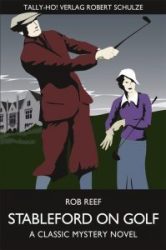
 Last week, I was moved to reflect upon the end of the archetypal Golden Age detective novel, and this week I’m moved to reflect on its beginning. The essential ludic air at the heart of the best of the genre is not quite there in The Duke of York’s Steps, but one can feel the inalienable ingredients of the form straggling into line to give shape to a story that retains fidelity to a type of plot that, at this stage, was understood if not quite mastered. If anything, the mystery feels almost over-subtle — like Antidote to Venom, it seems a trifle unlikely that such a set of circumstances as these would come to warrant criminal investigation — and so approximately the first quarter is spent trying to manufacture the necessary traction for the detection to begin in earnest.
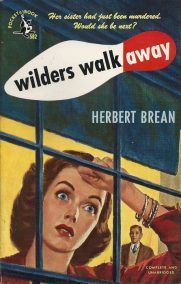 At some point between 1940 and 1960, puzzle-oriented detective fiction began an inexorable shift into what has now become know as crime fiction, wherein plot machinations took a back seat and character, setting, and ambience became more prevalent. Where detective fiction was mostly interested in the fiendish puzzle, crime fiction was more about the challenge to the status quo, and the effect this has on the people involved. And Wilders Walk Away, Herbert Brean’s debut novel, might just be the perfect peak between the two, because I do not remember having read a puzzle that was so intricately invested in the status quo. What emerges is necessarily a little confused about what it wants to be.
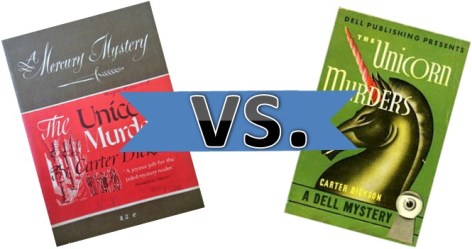
 When a man is found dead, stabbed between the eyes by a unicorn (of indeterminate nationality) — a, yes, fictional animal that can nevertheless apparently turn invisible at will — you don’t expect to find yourself in the GADU. And when a second victim is then killed in the same way but in full view of witnesses, if one can witness an invisible animal, you better hope you’re in the GADU or else things are about to get silly. Well, it’s your lucky day, because you are in a classic impossible crime mystery and things are about to get silly — this book is probably the final time John Dickson Carr had all the ingredients for a classic and didn’t actually write it, instead leaving a few edges untouched so that the overriding impression is slightly more “Er…what?” than “Hell, yeah!”.
 The Invisible Event