#1377: Having Wonderful Crime (1943) by Craig Rice


Having written six fast-paced and energetically witty mysteries featuring Jake and Helene Justus and their lawyer friend John J. Malone, Craig Rice decided that 1942 would be a year of experimentation. Some worked, some was hard work, and some was probably successful if you like that kind of thing. Thankfully, 1943 saw her return to Malone & Co., though the ghost of experimentation wasn’t completely laid and a little of the need to innovate — no bad attitude, not if you see yourself in writing for a while — carried through to Having Wonderful Crime (1943). So Jake, Helene, and Malone decamp to New York rather than Chicago, but murders happen in the Big Apple too, and before long we’re caught up in one.

Continue reading

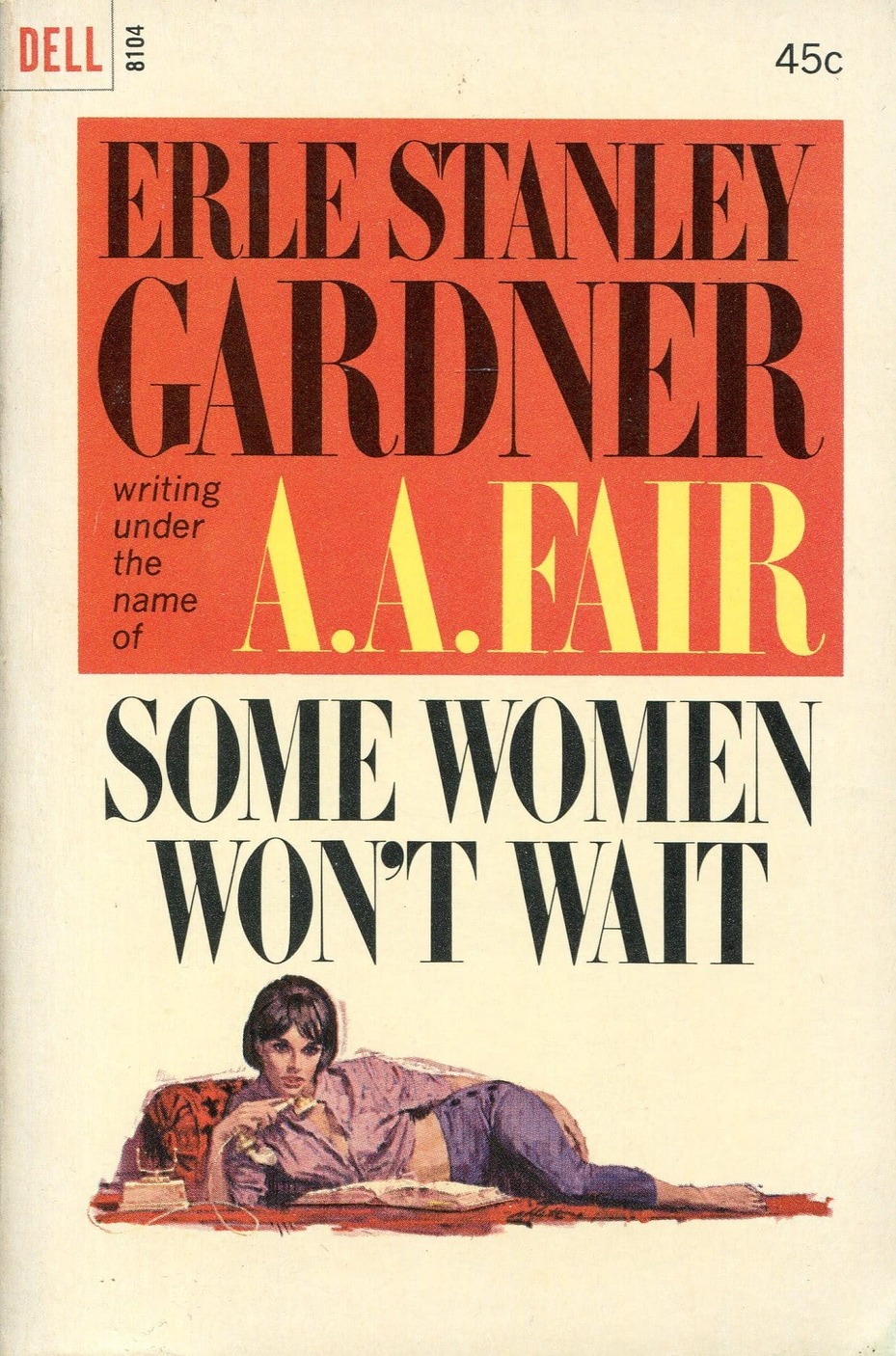
#1359: Top of the Heap (1952) by A.A. Fair


Official Case #13 for the Cool & Lam Detective Agency, Top of the Heap (1952) finds A.A. Fair, nom de plume of Erle Stanley Gardner, on slick-but-unmemorable form — mixing ingredients in a way that is at once comfortably familiar for this series yet tries to ring a few changes at the same time. And while it’s certainly not a bad book, for this reader — an avowed fan of Gardner and Fair both — it all sort of fell apart in the closing stages in which so much surmise is piled up that it’s to be wondered whether some sort of meta-textual commentary on the concept of ‘solving’ a case is being offered. It’s not, but, wow, is Donald Lam ever out on a limb or five here, and it shows.

Continue reading

#1338: The Black Angel (1943) by Cornell Woolrich


It’s been over two years since I reviewed any Cornell Woolrich, which seems incredible when you consider how completely I loved his work when he first started appearing on The Invisible Event. But, well, behind the scenes I’ve struggled through some of his stuff — the doom-drenched but ooooooverlong The Black Alibi (1942) and the somewhat tedious, Francis Nevins-edited Night and Fear [ss] (2004) collection — and lost the name of action, so to speak. But you can’t keep a good fan down, and so it’s back to the novels and The Black Angel (1943), which interestingly finds a new way to explore themes and approaches that would seem to recur throughout Woolrich’s oeuvre.

Continue reading

#1326: Bedrooms Have Windows (1949) by A.A. Fair


The twelfth published novel from Erle Stanley Gardner under his A.A. Fair nom de plume, Bedrooms Have Windows (1949) finds L.A. P.I.s Bertha Cool and Donald Lam once more skirting the law in pursuit of a case whose precise shape is obscured by the sheer number of actions dragged across its trail. And while this should be getting pretty tiresome by now, the truth is that since series nadir Crows Can’t Count (1946) Fair has delivered some blisteringly fast and fun little crime thrillers that go a long way to show how to write entertainingly: let everything fly at the page, and have someone as unshakeable as Donald on hand to unpick whatever madness you throw him into.

Continue reading

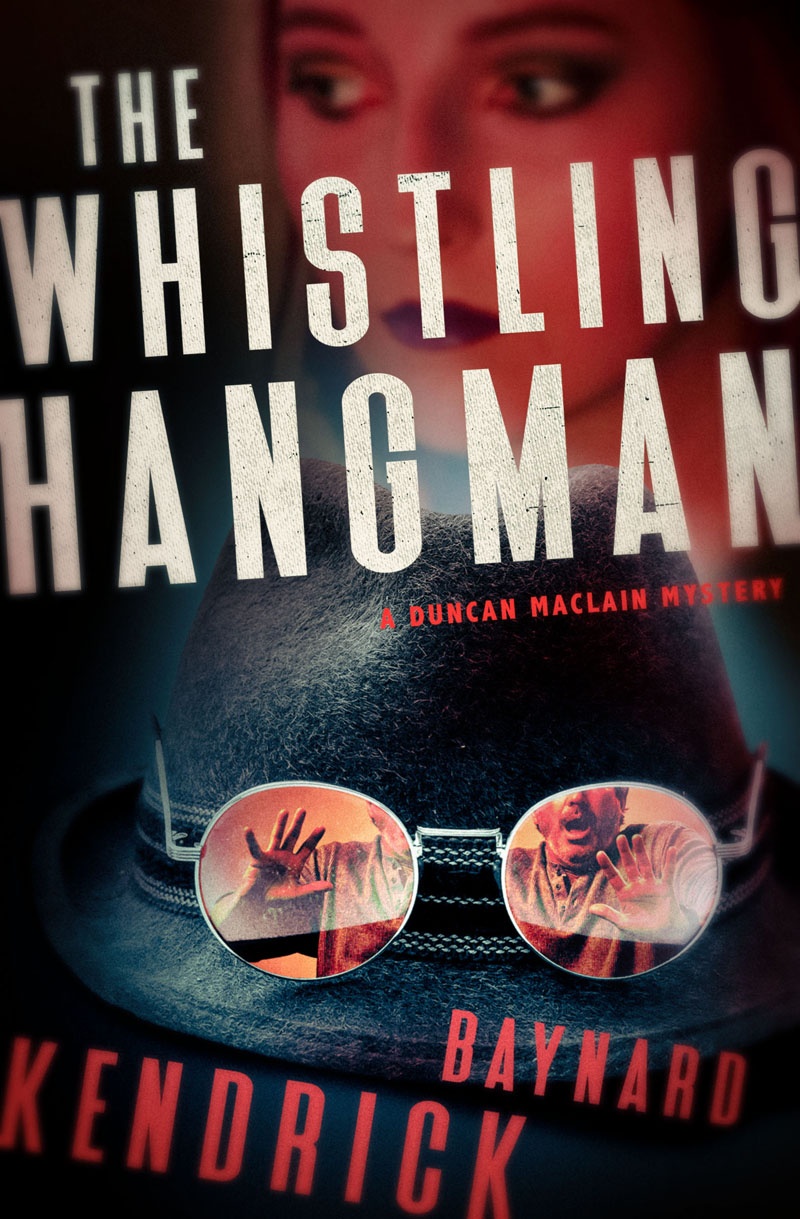
#1293: The Whistling Hangman (1937) by Baynard Kendrick


One of my favourite discoveries of recent years has been the character of Captain Duncan Maclain, the blind protagonist of a baker’s dozen of books by Baynard Kendrick. Having enjoyed The Odor of Violets (1941) and Blind Man’s Bluff (1943) as part of the American Mystery Classics range, I’ve been keeping an eye out for other books in the series, and got very lucky stumbling into a copy of The Whistling Hangman (1937) that was so severely beaten it must have owed money to six different loan sharks. And this was an especially exciting find as the novel has been praised by TomCat, apparently featuring some more ingenious impossible deaths in a large New York hotel…and, yeah, largely lives up to its billing.

Continue reading

#1284: The Dead Man’s Knock (1958) by John Dickson Carr


As my grandfather used to say, “Good god, it’s tough being a John Dickson Carr fan — he wrote some of the genre’s best and most enduring masterpieces, and yet the decline in his later works like Behind the Crimson Blind (1952) and The Cavalier’s Cup (1953) means that when you get to that end of his career he can prove to be frustrating and unenjoyable to read. But try The Dead Man’s Knock (1958), which at least features Dr. Gideon Fell, a character I’m sure you’ll like when you encounter him.” And, over 40 years later, his prophecy has been borne out, with The Dead Man’s Knock arresting a recent slide in quality where my Carr reading is concerned.

Continue reading

#1275: Fools Die on Friday (1947) by A.A. Fair


As my grandfather used to say, “When you fall off the horse, get back on the horse”.  And that’s why he made such a controversial judge at gymnastic competitions. But the fact remains that lately I’ve had some disheartening reading experiences with favoured authors — John Dickson Carr, J.J. Connington, Freeman Wills Crofts, A.A. Fair, Craig Rice, Cornell Woolrich J.J. Connington again, maybe Rice a second time — and so the tempting thing is to leave them alone for a while, wait for that memory to fade, and then return. But, no, I’m not doing that, I’m reading Fair again now, because why not? That’s what the horse is here. It was a pommel horse all along.

Continue reading

#1272: Yesterday’s Murder, a.k.a. Telefair (1942) by Craig Rice


As my grandfather used to say, “When you fall off the horse, get back on the horse”.  And that’s why he lost his job as a stuntman in Western movies. But the fact remains that lately I’ve had some disheartening reading experiences with favoured authors — John Dickson Carr, J.J. Connington, Freeman Wills Crofts, A.A. Fair, Craig Rice, Cornell Woolrich, J.J. Connington again — and so the tempting thing is to leave them alone for a while, wait for that memory to fade, and then return. But, no, I’m not doing that, I’m reading Rice again now, because why not? That’s what the horse is here. It was a literary horse all along.

Continue reading

#1266: Constable, Guard Thyself! (1934) by Henry Wade


I was one of many Golden Age fans who was quite excited when Orion’s now-defunct Murder Room acquired the rights to the novels of Henry Wade. And I was one of many Golden Age fans who signally failed to buy any of those titles and read and review them, which in part resulted in the aforementioned defunctness. But when titles began to vanish from availability, I snapped a couple up, including Constable, Guard Thyself! (1934) on the understanding that it presented an example of my favourite subgenre, the impossible crime. So, now that you can’t buy it for yourself, I’m here to say that, yeah, it’s fine, and that Wade, like J.J. Connington, presents enough of interest in his procedural approach to warrant further reading.

Continue reading