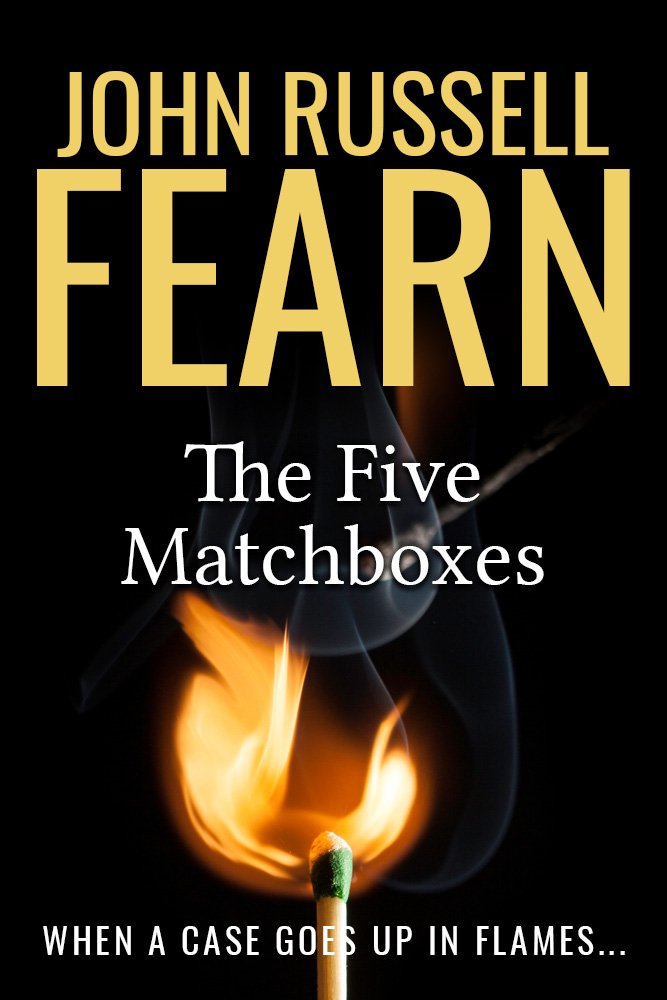
#1494: The Five Matchboxes (1948) by John Russell Fearn


I may not yet share TomCat’s love of John Russell Fearn, but I also won’t deny that in the little I’ve read by the man he’s shown enough spirit to warrant further investigation. Blame, then, my never-ending TBR for the multiple years it’s taken me to get back to him, with The Five Matchboxes (1948) patiently waiting on my Kindle with nary a word of complaint. Much to my surprise and delight, it was an impossible crime, too, with stockbroker Granville Collins shot in his office when there was no-one around and no way to shoot him from outside. Can Chief Superintendent Mortimer Garth get to the bottom of this without his dyspepsia distracting him too greatly?


Continue reading →

#572: Death in Silhouette (1950) by John Russell Fearn

Death in Silhouette Kindlestar filledstar filledstar filledstarsstars
Part of the fun of this blogging collective with its focus primarily on classic style mysteries is seeing the individual enthusiasms of bloggers and commenters alike assert themselves.  To pick just three, I’ve turned into quite the most unexpected fan of Freeman Wills Crofts, Puzzle Doctor is soon to convert us all to the joys of Brian Flynn, and TomCat has derived great pleasure from the works of John Russell Fearn.  And it’s nice to share in a joy with someone, so through an uncertain combination of runic alchemy and liturgical dance, I ended up at the conclusion that Death in Silhouette (1950) would be the next Fearn for me to try, and here we are.

Continue reading →

#213: On Audacity and How to Prepare for It, via John Russell Fearn’s Thy Arm Alone (1947)

thy-arm-alone

Sometimes someone is so taken with a book that you can’t help but stop and take notice yourself.  So when TomCat was full of praise for this impossible crime, it hopped up my TBR pile with the effortlessness of a mountain goat on an escalator.  I was promised audacity, and I love a bit of authorly audaciousness where an impossible crime is concerned — indeed, the boldness of such schemes as employed in John Dickson Carr’s The Man Who Could not Shudder (1940) or John Saldek’s Invisible Green (1977) make them firm favourites of mine, and if a book of this ilk has chutzpah enough to make TomCat and John Norris sit up and pay attention, then surely you must be onto a good thing.

Continue reading →