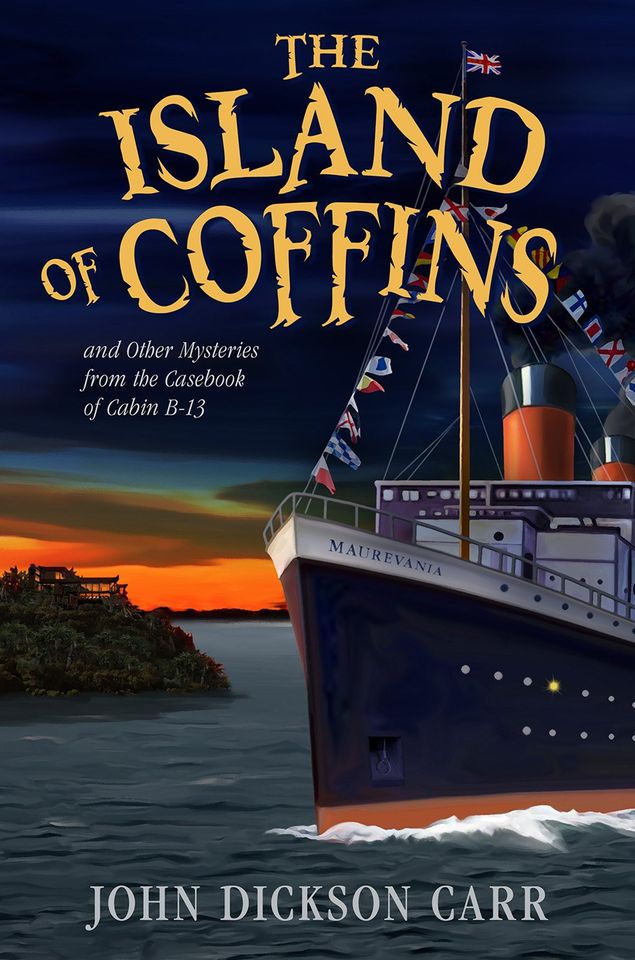
The final six trips aboard the Maurevania during the Golden Age of radio, with Dr. John Fabian leading us through the apparently impossible.
Continue readingThe final six trips aboard the Maurevania during the Golden Age of radio, with Dr. John Fabian leading us through the apparently impossible.
Continue reading
Last week, Nick Cardillo and I discussed the impossible crime on screen, at the end of which he casually asked about Jonathan Creek like I’d be able to condense my thoughts into a pithy bon mot and not obsess about what I’d missed out for the next 30 or 40 years. Instead, we’re back to discuss the series as a whole today.
Continue readingAnother six tales of intrigue from aboard cruise liner the Maurevania, with ship’s surgeon Dr. John Fabian keen to baffle and then elucidate us from his eponymous quarters.
Continue readingDoes In GAD We Trust have a hype train? If so, stoke the conductor, point the rails, wake up the boiler, and do other train things, because episode 27 is here and Nick Cardillo wants to talk about the impossible crime on screen.
Continue readingAnother tranche of seeming impossibilities from John Dickson Carr’s radio series Cabin B-13, tales of murder and bafflement told by Dr. John Fabian, ship’s surgeon aboard the Maurevania.
Continue readingIt is perhaps unsurprising, given the impact of John Dickson Carr’s radio play ‘Cabin B-13’ (1945) from the series Suspense, that a series of mystery and suspense plays should take that title when Carr returned to radio work. Unrelated to that original beyond apparently using the same ship — the Maurevania — as a framing device, the two series of Cabin B-13 (1948-49) nevertheless comprised half-hour problem-of-the-week plays in the same vein, related by ship’s surgeon Dr. John Fabian from his eponymous quarters
Continue readingI’m as surprised as you to see a new episode of my In GAD We Trust podcast, especially as I said on Thursday that there was unlikely to be one this weekend — well, okay, perhaps a I’m little less surprised than you, since I (sort of) planned, recorded, and (sort of) edited this, but you get the idea. However, on Thursday everything (sort of) came together and I was able to record this almost in one take and so here we are.
Continue reading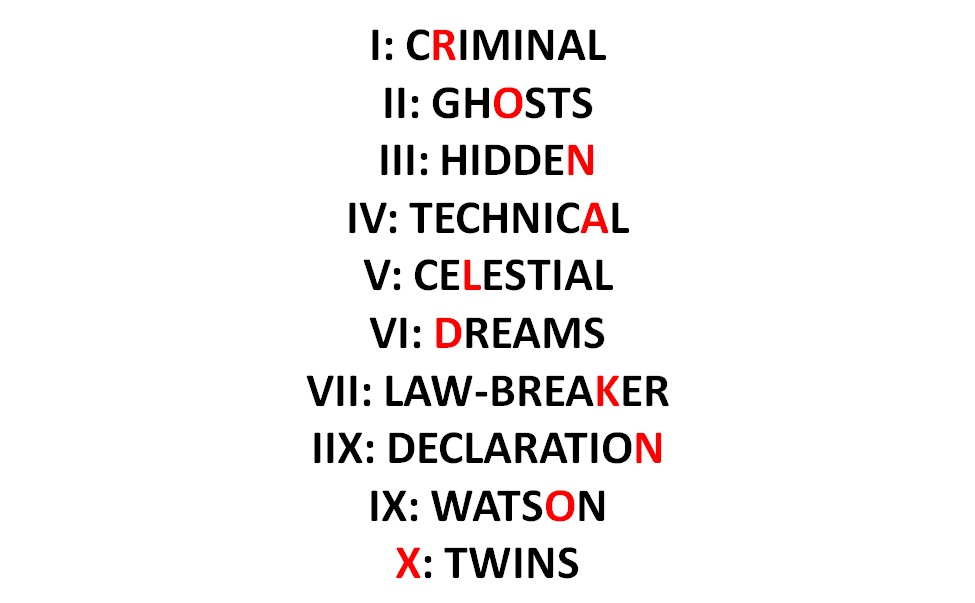
The end of the Knox Decalogue is in sight! This week it’s Watsons, next week it’s Twins, and then — oh no! — there’s a final Tuesday in the month that I have to fill with something. A flashy dance routine, perhaps?
Continue readingAfter the interruption to the schedule of two weeks ago, here’s another In GAD We Trust podcast — and given the topic of ‘Making a Good First Impression’ it’s only fitting to welcome returning guests Sergio and Brad.
Continue reading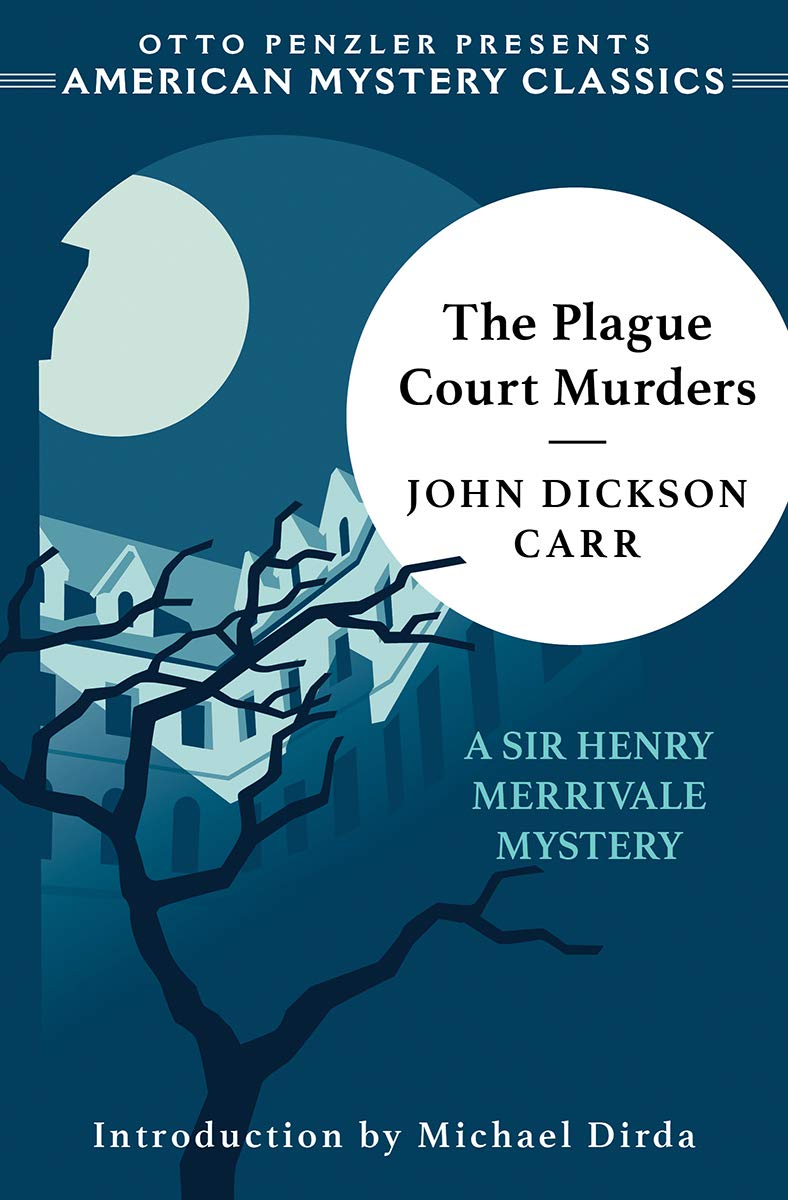


The Plague Court Murders (1934), the debut of John Dickson Carr’s sleuth Sir Henry ‘H.M.’ Merrivale and published under his Carter Dickson nom de plume, struck me when I first read it as among the ne plus ultra of locked room mysteries. A decade on, having read much more of Carr’s output, I now see it differently. Carr published five books in 1934, each one now feeling lilke an attempt to work some new wrinkle into his writing. For all the cleverness — and it is very clever — this is really an apprentice work from a man who would go on to do much, much better.
 The Invisible Event