-
Subscribe
Subscribed
Already have a WordPress.com account? Log in now.
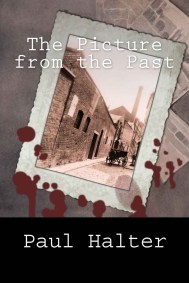 A man seeing an old photograph of an unremarkable street scene on the cover of a book and being struck by an overpowering reaction of uncertain origin doesn’t sound like a promising start to an impossible crime novel. However, it turns out that such an opinion is simply a sign of your lack of inventiveness, as Paul Halter can spin one hell of a tale from just that. Well, okay, not just that, as there’s also the notorious Acid Bath Murderer going around destroying the remains of murder victims by pouring acid on them – and John Braid, our photo-phobic protagonist, is curiously unwilling to tell his young, trusting and rather new wife what he gets up to every day when he leaves the house. And he’s rather keen on not letting his briefcase out of his sight…

 John Pugmire’s continuing mission to bring us the best unheralded impossible crime stories from around the globe under the guise of Locked Room International now adds Sweden to Japan (Yukito Ayatsuji’s The Decagon House Murders), France (Noel Vindry’s The House That Kills, Henry Cauvin’s The Killing Needle, plus ongoing translations of the wonderful Paul Halter) and England (Derek Smith’s criminally ignored Whistle up the Devil and Come to Paddington Fair). Hard Cheese by Ulf Durling gives us something classically locked room – man dead in hotel room, door locked on the inside – and adds to it a knowing wink at just about every mystery convention going: the dying message, the inverted mystery, the had-I-but-known, the least likely suspect…even when these ideas aren’t being explicitly used, Durling is throwing out casual references to the tropes and traps of the genre. Add name-checks to John Dickson Carr, Agatha Christie, Freeman Wills Crofts and others, and clearly here is a man who knows whereof he writes.
 The second of Crispin’s two short story collections, published posthumously. My choice of the two because of the way a lot of the stories hinge on a very simple core idea – homonyms, for example – that might come across a gimmicky but manage in about six or seven pages to communicate setting, setup, event, outcome and misdirection. Frankly no small feat! Yes, consequently the characters tend to suffer (the ebullient Fen is a curiously neutered presence in the stories in which he features) but for sheer inventive interpretation after inventive interpretation this is hard to beat. And as an example of Crispin’s tight hold on the reins of his plots (which could, let’s face it, get a bit beyond him in his novels) this reinforces his reputation in a form that has often proved the undoing of lesser talents. [Available in ebook and thoroughly unattractive print form from Bloomsbury]
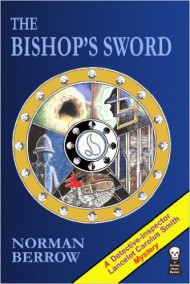 It is due to experiences akin to that of reading The Bishop’s Sword – a euphemism of a title if ever there was one, though here referring to a literal sword once owned by a bishop – that I started this blog in the first place. Picking up a book with very little to go on (a cursory, and then slightly more thorough, search online revealed not a single review of this anywhere) and having it turn out to be an absolute joy is the kind of thing I have to share with someone though, while in no way dismissing the many fine qualities that they do possess, not the kind of thing my friends necessarily share my enthusiasm for. And so I throw this to the interwebs, that you may be a way of enabling me to feel that someone who might be intrigued is going to share in this, and frankly you’re on to a corker if you decide to partake. You are, of course, most welcome. Continue reading
 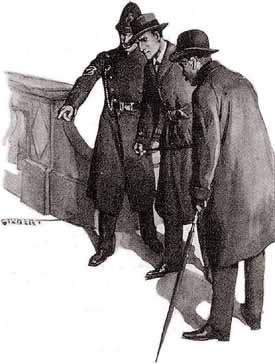 ‘The Problem of Thor Bridge’ gives us the classic impossible crime setup of a body that has been shot in the head but without any sign of a weapon to hand…and then manages to appear not at all impossible by finding the murder weapon hidden in the most likely suspect’s room, also throwing in a note from the suspected murderer arranging to meet the victim at the place of their demise and at around the time they are suspected of being having died. True, there are no footprints anywhere near the body, but – before you get too excited – “The ground was iron-hard, sir. There were no traces at all.” Oh, so that takes care of that, then.
 It is difficult to believe that Arthur Conan Doyle ever intended for his Sherlock Holmes stories to be as influential as they have proven to be. Not only are we still churning out variations on his characters in print and on radio, television and film but such is the fascination with his detective that something published before Conan Doyle even put pen to paper can achieve retrospective interest because of the similarities between the two. And so Locked Room International published this translation of Henry Cauvin’s debut novel The Killing Needle, wherein a skeleton-thin genius master of disguise who shuns social norms, declares “In my case, the brain dominates everything and is continually boiling over. This fire is eating me up and doesn’t leave a moment’s peace. The mind! The mind is a vulture that’s eating me alive” and takes opium (though in this case “to help me get some much-needed sleep”) has his adventures in crime-solving related by a doctor who becomes his confidant after being introduced by a mutual friend …yeah, okay, that’s a lot of overlap right there.
 The Invisible Event