Impossible Crimes
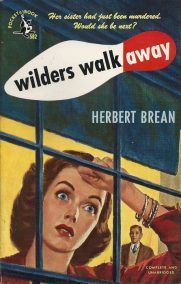 At some point between 1940 and 1960, puzzle-oriented detective fiction began an inexorable shift into what has now become know as crime fiction, wherein plot machinations took a back seat and character, setting, and ambience became more prevalent. Where detective fiction was mostly interested in the fiendish puzzle, crime fiction was more about the challenge to the status quo, and the effect this has on the people involved. And Wilders Walk Away, Herbert Brean’s debut novel, might just be the perfect peak between the two, because I do not remember having read a puzzle that was so intricately invested in the status quo. What emerges is necessarily a little confused about what it wants to be.
#259: ‘The Yellow Book’ (2017) by Paul Halter [trans. John Pugmire 2017] and Categorising No Footprints Murders
Of late, I have found myself surrounded by invisible men. Entirely fictional, of course, but there have been a lot of them: shooting someone in an empty room in You’ll Die Laughing (1945) by Bruce Elliott, disappearing into darkness in I’ll Grind Their Bones (1936) by Theodore Roscoe, vanishing from rooms and beaches in Thursday’s forthcoming Wilders Walk Away (1948) by Herbert Brean, performing miracle appearances and disappearances as I reread Rim of the Pit (1944) by Hake Talbot…everywhere I look, people are vanishing.
Continue reading
#258: I’ll Grind Their Bones (1936) by Theodore Roscoe is Now Available from Bold Venture Press!

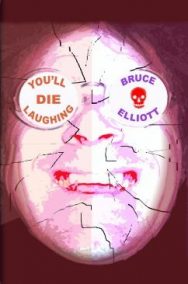 Stage magic and Golden Age detection go hand-in-hand: we go in knowing we’re being fooled in both cases, but there’s little more enjoyable than seeing it done well. Clayton Rawson and Hake Talbot were professional-level magicians who turned their minds to the dark arts of fictional (as far as we know…) murder and crafted some wonderful stories in doing so, and the name Bruce Elliott can also be added to the magician/detection-writer set with this country house mystery that benefits from his magical background by stirring in an impossible crime. This is yet another book that’s
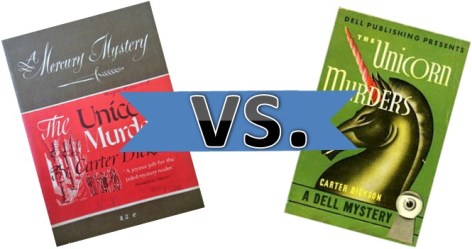
 When a man is found dead, stabbed between the eyes by a unicorn (
 While we can be thankful for real-life developments in forensic science that enable the speedier detection of criminals, there can be little argument that it was the death-knell of good detective fiction. Dull Inspector Arnold and his genius amateur sidekick Desmond Merrion spend so much time combing through the minutiae of the physical and mental aspect of the crime in Death in the Tunnel, and come up with such entertaining possibilities while doing so, that a crime scene tech in one of those all-over white body suits could never be a fifth as much fun. It makes me all the more appreciative of this kind of classic approach, knowing that this sort of book has seen its heyday pass.
 The Invisible Event