#1224: The Shadow of the Wolf (1925) by R. Austin Freeman

Shadow of the Wolf

star filledstar filledstar filledstar filledstars
Far from the short story collection my House of Stratus edition pictured here promises on the back cover, The Shadow of the Wolf (1925) is the eighth novel to feature R. Austin Freeman’s “medico-legal hermaphrodite” Dr. John Thorndyke and an inverted mystery to boot — a particular delight to discover, because I’ve been giving this form of detective story a lot of thought lately. And so when Varney — I don’t think we ever learn his first name — murders Dan Purcell on a boat in the opening chapter and begins to put in place that which makes it seem the dead man has fled of his own accord, I was even more delighted than I usually am at the start of a Thorndyke tale.

Continue reading

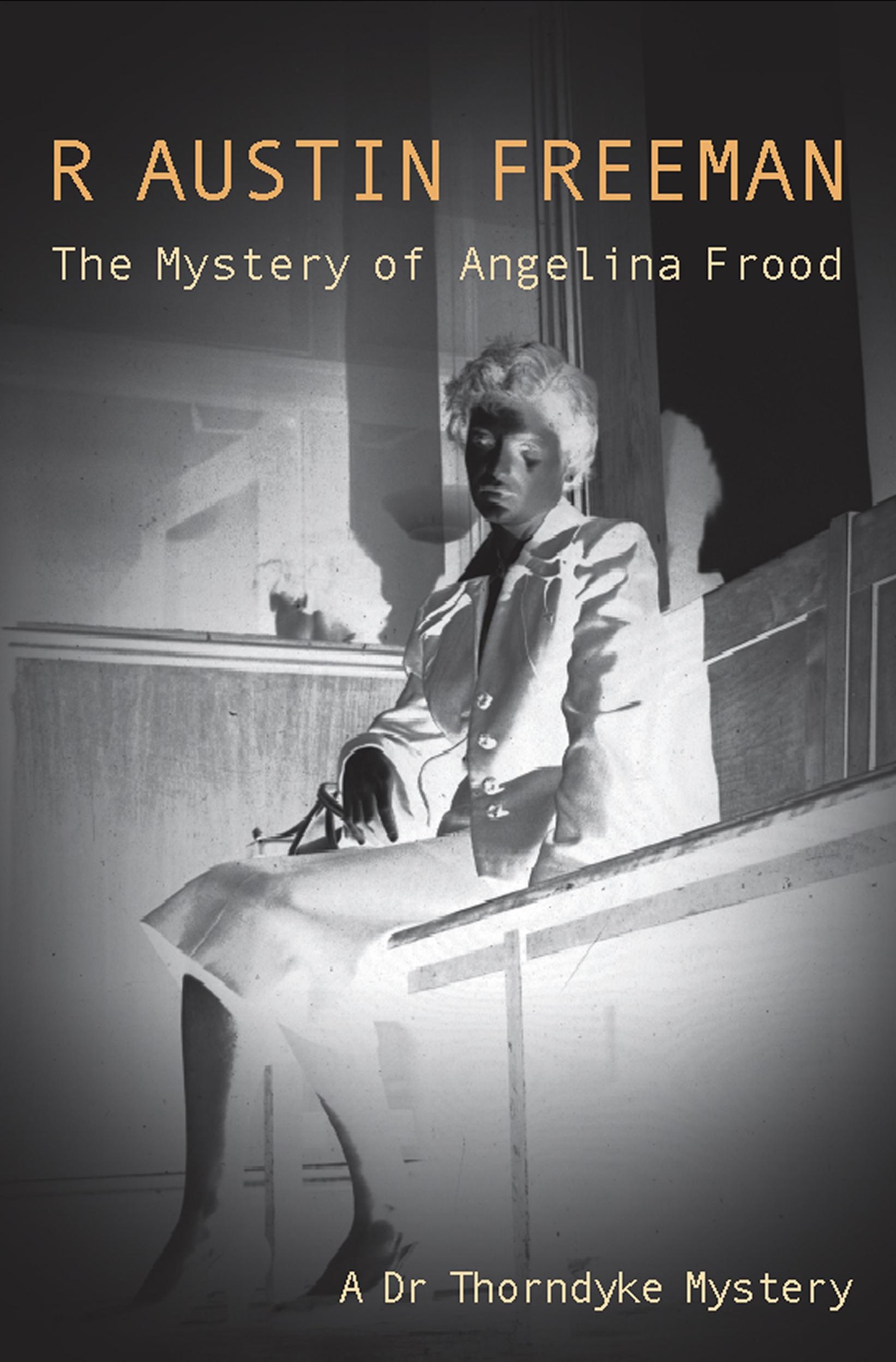
#1178: The Mystery of Angelina Frood (1924) by R. Austin Freeman

Mystery of Angleina Frood

star filledstar filledstar filledstar filledstars
Late one night, Dr. John Strangeways is summoned to tend to a woman who has clearly been strangled. Deeply unsettled by the odd encounter, he has cause to remember one of the men who was at that scene when chance brings them together in Rochester a year later. The man in question, in possession of a wicked-looking knife, does not remember the doctor, however, and Strangeways, new in town and on his way to look over a recently-vacated surgery, is relieved to be unable to help when the man asks for directions to the residence of Mrs. Frood. Deciding to take the practice on, Strangeways is in due course introduced to his landlady, and comes face to face with the strangled woman of a year before. Her name? Mrs. Angelina Frood.

Continue reading

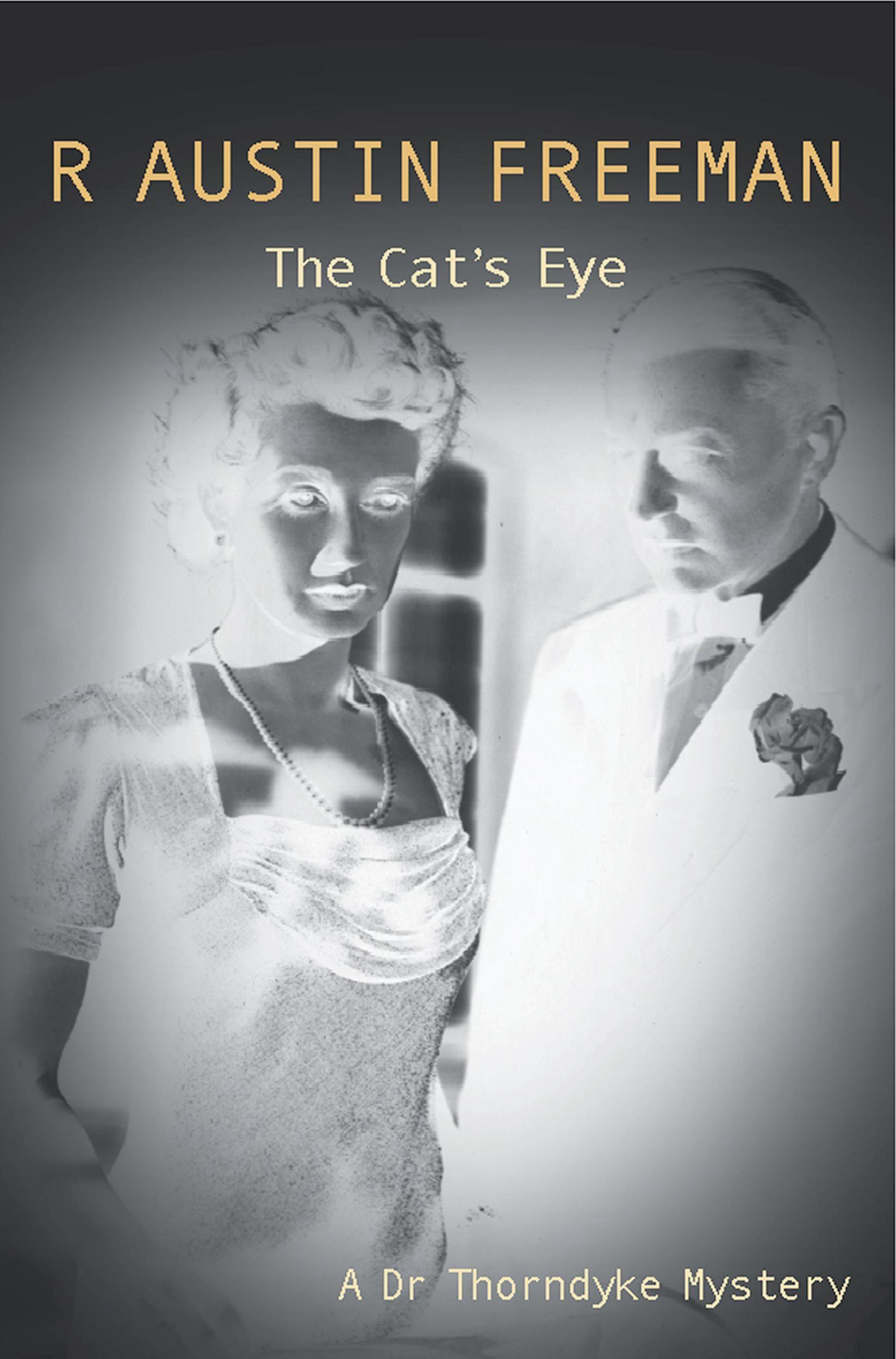
#1079: The Cat’s Eye (1923) by R. Austin Freeman

The Cat's Eye

star filledstar filledstar filledstarsstars
“Follow him!  Don’t let him escape!  He has just committed a dreadful murder!” — thus is Robert Anstey exhorted into chasing after a man he interrupts assaulting a woman on Hampstead Heath. Failing to catch his quarry, Anstey retraces his steps and discovers that Andrew Drayton, collector of knick-knacks, has indeed been shot dead in his home where Winifred Blake, the assaulted woman, had an appointment to meet him that evening. Even more curious, all Drayton’s acquisitions were well-known to be essentially valueless, so why have his gewgaws been ransacked, and what could he possibly have had amongst them that was worth killing for? Enter Dr. John Evelyn Thorndyke.

Continue reading

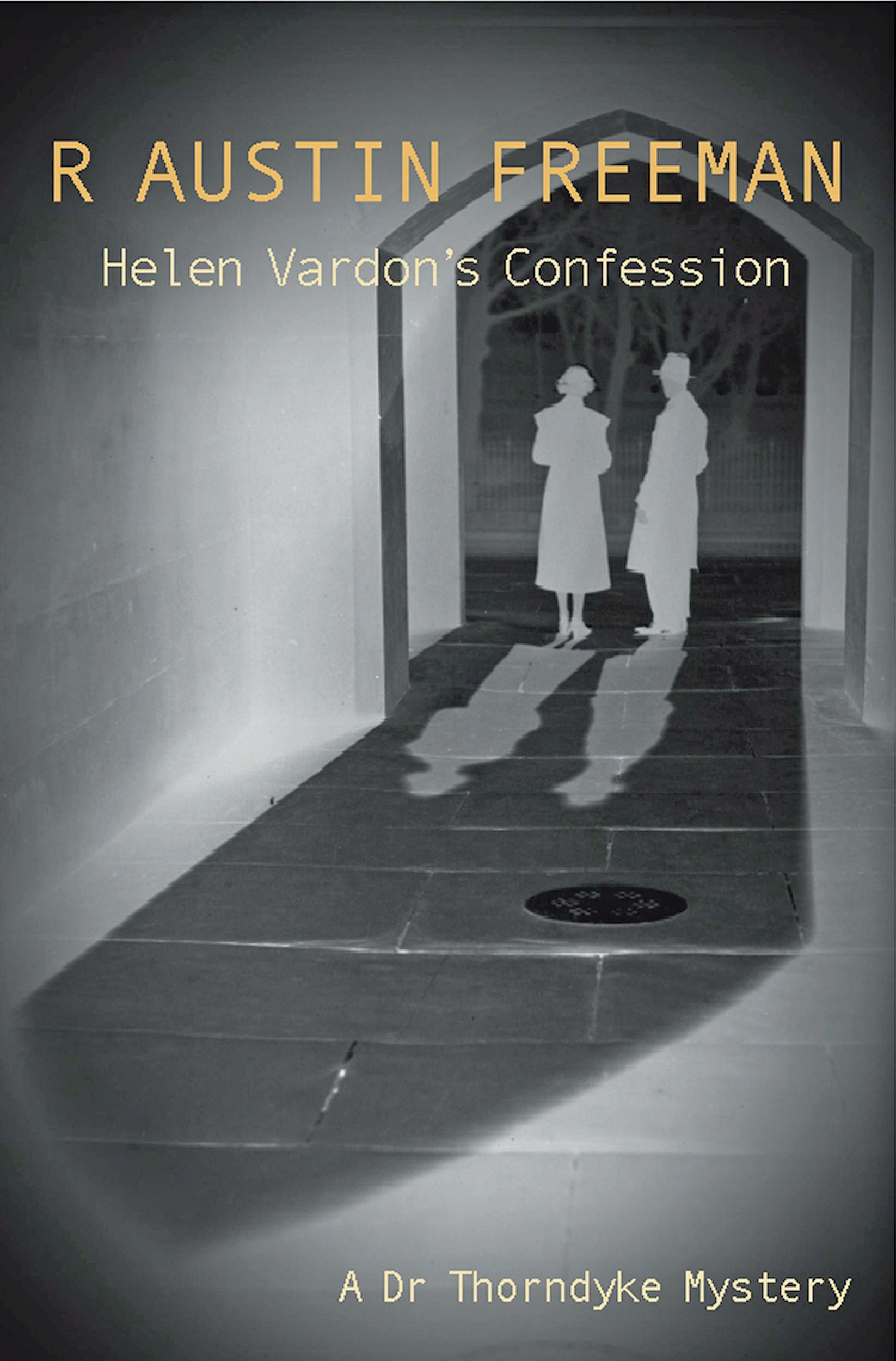
#1043: Helen Vardon’s Confession (1922) by R. Austin Freeman

Helen Vardon's Confession

star filledstar filledstarsstarsstars
I’ll be honest, I’ve been kind of dreading this. A glance across the spines of the Dr. John Thorndyke novels and short story collections by R. Austin Freeman reveals Helen Vardon’s Confession (1922) to be his longest book by a factor of about 50%, yet Nick Fuller — who directed me so some excellent Thorndyke novels when I was new to author and character both — considers it perhaps Freeman’s worst offering. And having now read it, I can see its many problems, not least of which is a short story’s worth of criminous endeavour hiding in a 130,000 word novel that takes in too many loose ideas to warrant its tedious length. This was…not fun to read.

Continue reading

#934: “It was surprising what a change the last minute or two had wrought…” – The Great Portrait Mystery [ss] (1918) by R. Austin Freeman

The short story collection The Great Portrait Mystery (1918) occupies an odd position in the oeuvre of R. Austin Freeman. Five of the seven stories herein have almost nothing to do with each other — tonally, thematically, genre-wise — and the other two are inverted tales of detection featuring his famous medical jurist character Dr. John Evelyn Thorndyke. So were Freeman’s publishers simply fancying up some of his B-material by including a couple of Thorndyke tales to draw otherwise-uninterested readers to this collection? Let’s find out.

Continue reading

#894: A Silent Witness (1914) by R. Austin Freeman

A Silent Witness

star filledstar filledstar filledstarsstars
Sheltering from the rain while out for a walk in north London one September evening, trainee doctor Humphrey Jardine happens upon the body of a dead man, only for the corpse to have vanished by the time he is able to bring the police to the location. Before long, a discovery at the scene of this vanishing, a chance encounter with the comely Miss Sylvia Vyne, a suspicious clergyman, and the death of an elderly patient just as Jardine is about to act as locum tenens for another doctor’s practice will combine with this mobile corpse to make quite the most “astounding sequence” in young Jardine’s life, changing it forever.

Continue reading

#806: The Red Thumb Mark (1907) by R. Austin Freeman

Red Thumb Mark

star filledstar filledstar filledstarsstars
As a firm proponent of reading an author’s work chronologically, I’m a terrible hypocrite. I initially encountered Dr. John Evelyn Thorndyke in his eighteenth published volume, and then read his third, fifth, fourteenth, seventeenth, fourth, and sixteenth before now getting to his debut, The Red Thumb Mark (1907). Those of you following along at home will know how much enjoyment I’ve taken from Freeman’s writing, and the simple truth is that, had I started here, I may still be working up the enthusiasm to read further. Not that this is a bad book, and in many ways it’s a fascinating one, but it’s difficult from here to see the heights RAF would scale later in his career.

Continue reading

#787: “My methods of defence are based on demonstration rather than rhetoric…” – The Magic Casket [ss] (1927) by R. Austin Freeman

At 1.30pm UK time today, the Bodies from the Library Conference starts online for the delectation of classic detection fans the world over. As my talk is due to be about detection, I thought I’d turn that into a flimsy excuse to write about one of my favourite discoveries of recent years: Dr. John Evelyn Thorndyke.

Continue reading

#773: The Mystery of 31 New Inn (1912) by R. Austin Freeman

31 New Inn

star filledstar filledstar filledstar filledstars
Summoned one evening to the house of a bedridden man — and taken there in a carriage with blacked-out windows to obfuscate the location — Dr. Christopher Jervis suspects poisoning but is assured by the people looking after Mr. Graves that no poison could have been administered. Some weeks later, he is summoned a second time and, after administering some treatment that sees Mr. Graves begin to revive, is dismissed and never hears of the patient or his carers again. Between these two visits, however, Jervis consulted Dr. John Thorndyke, which proves to be most fortuitous when further investigation into the matter becomes important.

Continue reading