#1243: The Judas Window, a.k.a. The Crossbow Murder (1938) by Carter Dickson

The Judas WIndow

star filledstar filledstar filledstar filledstar filled
One of many classic detection titles I read before I started this blog, The Judas Window (1938) is arguably among the most popular books John Dickson Carr ever wrote, under his nom de plume Carter Dickson or otherwise. The seventh book to feature his barrister-detective Sir Henry ‘H.M.’ Merrivale, and the only time H.M. enters the courtroom in all his cases, this was actually the first Merrivale book I read, way back when, and so a revisit seemed on the cards, especially with the British Library Crime Classics adding Dickson’s The Ten Teacups, a.k.a. The Peacock Feather Murders (1937) to their stable next month. Might this one follow suit? Lord knows it deserves to.

Continue reading

#1199: “There was undoubtedly method in the old boy’s madness…” – The Punch and Judy Murders, a.k.a. The Magic Lantern Murders (1936) by Carter Dickson

I have in the past referred to The Punch and Judy Murders, a.k.a. The Magic Lantern Murders (1936) — the fifth book to feature Sir Henry ‘H.M.’ Merrivale under John Dickson Carr’s Carter Dickson nom de plume — as an underacknowledged masterpiece in the oeuvre of an author who produced more than his fair share of masterpieces in the genre. So let’s examine that, eh? That sort of claim can’t possibly backfire.

Continue reading

#1161: “Who was murdered? When? How? Why?” – The Art of the Impossible, a.k.a. Murder Impossible [ss] (1990) ed. Jack Adrian and Robert Adey, Part 1 of 2

In a bizarre turn of events, I have no memory of acquiring the much-sought-after anthology The Art of the Impossible, a.k.a. Murder Impossible (1990) edited by the legendary pairing of Jack Adrian and Robert Adey. And yet I do have a copy. So let’s worry about my leaky memory later, and instead pick through some classic impossible crimes selected by two of the most knowledgeable men in the business, eh?

Continue reading

#1130: The Red Widow Murders (1935) by John Dickson Carr [a.p.a. by Carter Dickson]

red-widow-murders

star filledstar filledstar filledstar filledstars
I’ve written previously about The Red Widow Murders (1935) — John Dickson Carr’s first take on the Room That Kills, originally published under his Carter Dickson nom de plume — but this American Mystery Classics reissue is a chance to look at the book more broadly and attach a star value to it. This third reading reinforced my impression that it’s perhaps too busy a book, redolent with the enthusiasm the youthful Carr brought to his early efforts when his eagerness outweighed his skill with juggling plot, but reading it three times also give me a good perspective on its many successes, not least of which is just how busy Carr manages to make it.

Continue reading

#1018: “If it’s a new wrinkle in the art of homicide, I want to know all about it.” – The White Priory Murders (1934) by Carter Dickson

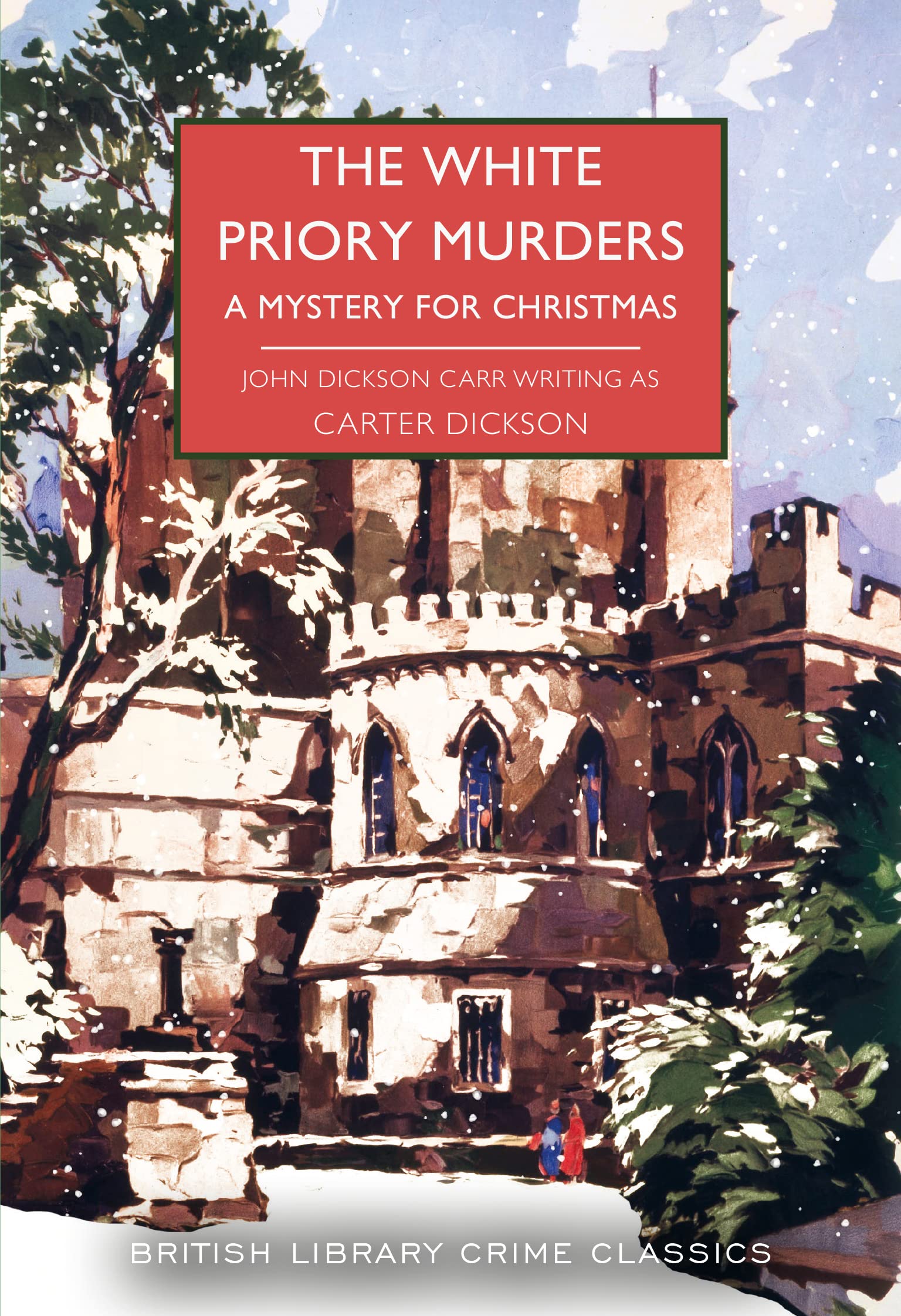
It speaks volumes about the excitement that the work of John Dickson Carr provokes in me that, with still around 20 of his novels unread, I’m revisiting some favourite titles from his output. Of course, it doesn’t hurt that the likes of the American Mystery Classics and the British Library Crime Classics ranges are putting out such lovely new editions — and who wouldn’t want to revisit Carr in his prime?

Continue reading

#930: Night at the Mocking Widow (1950) by Carter Dickson

Night at the Mocking Widow

star filledstar filledstarsstarsstars
I love a good village poison pen mystery but, as I’ve said before, they’re difficult to write because both the village and the mystery must convince and compel. Night at the Mocking Widow (1950), the twentieth book written under John Dickson Carr’s Carter Dickson nom de plume to feature Churchillian sleuth Sir Henry ‘H.M.’ Merrivale, starts off seeming like a great example of both…but once we hit the halfway stage and the impossible appearance and vanishing of the sinister Widow presents itself, the life rather goes out of things. From that point on, it feels more like a writing exercise than a novel, and one that Carr is forcing himself to complete.

Continue reading