Arthur Conan Doyle

#120: On the Many Wonderful Faces of Dr. John H. Watson, MD – Part 1 of 2
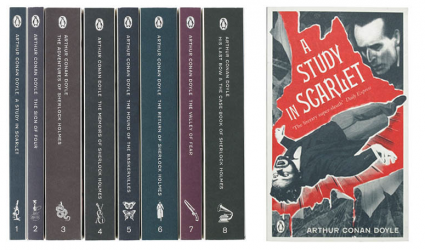 Lately I’ve read an unusually high concentration of Holmes pastiches — Caleb Carr’s The Italian Secretary (not good), Stephen King’s ‘A Doctor’s Case’ (not terrible), Colin Dexter’s ‘A Case of Mis-Identity’ (extremely good), Michael Kurland’s The Infernal Device (loadsa fun), Steve Hockensmith’s Holmes on the Range (fabulous) and a superb piece of unpublished fan fiction sent to me via email — and it’s made me realise that while Watson, and specifically the Watsonian voice, is vital in undertaking Holmes, no-one can quite agree what Watson is, how he should be written, and this makes him far and away the more interesting of the two men when it comes to analysis.
Continue reading
#113: The Tuesday Night Bloggers – A Circular Tour Through My Brain as I Attempt to Read ‘The Poisoned Dow ’08’ (1933) by Dorothy L. Sayers
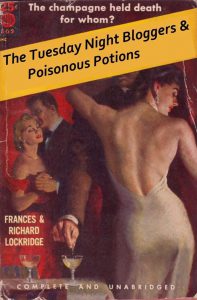
It being the ever-approaching end of the academic year, I’ve tended to focus on short stories for these Tuesday Night Bloggers posts on poison because I simply haven’t had the time to read more than one book a week, and I need to keep those for my Thursday reviews. So this week I thought I’d take on one of Dorothy L. Sayers’ short stories featuring her other sleuth, the purveyor of fine wines that is Mr. Montague Egg. This is another one taken from The Big Ol’ Black Lizard Book of Wowsa That’s a Lot of Stories Massive Gigantic Compendium of Impossible Crimes But for Some Reason They’ve Included A Huge Section of Surely the Most Anthologised Stories of All Time, and so once again it has an impossible element. Yes, I am nothing if not fond of playing to type.
And then something interesting happened…
Continue reading
#84: The Tuesday Night Bloggers – The Sherlockian Impossibilities of John Dickson Carr – II: ‘The Adventure of the Sealed Room’ (1953)
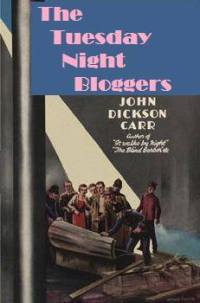
I’m guilty of sedition here: this isn’t technically part of the Tuesday Night Bloggers – they’re looking at travel in classic crime this month – but rather my own delayed TNB post on John Dickson Carr from March before I was sidelined. But, y’know how it is, it’s the second one looking at Carr’s Sherlock Holmes stories and so I feel I should probably post it on a Tuesday if only for internal consistency…my apologies for any confusion (though I suppose I cam writing about a Carr trip…). Just look upon this as my Never Say Never Again.
I talked about the origin of these stories in my first post on this topic, so let’s get straight on with it: this story is built on the reference to a case “of Colonel Warburton’s madness” made at the start of ‘The Engineer’s Thumb’ and so it’s appropriate that it begins in much the same way: someone in distress seeks out Watson (then for his doctoring, now seemingly because he knows Holmes) and is thus ushered into the Great Presence. It’s here that the story plays its most interesting card, as Holmes is rather short with the unfortunate Cora Murray who has just had a Colonel Warburton seemingly shoot himself and his wife while locked together in his study in the house where they all reside:
Continue reading
#79: The Tuesday Night Bloggers – The Sherlockian Impossibilities of John Dickson Carr – I: ‘The Adventure of the Highgate Miracle’ (1953)

In the early 1950s, John Dickson Carr collaborated with Sir Arthur Conan Doyle’s youngest son Adrian on six stories featuring Sherlock Holmes and Dr. John Watson. These were published in various magazines before being collected together and published as either The Exploits of Sherlock Holmes (as my edition – featured below – is, also containing six stories solely from the pen of Conan Doyle, Jr.) or The Further Exploits of Sherlock Holmes, separate from Conan Doyle, Jr.’s stories which were themselves published as The Exploits. Are you keeping up?
Continue reading
#59: On Locked Rooms and Impossible Crimes in fiction – something of a ramble

I was recently reading a book on the promise of it providing a locked room murder, to which I am rather partial. When said murder arrived, it took on this approximate form: a large indoor hall with a free-standing stone chapel inside it which has one door and no windows or other points of ingress, a crowd witnesses a lady entering said chapel – which is deserted – alone and the doors are shut, only for them to be opened some time later and said lady found beaten, bruised and devoid of life. It’s moderately classic in its setup and should therefore provide some interest, but once I read the details of the crime I gave up on the book and will not return to it (in fact, it’s already down the charity shop).
This is not due to any squeamishness on my part, or a particular problem I had with the writing or the characters – both were fine, if unexceptional – but rather just because it just wasn’t interesting. It is hard to put this in words, which is why I imagine this post may run rather longer than usual, but there were simply no features of intrigue to me in that supposedly impossible murder. And so I got to thinking…forget plot or prose or atmosphere, take away all the context of an impossible crime, particularly forget about the solutions: what makes an interesting fictional impossibility? Continue reading
#44: Who are the Kings of Crime?

The Tuesday Night Bloggers – an opt-in blogging group initially started by ‘Passing Tramp’ Curtis Evans to commemorate Agatha Christie’s 125th birthday but since expanded to include a broader program of authors from the Golden Age – has produced a glorious range of diverse posts from a variety of contributors and perspectives. Mostly I feel incapable of contributing anything half as interesting as what these guys and girls come up with, but Brad Friedman’s recent Ngaio Marsh-themed post on his excellent AhSweetMysteryBlog has got me thinking laterally about something he said, and so I’m going to run in my own direction with an idea that I’m curious about.
Any conversation about Marsh, see, veers into the debate over the Queens of Crime which is rife with obviously-Christie, pro-Sayers (hmmm), anti-Mitchell (yay!), possibly-Allingham (wooo!) debate, but Brad says that his personal “Queens of Crime” included John Dickson Carr and Ellery Queen. And I thought: hang on a minute, male monarchs? There’s a word for that…
Because, who are the kings of crime fiction?
Continue reading
#36: The Impossible Crimes of Sherlock Holmes – III: The Problem of Thor Bridge
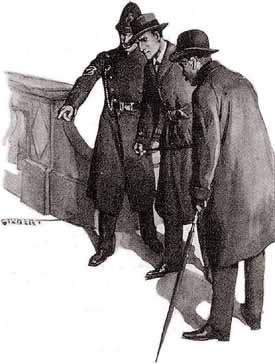
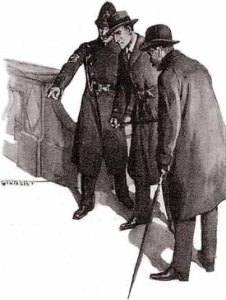 ‘The Problem of Thor Bridge’ gives us the classic impossible crime setup of a body that has been shot in the head but without any sign of a weapon to hand…and then manages to appear not at all impossible by finding the murder weapon hidden in the most likely suspect’s room, also throwing in a note from the suspected murderer arranging to meet the victim at the place of their demise and at around the time they are suspected of being having died. True, there are no footprints anywhere near the body, but – before you get too excited – “The ground was iron-hard, sir. There were no traces at all.” Oh, so that takes care of that, then.
Continue reading
#35: The Language of Sherlock Holmes – A Study in Consistency


 The Invisible Event