The final week of the Death of the Reader boys picking their way through Murder on the Way! (1935) by Theodore Roscoe, and the reckoning is upon us: how close were they with the solution they proposed in last week’s show?
Continue readingAmateur Detective
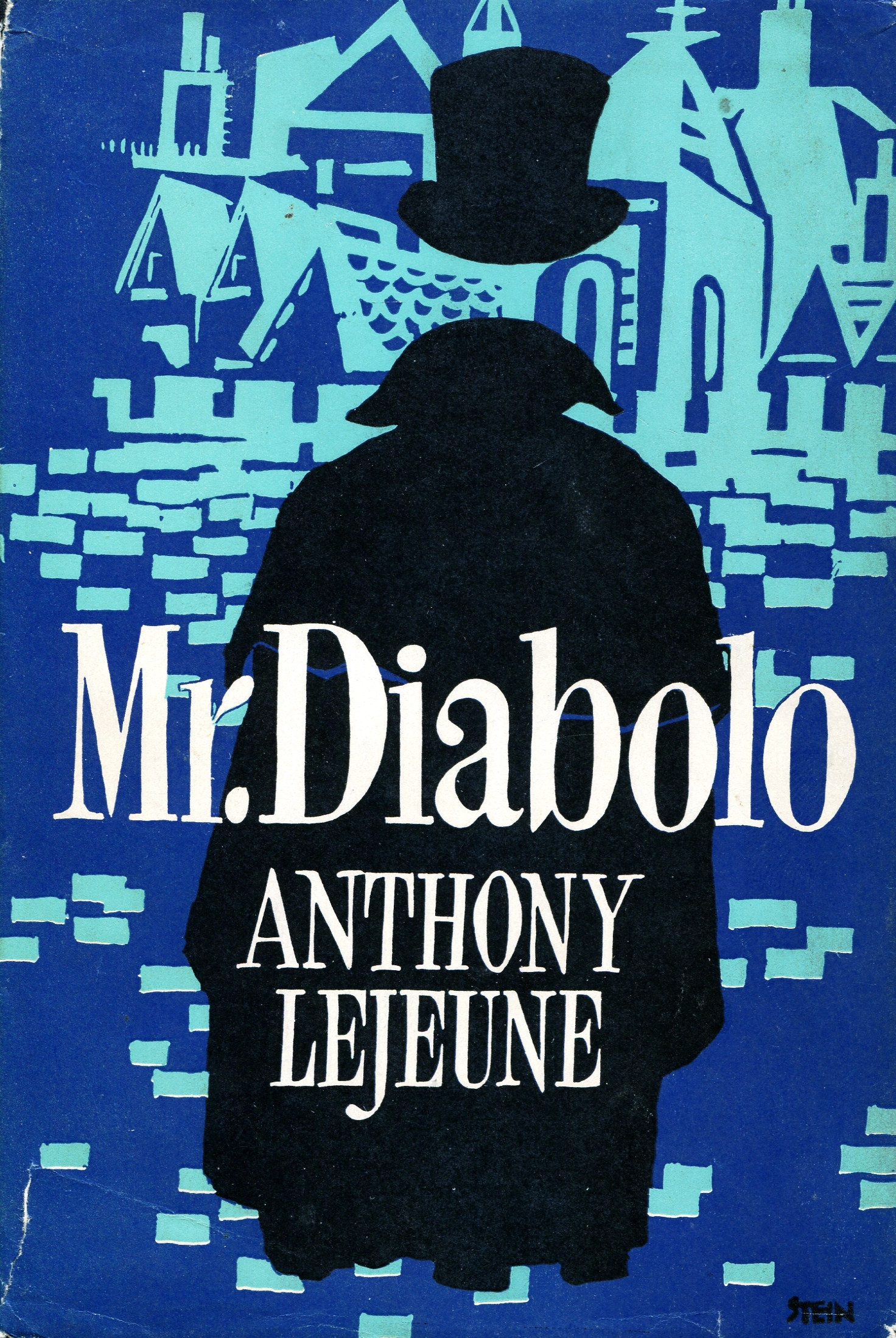
#851: “But soon the rumours became darker…” – Mr. Diabolo (1960) by Anthony Lejeune
There are Advent calendars in the supermarkets, but I’m sticking to my guns and committing October to a study of the eldritch and shiversome in detective fiction. We have zombies stalking through, Tuesday was ghosts, Thursday was spiders, and today we’ll look at the legend of Mr. Diabolo.
Continue reading#848: Death of the Reader x The Invisible Event – Murder on the Way! (1935) by Theodore Roscoe [Chapters 6 to 9]
Another Monday, another chance to listen to Felix ‘Flex’ Flexerton and Herman ‘Herds’ Herdley as they read Murder on the Way! (1935) by Theodore Roscoe in sections and I attempt to entice them away from the confident groove they settled into last week.
Continue reading#844: Death of the Reader x The Invisible Event – Murder on the Way! (1935) by Theodore Roscoe [Chapters 1 to 5]
You may remember that I recently reviewed Murder on the Way! (1935) by Theodore Roscoe — but what you won’t know until now is that I was rereading it in part because I’d been invited onto Death of the Reader to talk about it.
Continue readingIn GAD We Trust – Episode 27: The Impossible Crime on Screen [w’ Nick Cardillo]
Does In GAD We Trust have a hype train? If so, stoke the conductor, point the rails, wake up the boiler, and do other train things, because episode 27 is here and Nick Cardillo wants to talk about the impossible crime on screen.
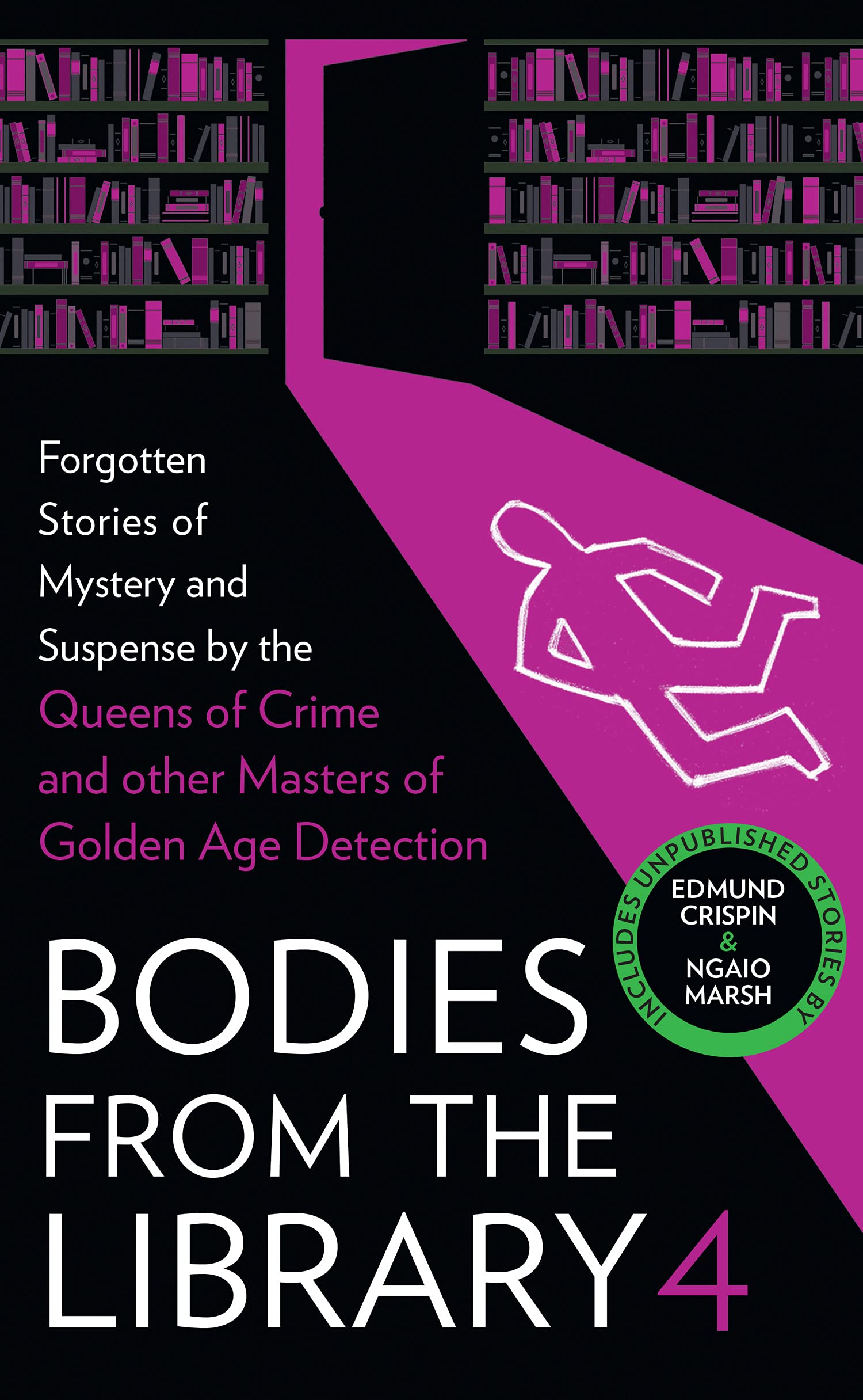
Continue reading#831: “As you know, an unusual crime has a deep interest for me…” – Bodies from the Library 4 [ss] (2021) ed. Tony Medawar
I can’t believe that there is a GAD enthusiast who doesn’t look forward to the annual Bodies from the Library collections so expertly curated by Tony Medawar. In bringing to public awareness some of the forgotten, neglected, or simply unknown stories that the great and the good of the form produced, these collections have become a source of great excitement, and a must-read for even the most ardent student of the Golden Age.
Continue reading#830: So Pretty a Problem (1950) by Francis Duncan

![]()
![]()
![]()
![]()
![]()
“Please. Come quickly. Please. I’ve killed my husband.” — these words awaken the holidaying Mordecai Tremaine as he dozes on the beach below the clifftop holiday home of Helen Carthallow and her artist husband Adrian. More worryingly, the words are spoken by Helen herself and, accompanying her over the footbridge that is the house’s only connection to the mainland, Tremaine finds Adrian shot in the head and Helen insisting it’s all the result of a bit of playfulness gone very, very wrong. All this happening in the opening chapter of So Pretty a Problem (1950) by Francis Duncan seemed to bode well for an incident-packed puzzle plot…and then, well.
In GAD We Trust – Episode 25: Fair Play and the Nomenclature of Golden Age Detective Fiction [w’ Scott K. Ratner]
Gutsy of me to suggest, on my site dedicated to the discussion of Golden Age detective fiction, that a lot of the terminology used to talk about these stories is incorrect, eh? Well, thankfully I’m not the one trying to convince you; that job falls to Mr. Scott K. Ratner.
Continue reading#812: The Forbidden House (1932) by Michel Herbert & Eugene Wyl [trans. John Pugmire 2021]

![]()
![]()
![]()
![]()
![]()
Nouveau-riche Napoléon Verdinage acquires Marchenoire Manor despite mysterious missives warning him against purchasing this “forbiddin [sic] house” and promising his untimely demise. Learning that the previous owners either died or took the letter writer’s warnings to heart and left, Verdinage becomes only more determined to stay. He only has himself to blame, then, when at the two month deadline given for his departure he is shot dead by a man who apparently vanished from the house…an outcome all the more baffling because the only exit was watched the entire time and multiple searches fail to discover the killer anywhere inside.
#809: The Clock Strikes 13 (1952) by Herbert Brean

![]()
![]()
![]()
![]()
![]()
Just a few days ago it was my lot to be unimpressed by the concluding volume of one series, and so time is ripe for me to be slightly underwhelmed by the fourth and final novel to feature Herbert Brean’s photographer-sleuth Reynold Frame. This feels like the thousandth book I’ve read this year to which my response has been “Yeah, it was okaaaay…”, but it’s sort of pleasing to finally encounter something by Brean that fails on its own terms — though if you can’t help but go into this “ten people trapped on an island, then murder intrudes” story expecting an update of And Then There Were None (1939), you do so at your own damn peril.