Amateur Detective
#580: Minor Felonies – Spaced Out (2016) by Stuart Gibbs
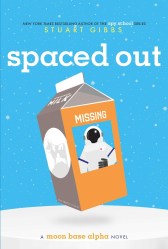
Space Case (2014), the opening volume in Stuart Gibbs’ Moon Base Alpha trilogy, did a very good job of marrying some intelligent scientific speculation with an appealing juvenile detective and a decent whodunnit plot, and follow-up Spaced Out (2016) is even better again.
Continue reading
#578: She Died a Lady (1943) by Carter Dickson
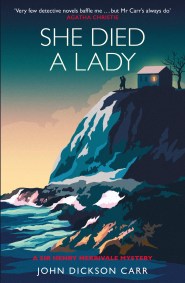


Firstly, good heavens the excitement of posting a John Dickson Carr review without then tagging it OOP — Polygon Books have Hag’s Nook (1933), The Case of the Constant Suicides (1941), and She Died a Lady (1943) in their stable, and the British Library and Otto Penzler have added more, with more to come. And after last week’s brilliant and baffling no-footprints murder in a lonely corner of England, and with my broadly chronological reading of Carr’s work bringing She Died a Lady back into my orbit, the stars seemed to be aligning on a reassessment of this, probably the most consistent contender for Best Carr Novel of All Time.
Continue reading
#577: Minor Felonies – The Mystery of the Spiteful Letters (1946) by Enid Blyton
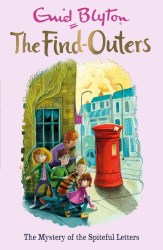
In the most recent episode of our podcast, I mentioned how Agatha Christie’s The Moving Finger (1942) was the book which made me appreciate how threatening a poison pen campaign could actually be. And four years after Christie used the conceit to drive a town mad, surprise Crime Writers’ Association member Enid Blyton made it the background for some childhood japes. What fun!
Continue reading
#574: Minor Felonies – High-Rise Mystery (2019) by Sharna Jackson
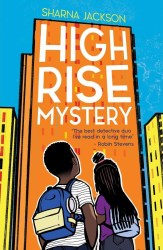
Right, let’s get back into blogging things. This week, three very different novels published this year, beginning with High-Rise Mystery (2019), the debut fictional work of Sharna Jackson.
Continue reading
#568: Adventures in Self-Publishing – An Invitation to Murder (2019) by A.G. Barnett
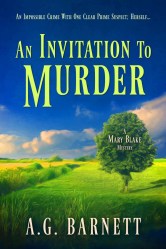
Confidence and competence are, I think, the two qualities I’d like an author to exhibit if they’re going to ask for money for their work. The confidence to know they’ve written something well, and the competence to be at least moderately schooled in things like continuity, how to use the language they’re writing in, and how to place and build ideas around their core structure.
Continue reading
#566: The Terror in the Fog (1938) by Norman Berrow

Bill Hamilton, having previously chased hashish smugglers and a werewolf (separately) around Spain, now finds himself in his homestead of Gibraltar contending with a “London particular” fog, three murdered men hanging from the rafters of an abandoned storehouse, and a mysteriously faceless nun intent on causing all manner of havoc. Yes, The Terror in the Fog (1938) is quite unmistakably a Norman Berrow novel — this mixture of superstition and cold, hard murder is Berrow’s bailiwick, and here are glimpses of the very fine novels he would go on to produce — and from early on it feels by far the most confident of his career to this point.
Continue reading
#565: Adventures in Self-Publishing – The Castle Mystery (2019) by Faith Martin [a.p.a. An Invisible Murder (2012) by Joyce Cato]
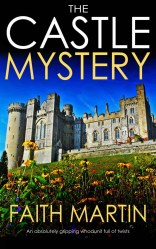
Another week, another debate brewing over precisely how “self-published” a book is when it’s been put out under the auspices of Joffe Books, who at least appear to be a bit more of a traditional setup than has featured in these AiSP before.
Continue reading
#562: Adventures in Self-Publishing – The Leviathan’s Resting Place (2019) by DWaM

Otto Reylands, multi-millionaire, has been receiving threatening letters, as is the wont of multi-millionaires in fiction (and perhaps reality, I have no experience at either end). Letters accusing him of chicanery and deception. Letters accompanied by photos of a dead woman…
Continue reading
#561: Thinking Too Precisely on th’ Event – Clued and Unclued Detective Fiction, or: The Active and the Passive Detective-Reader
 The Invisible Event