Amateur Detective
#681: Minor Felonies – Alfred Hitchcock’s Solve-Them-Yourself Mysteries [ss] (1963): ‘The Mystery of the Seven Wrong Clocks’ by Robert Arthur

Another short conundrum from Alfred Hitchcock’s Solve-Them-Yourself Mysteries (1963), which contains the following being covered this month:
1. ‘The Mystery of the Five Sinister Thefts’
2. ‘The Mystery of the Seven Wrong Clocks’
3. ‘The Mystery of the Three Blind Mice’
4. ‘The Mystery of the Man Who Evaporated’
5. ‘The Mystery of the Four Quarters’
Continue reading
In GAD We Trust – Episode 6: Detective Fiction is Comedy [w’ Alasdair Beckett-King]

It’s long been a tenet of mine that detective fiction and comedy have a great deal in common, and to pursue that this week via the medium of podcasting I’ve enlisted the help of comedian Alasdair Beckett-King.
Continue reading
In GAD We Trust – Episode 5: GAD in the Time of COVID-19 [w’ Brad @ AhSweetMysteryBlog]
As the COVID-19 pandemic rolls into its 348th week, Brad from AhSweetMysteryBlog is here with some salutary advice.
Continue reading
#672: Adventures in Self-Publishing – Murder by Magic (2017) by Paul Tomlinson

Typical, eh? You wait years for a blog to talk about magic, and then suddenly three posts come along at once: the most recent In GAD We Trust episode with John Norris, and two self-published impossible crime stories — one this week, and one next. Sure, that’s stretching the definition of “at once” to an Orwellian degree, but that’s how I apparently roll.
Continue reading
#671: “At this point, everything seems too far-fetched to be taken seriously…” – The Invisible Circle (1996) by Paul Halter [trans. John Pugmire 2014]
A triptych of needs are being met here: firstly a last-minute replacement for the Modern Locked Room Mystery for TomCat I’d intended to write about, secondly the addressing of a Paul Halter book not yet reviewed on this blog, and thirdly some tangential research for next Saturday’s In GAD We Trust episode.
Continue reading
#670: Sleeping Murder (1976) by Agatha Christie


Agatha Christie famously wrote the final novels to feature her two biggest sleuths well ahead of their publication, and where Hercule Poirot’s swansong Curtain (1975) was a joyous return to the heights for a character she had grown weary of, Sleeping Murder (1976) — the last hurrah for Miss Jane Marple, a character you can’t help but feel Christie had a growing respect for as she aged — is…fine. Yes, it had a cogency and precision that At Bertram’s Hotel (1965) and Nemesis (1971) sorely needed, but in all honesty the sound and fury on display here signifies something that doesn’t even add up to a hill o’ beans, if you’ll forgive my mixing of classics.
Continue reading
In GAD We Trust – Episode 4: Magic, Mummery, and Misdirection [w’ John @ Pretty Sinister Books]
Lockdown rolls on, and so does my GAD-focussed podcast, which this time around sees me picking the brains of John Norris who blogs at Pretty Sinister Books and is surely one of the most widely-read members of our GAD coterie.
Continue reading
#667: A Kiss Before Dying (1953) by Ira Levin
In our recent discussion about inverted mysteries, Aidan made Ira Levin’s debut A Kiss Before Dying (1953) sound simply fabulous: the first part of the novel follows a nameless man as he commits a murder, the second part is then concerned with unpicking his identity, and the third is the fallout. Much like Antidote to Venom (1938) by Freeman Wills Crofts, then, you get both an inverted and a traditional detective story, knowing who the killer is and watching characters who aren’t aware of his identity coming to that awareness, with the additional kick of only finding out yourself with about 100 pages remaining in the book.
Continue reading
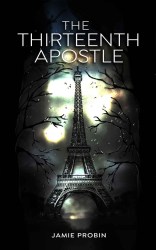
#666: Adventures in Self-Publishing – The Thirteenth Apostle (2020) + ‘The Episode of the Nine Monets’ (2020) by Jamie Probin
 The Invisible Event