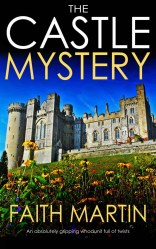
#564: The Men Who Explain Miracles – Episode 10.1: The Impossible Crime Novels of Agatha Christie

With the self-imposed “every two months” deadline for episodes being a little difficult to maintain, it nevertheless gives me great pleasure to present to you today a new episode of our increasingly-occasional podcast The Men Who Explain Miracles.
Continue reading
#563: The Rose in Darkness (1979) by Christianna Brand
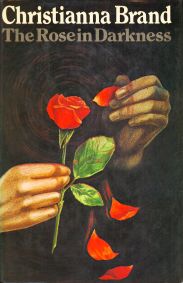


I don’t think I’ve ever disliked the cast of a novel as much as I disliked the core group of The Rose in Darkness (1979) by Christianna Brand. Goddamn, what a bunch of self-centred, self-congratulatory, self-satisfied, smug, pretentious, vacuous, condescending, poseur, low-rent hipster prigs. You say ‘bohemian’, I say ‘unbearable’ — were people really like this in the Seventies? And, because Brand does her usual thing of telling you up front that there’s one victim and one killer, you know that once the body turns up you’re stuck with the rest of them until the end. Good heavens, there’s never a serial killer around when you need one.
Continue reading
#562: Adventures in Self-Publishing – The Leviathan’s Resting Place (2019) by DWaM

Otto Reylands, multi-millionaire, has been receiving threatening letters, as is the wont of multi-millionaires in fiction (and perhaps reality, I have no experience at either end). Letters accusing him of chicanery and deception. Letters accompanied by photos of a dead woman…
Continue reading
#561: Thinking Too Precisely on th’ Event – Clued and Unclued Detective Fiction, or: The Active and the Passive Detective-Reader
August is my summer holiday, and I’m contributing to the slow death of the planet by taking a few breaks here and there, so might not be as hot in the comments as usual. But the nature of what we mean when we say “GAD” has been on my mind for a while, so here goes nothing.
Continue reading
#560: Inspector French’s Greatest Case (1924) by Freeman Wills Crofts
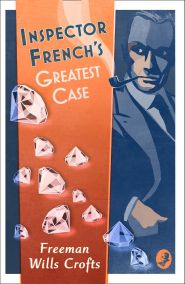
Cometh the hour, cometh the man. After a debut that laid the cornerstone of a new genre and three succeeding works exploring the principles of that genre from varying perspectives, now begins Freeman Wills Crofts’ 30-novel (plus however-many short stories) relationship with Inspector Joseph French. At this stage it’s difficult to judge how French differs from his antecedents Burnley, Lafarge, Tanner, Willis, Vandam, and Ross, but I guess we’ll never know whether French was ever initially conceived as more than a one-book man like those others. The title certainly suggests so, but history shows otherwise.
Continue reading
#559: Little Fictions – Curiosities from Adey: ‘Murder at the Automat’ (1937) and ‘All at Once, No Alice’ (1940) by Cornell Woolrich
The final two stories for this month to be plucked out of the listings in Robert Adey’s reference bible Locked Room Murders (1992) sees a return to the work of Cornell Woolrich, who was discussed on this site only a few weeks ago.
Continue reading
#558: Spoiler Warning – Coming in October: Postern of Fate (1973) by Agatha Christie
With the most recent Spoiler Warning post now out in the wild — it’s on The Moving Toyshop (1946) by Edmund Crispin if you’re interested — it’s time to prepare for the next.
Continue reading
#557: The Gilded Man, a.k.a. Death and the Gilded Man (1942) by Carter Dickson
It had been my intention to review a book by a new-to-me author this week, but thankfully I was able to get to it a little ahead of time and watch disconsolately as, after a bright start, it fizzled out to nothing (man, some Silver Age stuff has a lot to answer for…). Instead, here’s another from John Dickson Carr’s era of tight, house-set puzzles which range from masterpieces (The Reader is Warned (1939), The Seat of the Scornful (1941)) to very good (The Crooked Hinge (1938), The Emperor’s Snuff-Box (1942)) to, er, Seeing is Believing (1941). And with The Gilded Man (1942) being somewhat overlooked, I wasn’t entirely sure what I was going to get…
Continue reading
#556: Little Fictions – Curiosities from Adey: ‘The 51st Sealed Room’, a.k.a. ‘The MWA Murder’ (1951) and ‘The Glass Bridge’ (1957) by Robert Arthur


