-
Subscribe
Subscribed
Have a WordPress.com account? Log in now.
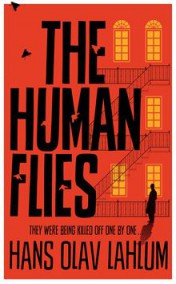 For those of you who lament the decline of the modern detective novel – and we are legion, to be sure – I have three words: Hans Olav Lahlum. The Human Flies, his debut novel, is by no means perfect – it’s in need of a good edit, as there’s a tendency to repeat ad infinitum information gleaned and interpreted elsewhere – but it’s honestly about as close to a classically-motivated, -structured, and -executed novel as I imagine you’ll find in the 21st century. The fact that it has almost the exact same setup as the likes of The Wooden Overcoat, The Black Shrouds and Our First Murder with a killing in a guest-house (here a small apartment block) of which one of the denizens is undoubtedly guilty certainly helps, but Lahlum is also smart enough to build on this base in very classical ways. But for a few dates and key events – it is set in 1968 – this could almost have been written in the late 1940s.
 A quick word from me before the festive craziness starts to wish a very happy, safe, peaceful, and relaxing Christmas to you all. Many thanks for dropping by and getting involved in the few months The Invisible Event has been running – it’s been an absolute joy, and I feel immensely privileged to have had the discussion I’ve had with such passionate, knowledgeable, entertaining, and discerning people as yourselves.
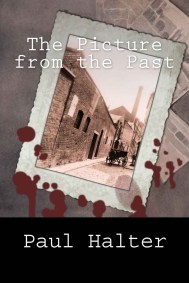 A man seeing an old photograph of an unremarkable street scene on the cover of a book and being struck by an overpowering reaction of uncertain origin doesn’t sound like a promising start to an impossible crime novel. However, it turns out that such an opinion is simply a sign of your lack of inventiveness, as Paul Halter can spin one hell of a tale from just that. Well, okay, not just that, as there’s also the notorious Acid Bath Murderer going around destroying the remains of murder victims by pouring acid on them – and John Braid, our photo-phobic protagonist, is curiously unwilling to tell his young, trusting and rather new wife what he gets up to every day when he leaves the house. And he’s rather keen on not letting his briefcase out of his sight…

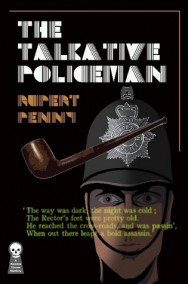 Aaah, Christmas. A time for cheer, goodwill to all men, on-trend ironic jumpers and spending time with the people you love. Look around the crime fiction blogosphere and these loved ones include a tremendous number of murderers, victims, stooges, detectives and classic authors, and so for me the time is ripe for a return to my overriding obsessions: this week it’s Ernest Basil Charles Thornett’s turn as his debut under the guise of Rupert Penny with The Talkative Policeman. And of course it’s a return to impossible crimes after a couple of weeks away with what the synopsis calls a “longer-than-usual impossible mystery,” and since Penny has written a couple of absolute doozys in this vein an extra bt of content is only to be a cause for celebration. Clap hands. Settle in. Let’s go.
 So, from one Australian author last week – the entertainingly bonkers world of Max Afford’s Owl of Darkness – to two this week – the entertainingly bonkers world of the Little Sisters. This is my first foray into the Monthly Challenge over at Past Offences, with the year for December being 1941 and so falling perfectly into my TBR pile, and it’s been a joy to reacquaint myself with these literary ladies after frankly too long away. Shades of my reviews from earlier this year – Pamela Branch’s The Wooden Overcoat and Torrey Chanslor’s Our First Murder – resurface here, with delightful overtones of everyone’s favourite crime-solving couple found in the echoes of Kelley Roos’ The Frightened Stiff, too, as a murder in a boarding house gives way to suspicion, fear, mistrust, confusion, doubt, terror and…laughter. Because as well as being a well-plotted and beautifully light mystery, this is also very, very witty indeed.
