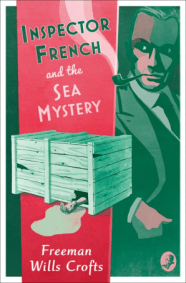
 First thing first: yes, I’m aware that the 2017 Collins Crime Club edition of this novel — for which I am eternally grateful, since it has enabled me to read it in the first place — has been reissued with the title Inspector French and the Sea Mystery. What can I say? I’m a stickler for origins, and so am reviewing it under the original title. My delight at having Crofts back in print is undimmed, and if building an MCU-esque awareness through uniformity in titles helps the books gain popularity and leads to even more Crofts back in print, hell, I’m all for it. And, while we’re on the subject of these new editions, the covers are exquisite — simple, direct, clean, beautifully evocative…a great job.
#284: Lament for a Maker – Logical Fallacies Abound in The Mentalist Season 1, Episodes 1-8 (2008)

I don’t watch much TV. I’m not going to be pompous about it, I just don’t. Recently, however, I came into possession of the complete run — seven seasons, approximately 800 DVDs — of the US show The Mentalist and was intrigued enough to give it a look. If this is new territory to you, it stars Simons Baker as Patrick Jane, an ex-psychic who following a personal tragedy now helps the seemingly-autonomous California Bureau of Investigation with his keen insight into the crimes they are called to solve.
Continue reading
#283: Trifecta Perfecta – A Trio of Locked Room Riddles for Younger Readers in Mystery & Mayhem [ss] (2016)
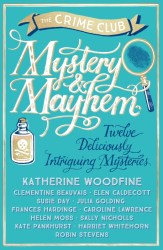
Immediately prior to interviewing Robin Stevens for The Men Who Explain Miracles, I discovered that she had written a short story for 2016 YA anthology Mystery & Mayhem. And then I discovered that the first three stories in the collection were impossible crimes and, well, you can guess what happened next…
Continue reading
#282: Sinners in Paradise (1946) by Max Afford
 Do you find yourself lulled into an erudite hebetude by too many stories blethering on instead of simply getting down to the plot and relevant incidents? Well, Max Afford’s fifth novel runs to 116 pages and probably doesn’t contain a single one that does not in some way contribute to the interpretations or solutions of the central conundrums. A sea-faring mystery in the Death on the Nile (1937) school, a small group of characters are gathered on a liner heading out from Sydney, Australia to some islands because…reasons…when mysterious phone calls, mysterious passengers, mysterious relationships, and mysterious pasts all converge for a cavalcade of enigmas wrapped in queries and shrouded in deepest sinisterlyness.
Continue reading
#281: “Twelve different solutions to everything, most of them not very probable…” – in Partial Defence of Hallowe’en Party (1969) by Agatha Christie
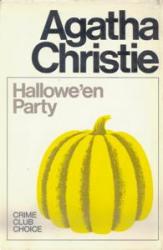
If you came to me at this precise moment in time and expressed both an ignorance of and an interest in the work of Agatha Christie, these are the ten books I’d recommend picking one to start from (presented chronologically, let’s not play Favourites):
Continue reading
#280: The Man Who Wasn’t There – An Unseen Side to Sexton Blake in Model for Murder (1952) by Derek Howe Smith
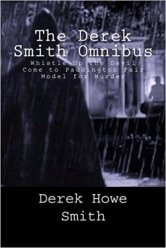
A year before the publication of locked room masterpiece Whistle Up the Devil (1953), and possibly just to get his eye in for the writing of a detective story, Derek Smith wrote a story featuring the popular pulp character Sexton Blake. It was never published, and only came to public awareness when John Pugmire compiled the Derek Smith Omnibus in 2014 which comprised Smith’s two novels, the Blake novella Model for Murder, and a short story entitled ‘The Imperfect Crime’.
Continue reading
#279: The Devil and the C.I.D. (1938) by E.C.R. Lorac
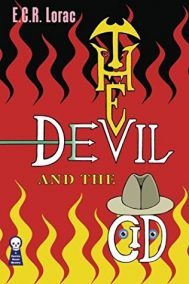 My first foray into the work of E.C.R. Lorac was long on character and setting but short on plot. This time there’s plenty of everything to go around, and I’m now very intrigued by what else Edith Caroline Rivett may have cooked up in the realms of GAD writing — am I right in saying that it was mentioned at the Bodies from the Library conference that one of her books will be a future British Library Crime Classic? On this evidence, and trusting those fine folk to continue their habit of making generally good selections, that could be something worth anticipating. She’s not quite Agatha Christie yet, but if you’d read only Destination Unknown and Third Girl then even Agatha Christie wouldn’t be Agatha Christie…
Continue reading
#278: Six Were Present – A Collaboration of Titans in ‘The Scoop’ (1931)

Most fans of Golden Age detective fiction (GAD) will be aware of the portmanteau novel The Floating Admiral (1931) in which many luminaries of the form each contributed a chapter in turn to a murder mystery plot (pity poor Anthony Berkeley, who had to unravel all the clues and events to provide a coherent solution in the final chapter). I’m imagining that slightly — but only slightly — fewer of you will be aware of the precursors to this novel written in the preceding year, where the same sort of approach was taken for two mysteries to be broadcast on radio.
Continue reading
#277: The Temple of the Great Jupiter – The Three Investigators March in The Secret of Terror Castle (1964) by Robert Arthur
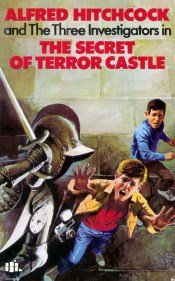
 Erle Stanley Gardner, in my view one of the
