Why I love…

#120: On the Many Wonderful Faces of Dr. John H. Watson, MD – Part 1 of 2
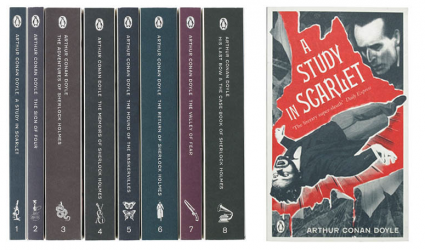 Lately I’ve read an unusually high concentration of Holmes pastiches — Caleb Carr’s The Italian Secretary (not good), Stephen King’s ‘A Doctor’s Case’ (not terrible), Colin Dexter’s ‘A Case of Mis-Identity’ (extremely good), Michael Kurland’s The Infernal Device (loadsa fun), Steve Hockensmith’s Holmes on the Range (fabulous) and a superb piece of unpublished fan fiction sent to me via email — and it’s made me realise that while Watson, and specifically the Watsonian voice, is vital in undertaking Holmes, no-one can quite agree what Watson is, how he should be written, and this makes him far and away the more interesting of the two men when it comes to analysis.
Continue reading
#102: Paul Halter Day – II: The Impossibility of More Impossibilities

Declaring that the detective novel was the only form of literature that put the reader to work, [S.S. van Dine] argued that “a deduction game emphasising fair play within a limited setting” would be the story structure with the best potential to result in masterpiece mystery stories […] But when the elements of the game are too severely limited and the building materials are all the same, only the first few builders will get all the glory and there will be an over-abundance of similar novels…
—Soji Shimada, in his introduction to The Moai Island Puzzle
Continue reading
#98: One week until Paul Halter Day!
I have absolutely no doubt that Kate, Rich, Puzzle Doctor, and many others will do jobs far superior to anything I ever could in summarising yesterday’s hugely enjoyable Bodies from the Library and so I’ll leave that to them.
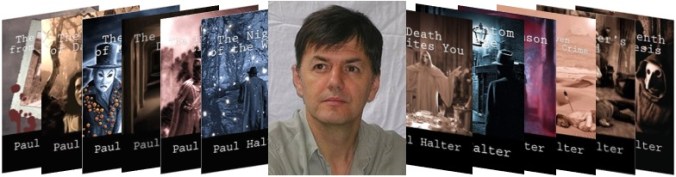
Instead, I’d like to remind anyone still considering it that next Sunday will be Paul Halter’s 60th birthday and so Paul Halter Day will come into effect. If you’re posting anything Paul Halter-related on that day, put the link in the comments of this post and I’ll do a wrap-up later in the evening.
My thanks in advance to anyone getting involved, really looking forward to what people come up with…!
#95: Character v Plot 2 – Atmosphere v Redundancy
As you’re no doubt aware, the internet is currently ablaze with my self-inflicted #9booksin9days challenge on Twitter in which, well, I’m reading 9 books over the nine days of my half term break. It’s been fun and slightly intense – I’ve read books in a single day before, even on consecutive days, but never nine in a row – and has caused me to reflect upon my post from last week on the topic of the character/plot threshold in detective fiction (which has already been reflected upon by Brad at AhSweetMysteryBlog). In light of this, I wanted to explore it a bit deeper. You are, of course, invited to come along with me.
Continue reading
#92: Character v Plot
 So here’s a starting point that doesn’t belong on a blog about crime fiction between 1920 and 1959 with frequent diversions into apparent impossibilities: I freakin’ love Batman. The whole Bruce Wayne/Batman duality in almost any form is an absolute joy to me – I’m not going to geek out here over the many, many years I’ve spent reading the comics nor the sundry disappointments of the various cinematic fusterclucks (I’m looking daggers at you, Schumacher…Burton, you’re borderline), and shall instead make the following observation: the second I heard Batman v Superman: Dawn of Justice was announced, I’d practically bought my ticket on the fact of it being a new Batman incarnation.
Continue reading
#65: On the Loss of the Rue Morgue Press – an open love letter
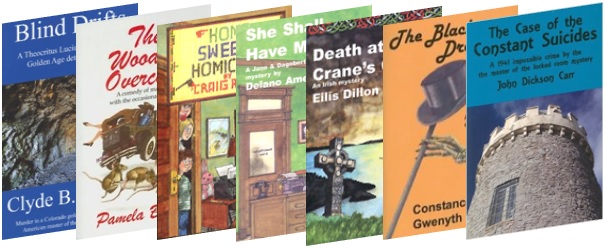
A little while ago, via TomCat over at Beneath the Stains of Time, I learned to my immense sadness that the Rue Morgue Press has officially shut down and will no longer be publishing books. If you don’t know RMP, then you’ve been missing out: set up by Tom and Enid Schantz, they have kept in print the kinds of classic detective novels that give the Golden Age such a deserved reputation while big-hitters like Agatha Christie and Dorothy L. Sayers hog all the limelight. The cessation of their endeavours is a tremendous loss, and what follows is an attempt to explain what they’ve meant to me as a reader for several years now.


 The Invisible Event