Reviews


#566: The Terror in the Fog (1938) by Norman Berrow


Bill Hamilton, having previously chased hashish smugglers and a werewolf (separately) around Spain, now finds himself in his homestead of Gibraltar contending with a “London particular” fog, three murdered men hanging from the rafters of an abandoned storehouse, and a mysteriously faceless nun intent on causing all manner of havoc. Yes, The Terror in the Fog (1938) is quite unmistakably a Norman Berrow novel — this mixture of superstition and cold, hard murder is Berrow’s bailiwick, and here are glimpses of the very fine novels he would go on to produce — and from early on it feels by far the most confident of his career to this point.
Continue reading
#563: The Rose in Darkness (1979) by Christianna Brand
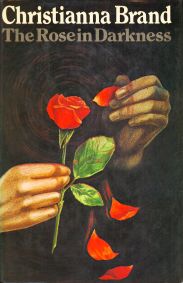
I don’t think I’ve ever disliked the cast of a novel as much as I disliked the core group of The Rose in Darkness (1979) by Christianna Brand. Goddamn, what a bunch of self-centred, self-congratulatory, self-satisfied, smug, pretentious, vacuous, condescending, poseur, low-rent hipster prigs. You say ‘bohemian’, I say ‘unbearable’ — were people really like this in the Seventies? And, because Brand does her usual thing of telling you up front that there’s one victim and one killer, you know that once the body turns up you’re stuck with the rest of them until the end. Good heavens, there’s never a serial killer around when you need one.
Continue reading
#560: Inspector French’s Greatest Case (1924) by Freeman Wills Crofts
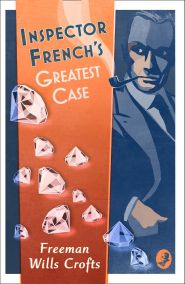
Cometh the hour, cometh the man. After a debut that laid the cornerstone of a new genre and three succeeding works exploring the principles of that genre from varying perspectives, now begins Freeman Wills Crofts’ 30-novel (plus however-many short stories) relationship with Inspector Joseph French. At this stage it’s difficult to judge how French differs from his antecedents Burnley, Lafarge, Tanner, Willis, Vandam, and Ross, but I guess we’ll never know whether French was ever initially conceived as more than a one-book man like those others. The title certainly suggests so, but history shows otherwise.
Continue reading
#557: The Gilded Man, a.k.a. Death and the Gilded Man (1942) by Carter Dickson
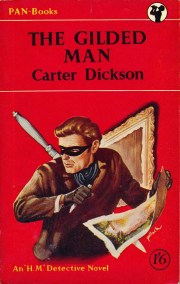
It had been my intention to review a book by a new-to-me author this week, but thankfully I was able to get to it a little ahead of time and watch disconsolately as, after a bright start, it fizzled out to nothing (man, some Silver Age stuff has a lot to answer for…). Instead, here’s another from John Dickson Carr’s era of tight, house-set puzzles which range from masterpieces (The Reader is Warned (1939), The Seat of the Scornful (1941)) to very good (The Crooked Hinge (1938), The Emperor’s Snuff-Box (1942)) to, er, Seeing is Believing (1941). And with The Gilded Man (1942) being somewhat overlooked, I wasn’t entirely sure what I was going to get…
Continue reading
#555: Oh, What a Tangled Web We Weave in The Mystery of the Silver Spider (1967) by Robert Arthur
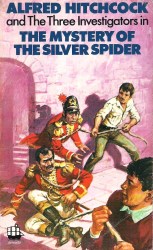
Thus far in my reading of the Alfred Hitchcock and the Three Investigators books, the clear pattern of The Odd-Numbered Ones Are the Good Ones has emerged…so how did this, the eighth title, fare?
Continue reading
#554: The Case of the Solid Key (1941) by Anthony Boucher
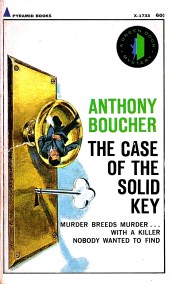
Several years ago, discovering that the impossible crime novel was a thing, I read Anthony Boucher’s Nine Times Nine (1940), originally published as by H.H. Holmes, and loved it. I then discovered TomCat’s list of favourite impossible crime novels and was intrigued by the fact that, eschewing the accepted classic that Nine Times Nine is, Boucher’s later, less discussed The Case of the Solid Key (1941) was included there instead (TC, it must be said, is something of an iconoclast…). More Boucher followed, some of it disappointing, and last year I finally ran to ground a copy of TCotSK in a secondhand bookshop in Philadelphia and — at long, long last — here we go.
Continue reading
#551: The White Cockatoo (1934) by M.G. Eberhart
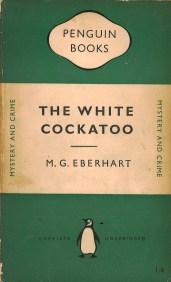
Sometimes quality and taste do not overlap. For instance, I have every reason to believe that The White Cockatoo (1934) by Mignon G. Eberhart is a very good book, but given that it veers far more heavily into the suspense/HIBK/EIRF schools of writing rather than anything qualifing as detection it’s not especially to my taste. It’s well- (if perhaps a little over-) written, has some good atmosphere, and introduces in the eponymous bird Pucci an unusual twist that enlivens the eventual resolution…but amidst all the mysterious happenings — sinister hotelier, sinister guests, sinister wind, sinister banging shutters, sinister everything — it’s just a bit too bland for my palate.
Continue reading
#548: The Seventh Guest (1935) by Gaston Boca [trans. John Pugmire 2018]

The recent, very exciting publication of the brand new Paul Halter novel The Gold Watch (2019, tr. 2019) served to remind me that I still hadn’t read Locked Room International’s previous publication, a translation of Les Invités de Minuit (1935) by Gaston Boca. This is by my reckoning the sixteenth title from the Roland Lacourbe-curated list of 99 excellent impossible crime stories that John Pugmire has brought into English, and his tireless promotion of these books across the language barrier is a continued source of joy for those of us who lament the dearth of great impossible crime fiction being written these days. Pugmire always has something up his sleeve.
Continue reading
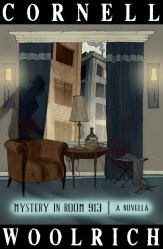
#545: The Case of the Inconstant Suicides – Mystery in Room 913, a.k.a. The Room with Something Wrong (1938) by Cornell Woolrich
 The Invisible Event