Reviews
#581: The Wrong Letter (1926) by Walter S. Masterman
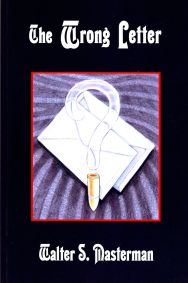


I very nearly paid a king’s ransom for a secondhand copy of Walter S. Masterman’s debut The Wrong Letter (1926) a couple of years ago, since it was rare as rocking-horse teeth (wait, those are not rare…) and featured on Roland Lacourbe’s “100 Books for a Locked Room Library” list (or, well, the supplemental list of fourteen supposedly excellent impossible crime novels for which there were no French translations, at least). Then, in 2018, Ramble House made it easily available for much more sensible money, and here we are. More power to their elbow, frankly, as this is the strongest Masterman I’ve read, and has encouraged me to not write him off just yet.
Continue reading
#580: Minor Felonies – Spaced Out (2016) by Stuart Gibbs
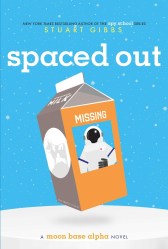
Space Case (2014), the opening volume in Stuart Gibbs’ Moon Base Alpha trilogy, did a very good job of marrying some intelligent scientific speculation with an appealing juvenile detective and a decent whodunnit plot, and follow-up Spaced Out (2016) is even better again.
Continue reading
#578: She Died a Lady (1943) by Carter Dickson
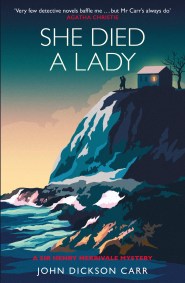
Firstly, good heavens the excitement of posting a John Dickson Carr review without then tagging it OOP — Polygon Books have Hag’s Nook (1933), The Case of the Constant Suicides (1941), and She Died a Lady (1943) in their stable, and the British Library and Otto Penzler have added more, with more to come. And after last week’s brilliant and baffling no-footprints murder in a lonely corner of England, and with my broadly chronological reading of Carr’s work bringing She Died a Lady back into my orbit, the stars seemed to be aligning on a reassessment of this, probably the most consistent contender for Best Carr Novel of All Time.
Continue reading
#577: Minor Felonies – The Mystery of the Spiteful Letters (1946) by Enid Blyton
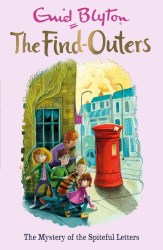
In the most recent episode of our podcast, I mentioned how Agatha Christie’s The Moving Finger (1942) was the book which made me appreciate how threatening a poison pen campaign could actually be. And four years after Christie used the conceit to drive a town mad, surprise Crime Writers’ Association member Enid Blyton made it the background for some childhood japes. What fun!
Continue reading
#576: A Little Help for My Friends – Finding a Modern Locked Room Mystery for TomCat Attempt #12: Endgame (2019) by Daniel Cole
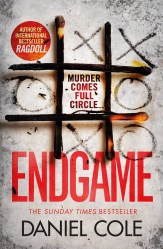
I started, but did not finish, Daniel Cole’s debut novel Ragdoll (2017), which seemed to me a gruesome hook followed by a lot of meandering prose. Endgame (2019), his third novel, promised me a dead body in a locked room and so, since I’m reluctant to write off anyone after just one book, here we are.
Continue reading
#575: The Gold Watch (2019) by Paul Halter [trans. John Pugmire 2019]
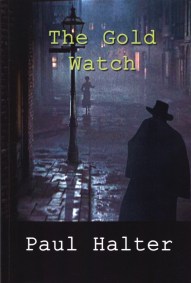
Similar to how Alfred Hitchcock’s two version of The Man Who Knew Too Much (1934/1956) use the same core ideas but differ in details, the motifs Paul Halter returns to in The Gold Watch (2019, tr. 2019) — the dual time period narratives of The Picture from the Past (1995, tr. 2014), a baffling no footprints murder at an isolated house a la The Lord of Misrule (1994, tr. 2006), the invocation of The King in Yellow from ‘The Yellow Book’ (2017, tr. 2017) — there’s no doubt this is a very different style of story simply using familiar ideas to very new ends. Strange to say this of a Frenchman, but this is perhaps the outright Frenchest work of his yet translated.
Continue reading
#574: Minor Felonies – High-Rise Mystery (2019) by Sharna Jackson
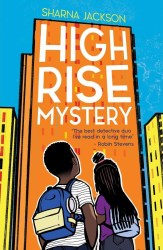
Right, let’s get back into blogging things. This week, three very different novels published this year, beginning with High-Rise Mystery (2019), the debut fictional work of Sharna Jackson.
Continue reading
#573: Lamentings Heard i’th’Air in The Mystery of the Screaming Clock (1968) by Robert Arthur

 The Invisible Event