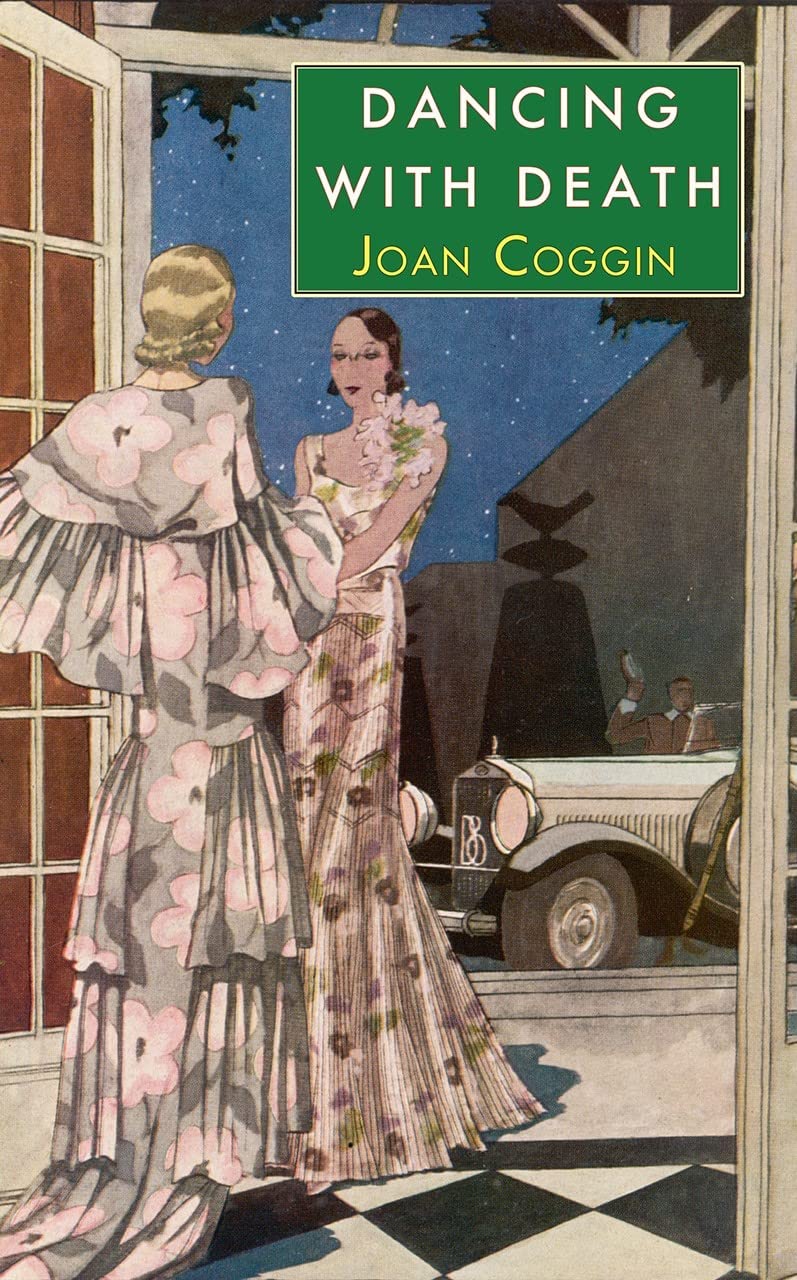
#1046: Dancing with Death (1947) by Joan Coggin

Dancing with Death

star filledstar filledstar filledstar filledstars
As someone who has recently found more joy in certain books upon rereading them, I appreciate the many ways context can affect how we respond to a book when we encounter it. And so when I say that I read Dancing with Death (1947) by Joan Coggin at the right time, I suppose it is to acknowledge that I was fortunate enough to be in the mood to appreciate its many subtle touches which might, at any other time, have passed me be entirely. It’s very much not my usual kind of thing, but a break from the norm is often encouraged and, in this case, turned out very well indeed. One is left to rue the fact that Coggin wrote only four books, that those books are hard to find, and that she spoils the solutions of two of them in the first chapter here.
Continue reading

#1043: Helen Vardon’s Confession (1922) by R. Austin Freeman

Helen Vardon's Confession

star filledstar filledstarsstarsstars
I’ll be honest, I’ve been kind of dreading this. A glance across the spines of the Dr. John Thorndyke novels and short story collections by R. Austin Freeman reveals Helen Vardon’s Confession (1922) to be his longest book by a factor of about 50%, yet Nick Fuller — who directed me so some excellent Thorndyke novels when I was new to author and character both — considers it perhaps Freeman’s worst offering. And having now read it, I can see its many problems, not least of which is a short story’s worth of criminous endeavour hiding in a 130,000 word novel that takes in too many loose ideas to warrant its tedious length. This was…not fun to read.

Continue reading

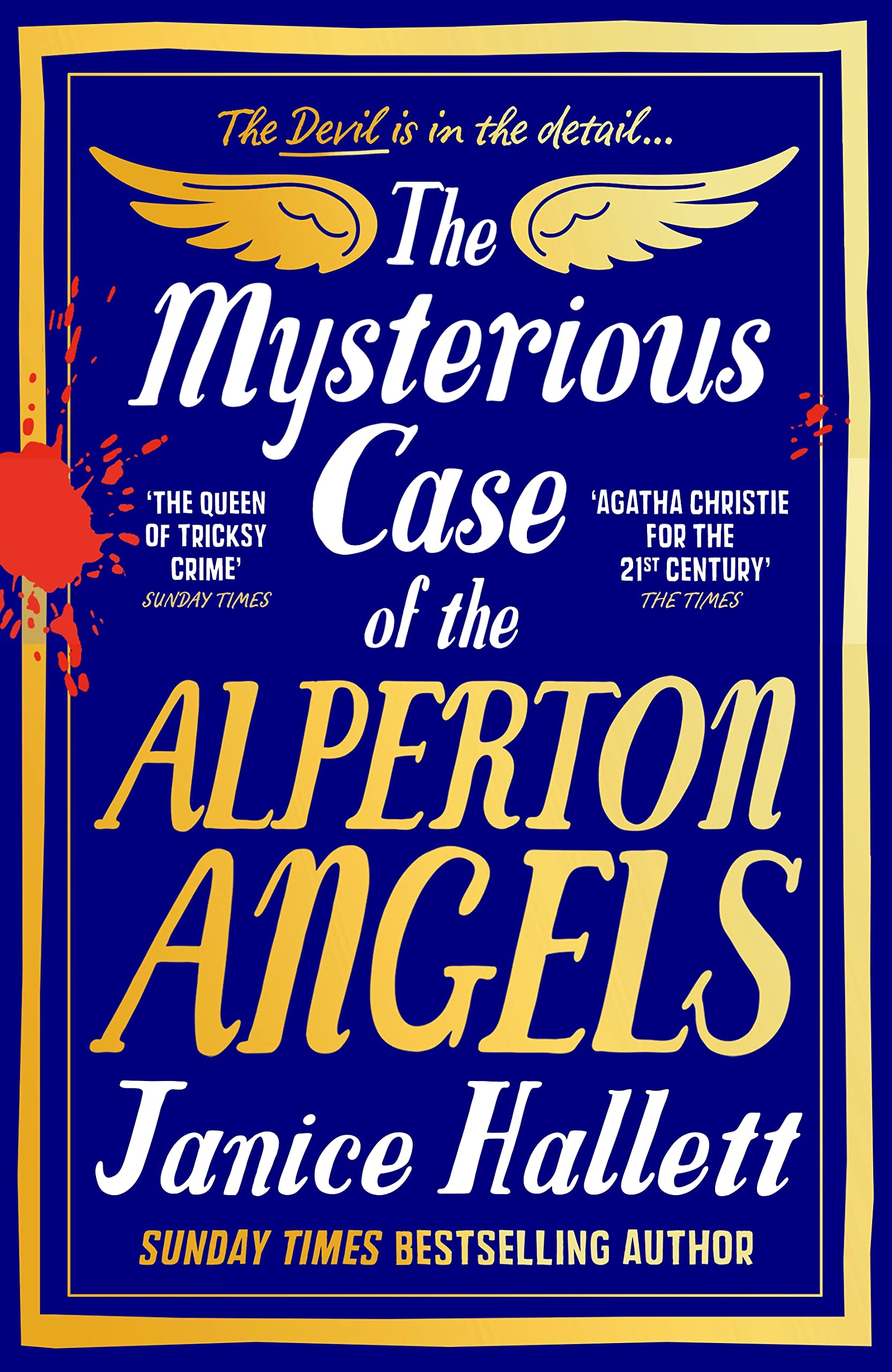
#1040: The Mysterious Case of the Alperton Angels (2023) by Janice Hallett

Alperton Angels

star filledstar filledstar filledstar filledstars
Belial.  Behemoth.  Beelzebub.  Asmodeus.  Satanas.  Lucifer.  The Antichrist has had many names in many cultures, and taken many forms, such as 18 years ago when a young woman gave birth to the Prince of Darkness. Thankfully, she was identified by a small group of angels who had taken human form and who knew that the baby had to be killed during a particular cosmic alignment in order to stop it simply being reborn over and over. What happened to that young woman, and to the angels who saved her, has been the subject of intense speculation ever since, and now true crime writer Amanda Bailey is going to dig into the case of the Alperton Angels and get to the bottom of all the nonsense. Because it was all nonsense. Right?

Continue reading

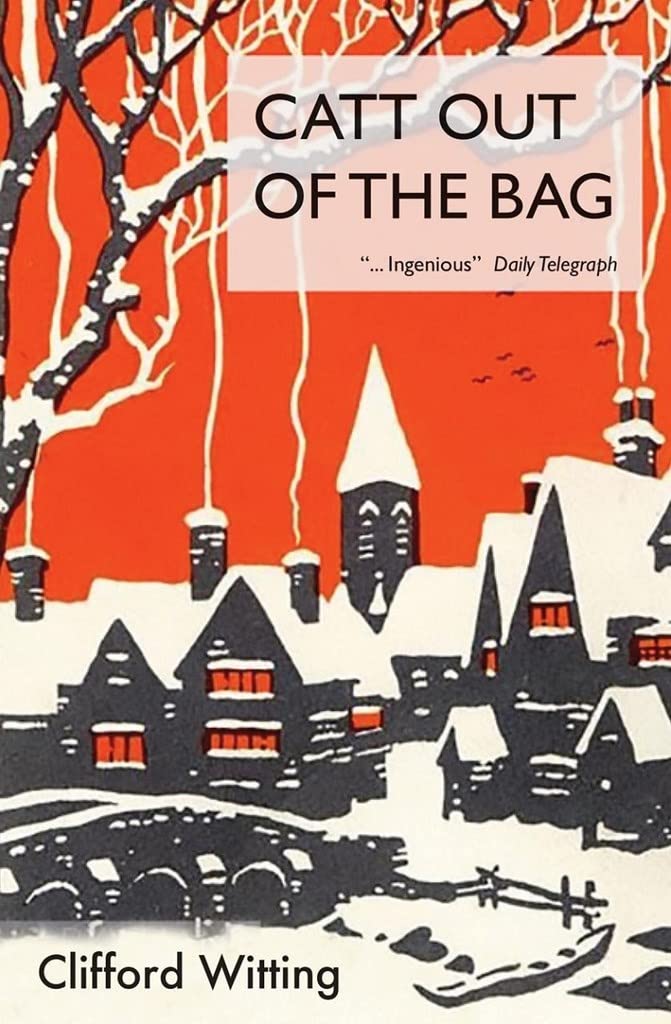
#1037: Catt Out of the Bag (1939) by Clifford Witting

Catt Out of the Bag

star filledstar filledstar filledstar filledstars
On the evening of 21st December, a group of carollers — or “waits”, a turn of phrase that was new to me — organised by the formidable Mrs. de Frayne are stopping and singing at prime spots in the small town of Paulsfield while collectors go door-to-door to raise money for the local hospital. Already struggling to keep to their strict timetable, things are frustrated further when Mr. Vavasour, one of the collectors, does not return from his allocated stretch of road, and so the party moves on without him, assuming that he has gone home. And later that evening, Mrs. Vavasour phones the De Fraynes to enquire after her husband, worried because he has not yet come home from the carolling…

Continue reading

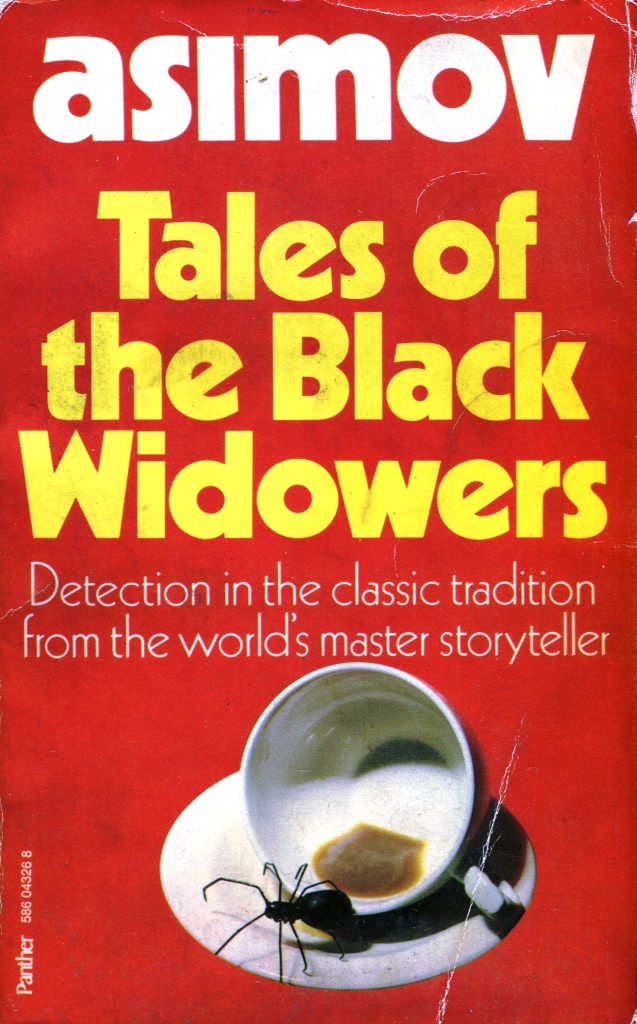
#1035: “Our guest has a problem and I direct him to favour us with it.” – Tales of the Black Widowers [ss] (1974) by Isaac Asimov

“Twelve mystery masterpieces by the maestro” promises the back cover of Tales of the Black Widowers (1974), the first collection featuring Isaac Asimov’s puzzle-solving dining club, and given that Asimov says in the introduction that his “detective ideal is Hercule Poirot and his little gray cells” it seems like it might not be an empty promise…

Continue reading

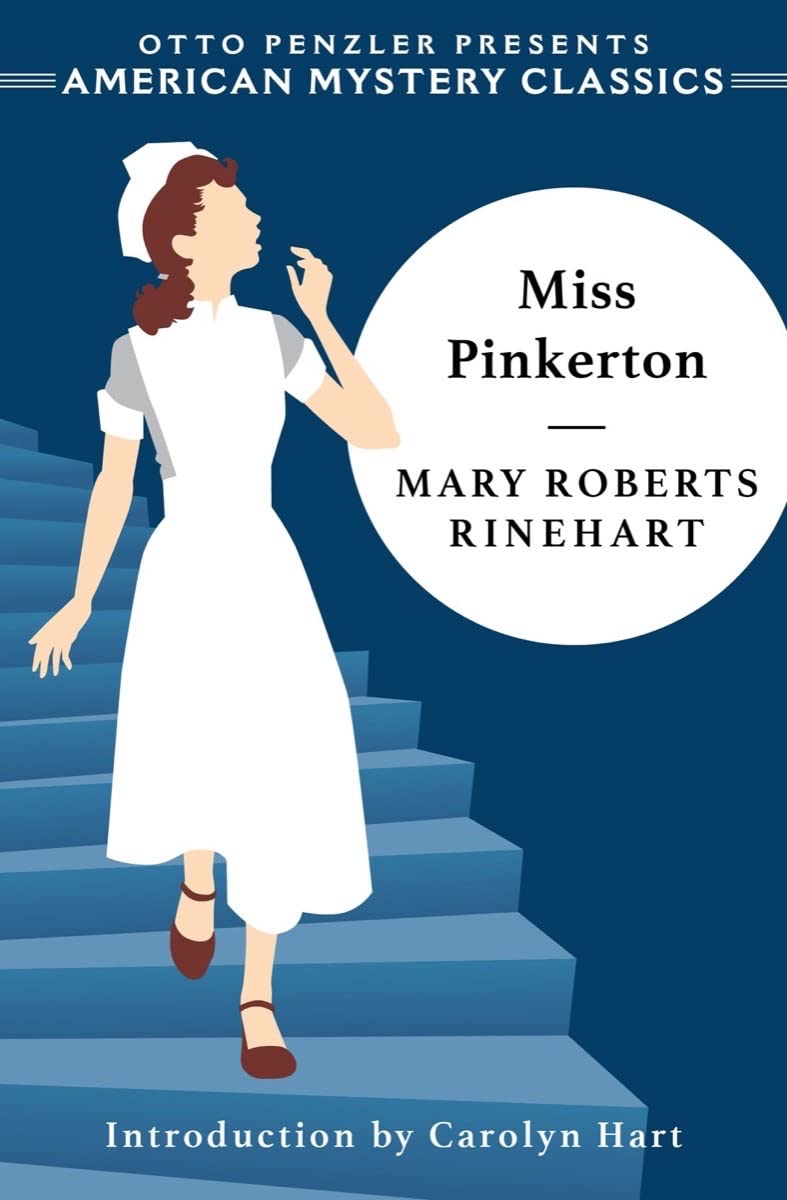
#1034: Miss Pinkerton, a.k.a. The Double Alibi (1932) by Mary Roberts Rinehart

Miss Pinkerton

star filledstarsstarsstarsstars
I’ve probably, at some point in this blog, been less invested in the outcome of a mystery than I was while reading Miss Pinkerton (1932) by Mary Roberts Rinehart, but rarely have I dreaded the oncoming pages as much as I did here. When the second death occurs at the two-thirds point, I felt my heart sink when I realised that approximately 486,000 pages of this 237-page novel remained and that, as much as I admired the pluck of Miss Hilda Adams, a private nurse called in by Inspector Patton to keep an eye on suspects in a murder case whenever the police aren’t able to be quite so free in their investigations, I just didn’t care any more and probably never had.

Continue reading

#1031: Tragedy at Ravensthorpe (1927) by J.J. Connington

Tragedy at Ravensthorpe

star filledstar filledstar filledstar filledstars
The second novel to feature Chief Constable Sir Clinton Driffield, Tragedy at Ravensthorpe (1927) joins the likes of The Wintringham Mystery (1927) by Anthony Berkeley in a subgenre I like to think of as Frustrated Japes: someone plans something as a bit of a lark — here the theft of some valuable medallions during a masquerade ball at the eponymous country pile — only for another party to interrupt the undertaking and turn things in an unexpectedly more sinister direction. Thankfully, what results is another zesty, energetic, well-clued mystery from Connington’s pen, albeit one which won’t linger in the memory.

Continue reading