Another Choose Your Own Adventure-style mystery from an established novelist, Murder at Christmas (2025) by G.B. Rubin being the work of Gareth Rubin, who recently published Sherlock Holmes novel Holmes and Moriarty (2024). And this one’s Christmas-themed! So let’s dive in…
Continue readingReviews
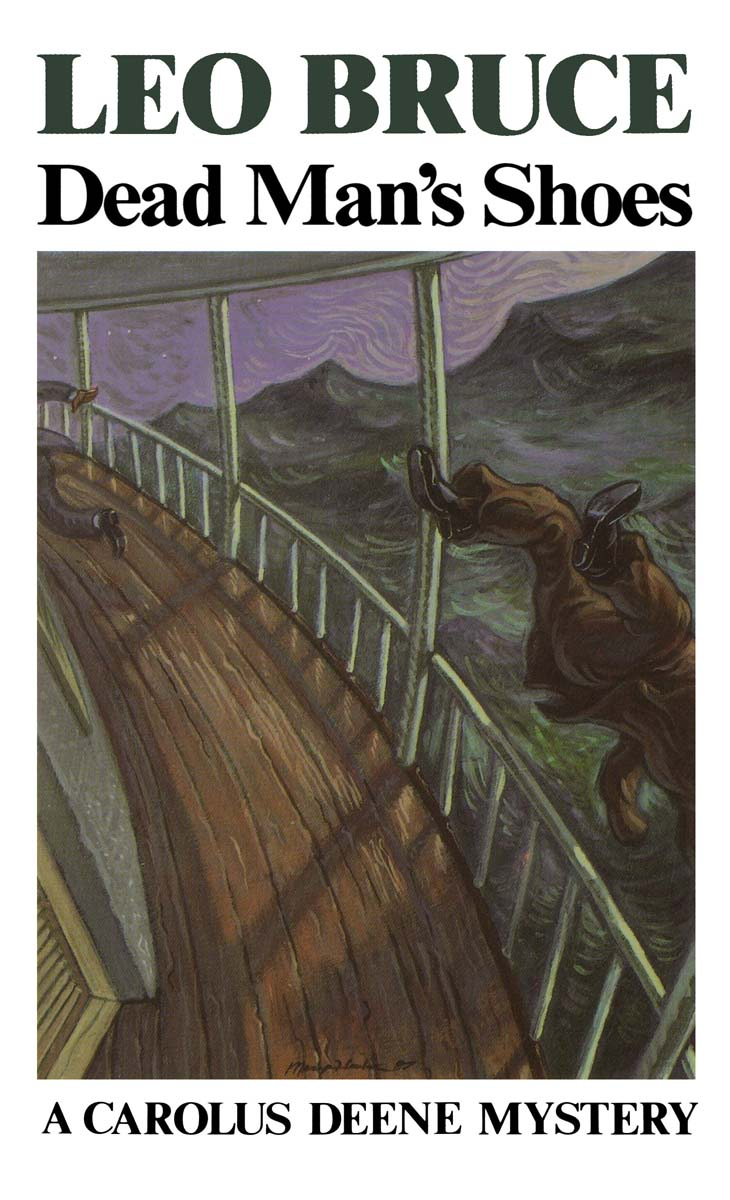
#1386: Case with No Conclusion (1939) by Leo Bruce
![]()
![]()
![]()
![]()
![]()
Another man accused of murder, another family member going to an amateur detective to prove his innocence. The classics don’t wear, do they? This time it is Stewart Ferrers accused of murdering local GP Dr. Benson late at night in his own home, and Stewart’s brother Peter who goes to ex-Sergeant Wm. Beef, now set up as a private enquiry agent, in the hope that evidence can be uncovered to cast doubt on the conviction. And along for the ride is Beef’s faithful-if-frustrated chronicler Townsend (now called Lionel despite calling himself Stuart at the end of the previous novel…) who hopes that something interesting might come of this to put him on equal footing with other novelists who relate the cases of their famous detectives.
#1383: The Man Who Died Seven Times (1995) by Yasuhiko Nishizawa [trans. Jesse Kirkwood 2025]
![]()
![]()
![]()
![]()
![]()
For as long as he can remember, 16 year-old Hisataro Oba has found himself randomly, several times a month, caught in a time loop he dubs The Trap: waking up on the same day nine times in a row, with only the events of the final day of the loop becoming the canon version of the day for everyone else in existence. Having realised this, and in part as a coping mechanism, he has been able to exploit The Trap — cheat on a test, win a bet, etc. — but now things are different. Because now a murder has been committed and he would like, if possible, to avert it in the ninth and final version so that it does not become the reality for everyone else.
#1381: A Little Help for My Friends – Finding a Modern Locked Room Mystery for TomCat Attempt #29: Murder Most Haunted (2025) by Emma Mason
One haunted house. One impossible crime. One killer weekend. Thus runs the promise on the front cover of Murder Most Haunted (2025), the debut novel of Emma Mason, and that was enough to get in on my TBR as a modern example of the impossible crime that we’re no longer pretending I read just for TomCat‘s sake. So, did it deliver on those promises?
Continue reading#1380: The Noose (1930) by Philip MacDonald
![]()
![]()
![]()
![]()
![]()
In five days, Daniel Bronson will be hanged for the murder of regional ne’er-do-well Blackatter, found shot through the back of the head with the insensible, gun-clutching Bronson nearby. And while “no man so near the gallows can be called alive” his wife Selma refuses to think of him as dead yet and approaches Anthony Gethryn to see if he can, “months after the thing was done, when even witnesses’ memories are getting hazy and any scent there might’ve been at the time’s vanished long ago”, find the evidence that would clear Bronson of the crime which Selma simply does not believe he committed. And, well, how could Colonel Gethryn ever live with himself if he didn’t at least try?
#1378: “We let them choose as they wish…” – Can You Solve the Murder? (2025) by Antony Johnston
Intrigued by the apparent swathe — maybe I’m exaggerating it in my mind, but there do seem to be a lot of them at present — of Choose Your Own Adventure-style mystery books coming into the market in recent months, I undertook to try one. And having found Antony Johnston’s The Dog-Sitter Detective Plays Dead (2025) an easy read, it is to his contribution, Can You Solve the Murder? (2025), that I turn.
Continue reading#1377: Having Wonderful Crime (1943) by Craig Rice
![]()
![]()
![]()
![]()
![]()
Having written six fast-paced and energetically witty mysteries featuring Jake and Helene Justus and their lawyer friend John J. Malone, Craig Rice decided that 1942 would be a year of experimentation. Some worked, some was hard work, and some was probably successful if you like that kind of thing. Thankfully, 1943 saw her return to Malone & Co., though the ghost of experimentation wasn’t completely laid and a little of the need to innovate — no bad attitude, not if you see yourself in writing for a while — carried through to Having Wonderful Crime (1943). So Jake, Helene, and Malone decamp to New York rather than Chicago, but murders happen in the Big Apple too, and before long we’re caught up in one.
#1375: “I find it difficult to explain.” – The Clue of the New Pin (1923) by Edgar Wallace
I have, in my limited exposure to his work, come to quite enjoy the thrillerish tendencies of Horatio Edgar Wallace. You don’t come to him for solid plotting, intelligent detection, or subtle clewing, but there’s a brand of creativity he brings to his wild schemes that is difficult to find elsewhere.
Continue reading#1374: The Affair at Little Wokeham, a.k.a. Double Tragedy (1943) by Freeman Wills Crofts
![]()
![]()
![]()
![]()
![]()
The Affair at Little Wokeham, a.k.a. Double Tragedy (1943), was the last of Freeman Wills Crofts’s books to be recently reprinted by Harper Collins in these lovely paperback editions. Fear not, I have acquired the rest of Crofts’s oeuvre — though if you have an unread House of Stratus edition of Death of a Train (1946), do get in touch — and shall indeed complete the Full Crofts here on The Invisible Event, but let’s spare a thought for what might have been: when the Inspector French TV show seemed a likely prospect, we could have had all of Crofts’s novels for grown-ups in bookshops in the 21st century. Alas, Utopia must remain a dream.
#1372: “I’ll play along!” – You Are the Detective: The Creeping Hand Murder (2025) by Maureen Johnson & Jay Cooper
Having previously poked their tongue into their cheeks with Your Guide to Not Getting Murdered in a Quaint English Village (2021), Maureen Johnson and illustrator Jay Cooper turn their minds to committing crimes rather than evading them with The Creeping Hand Murder (2025). I have Brad to thank for bringing this to my attention, and, having recently held forth on the hiding of clues, it seemed the perfect opportunity to look at the inevitable use of the visual to communicate that which would be far more obvious, or difficult to convey subtly, in prose.
Continue reading