#1115: The Wheel Spins, a.k.a. The Lady Vanishes (1936) by Ethel Lina White

Wheel Spins

star filledstar filledstar filledstar filledstars
Young Iris Carr is travelling back to England alone when she is befriended by governess Winifred Froy; taking tea in the dining car of their train, they return to their carriage, where Iris falls asleep. Upon awakening, she finds Miss Froy has disappeared and, more confusingly, that all the forriners sharing the compartment insist there never was such a lady to begin with. Might the attack of sunstroke Iris suffered on the platform before boarding be to blame, or might there be a more sinister explanation? Thus The Wheel Spins (1936) walks in the same furrow as a good many suspense stories, not least Phantom Lady (1942) by Cornell Woolrich and the Jodie Foster-starring Flightplan (2005).

Continue reading

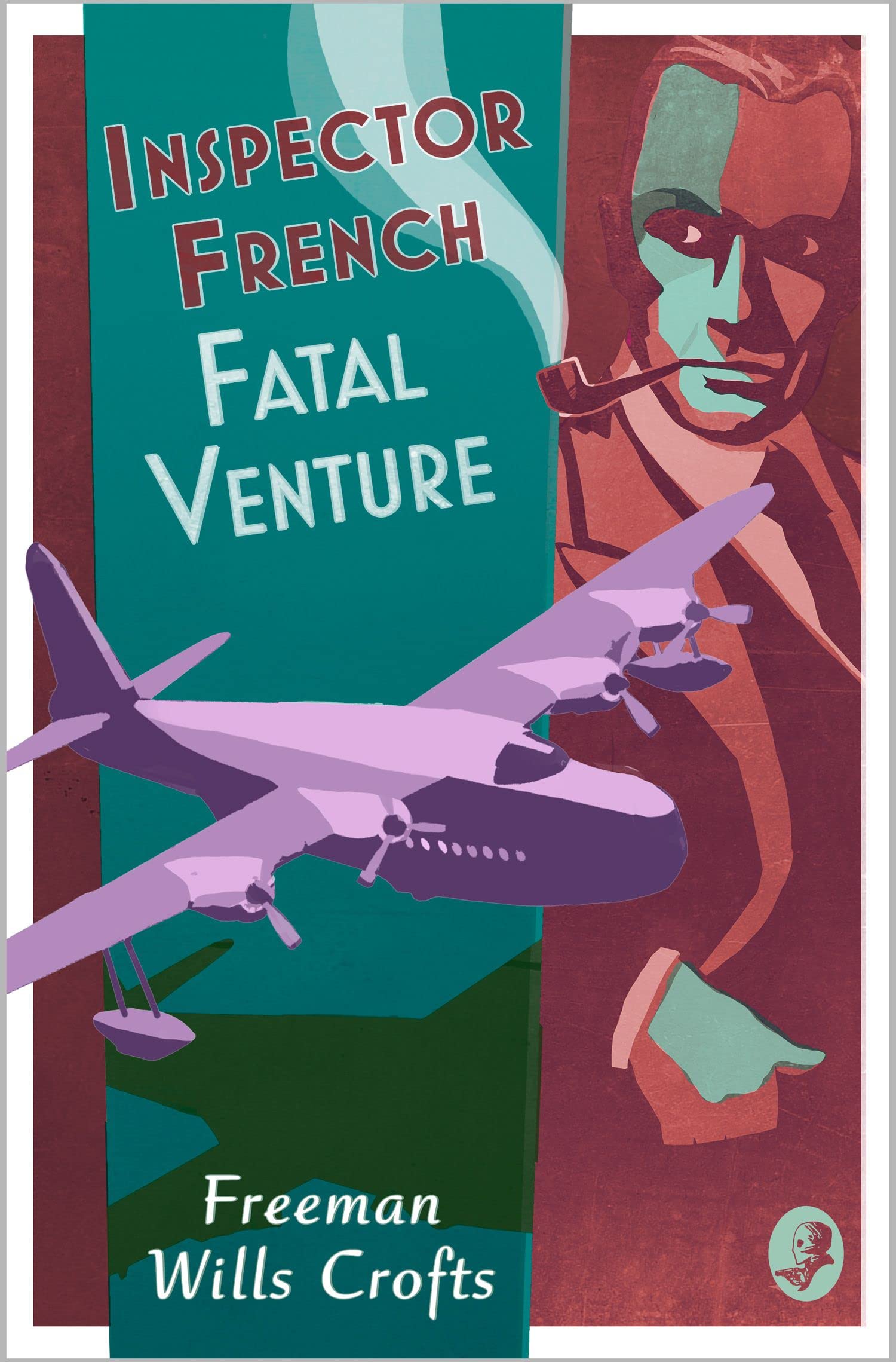
#1112: Fatal Venture, a.k.a. Tragedy in the Hollow (1939) by Freeman Wills Crofts

Fatal Venture

star filledstar filledstar filledstar filledstars
Fatal Venture (1939) represents, by my count, the ninth time in twenty-three books that Freeman Wills Crofts has devised a criminal scheme which contains a significant strain of maritime malfeasance. Compared to the mere brace involving railway timetables, you have to wonder why he’s seen as the Timbletable King rather than the Wizard of the Waterways — hell, even these excellent Harper Collins reissues make a point of highlighting his use of railway timetables, so you have to wonder if that myth will ever die. Never mind, this is still superb; highlighting why Crofts has fallen by the wayside compared to some of his peers, perhaps, but enjoyable, clever, and surprising along with it.

Continue reading

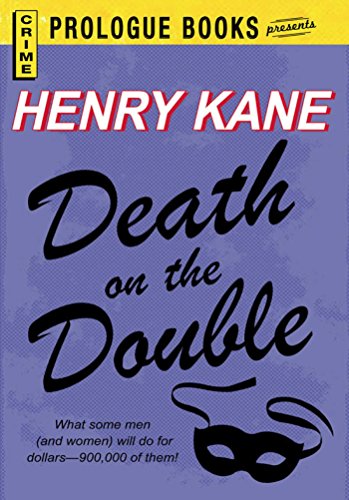
#1111: Mining Mount TBR – Death on the Double (1957) by Henry Kane

I often find myself in possession books with no idea why I bought them — there was a good reason at the time, or a recommendation from a reliable source, but damned if I can remember it now. And thus, with my motivation to read them forgotten, they linger on my TBR making me feel guilty…so for Tuesdays this month I’m again plucking four from obscurity and hoping for the best.

Continue reading

#1109: The Alarm of the Black Cat (1942) by Dolores Hitchens [a.p.a. by D.B. Olsen]

Alarm Black Cat

star filledstar filledstar filledstarsstars
The Cat Saw Murder (1939), Dolores Hitchens’ first book featuring septuagenarian spinster sleuth Rachel Murdock, saw Miss Rachel move into some vacant accommodation following a vague suspicion only for murder to occur and our protagonist to slowly put together the pieces based on her observation of the sundry types living around her, achieved with the help of her black cat Samantha. The Alarm of the Black Cat (1941), the second Miss Rachel novel, also does this, and exposes what I feel might be a recurrent flaw in this series going forward: namely that Hitchens is superb at suspense, but sorely lacks when it comes to plot construction and detection.

Continue reading

#1108: Little Fictions – The Amazing Adventures of Lester Leith: ‘The Hand is Quicker than the Eye’, a.k.a. ‘Lester Leith, Magician’ (1939) by Erle Stanley Gardner

A big game hunter, an explorer, and a master sharpshooter attend a magic show while on a cruise…not the setup of a disappointing joke, but rather the core idea at the centre of ‘The Hand is Quicker than the Eye’, a.k.a. ‘Lester Leith, Magician’ (1939), the fifth and final story collected in The Amazing Adventures of Lester Leith (1980).

Continue reading

#1107: “You really are a sly one, Lieutenant.” – Sour Grapes Aplenty in Columbo: Any Old Port in a Storm (1973) [Scr. Stanley Ralph Ross; Dir. Leo Penn]

I’ve not watched Columbo — in which Peter Falk’s eponymous, crumpled Lieutenant outwits murderers the viewer has watched commit and then cover up their crimes — in years, and would probably have gone years more but for stumbling over two references in a week to ‘Any Old Port in a Storm’ (1973) apparently being the very pinnacle of the long-running series. So, let’s take a look.

Continue reading

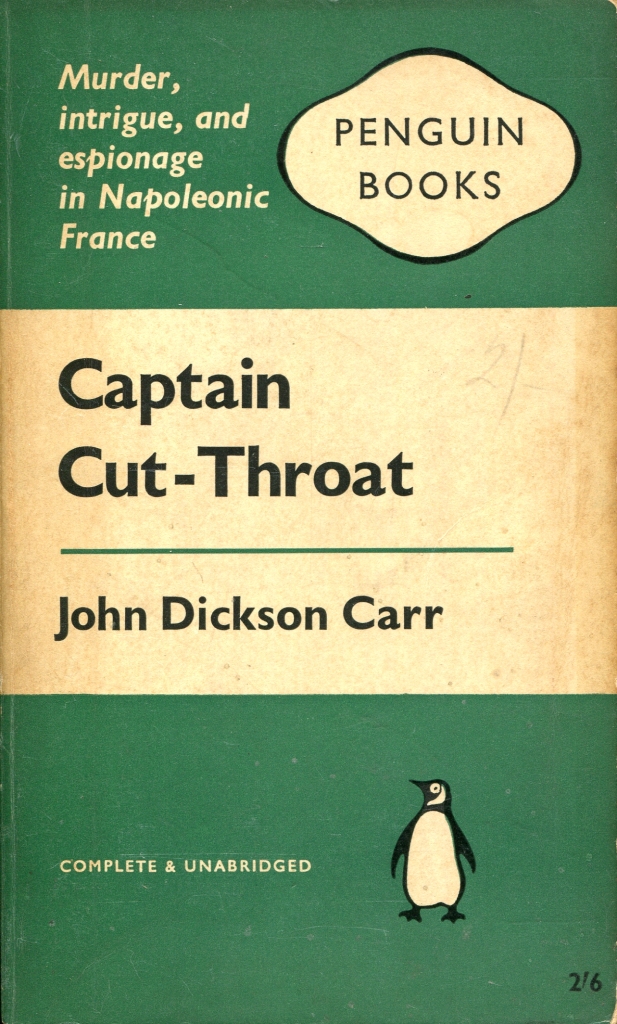
#1106: Captain Cut-Throat (1955) by John Dickson Carr

Captain Cut-Throat

star filledstar filledstar filledstarsstars
Just as you shouldn’t judge a book by its cover, don’t judge Captain Cut-Throat (1955) — John Dickson Carr’s breathless tale of Napoleonic-era espionage and swagger — by its first chapter. The opening to this otherwise very enjoyable story took me three attempts to conquer, as Carr really wants you to know he’s done his research and so crams in too much detail with insufficient focus, leaving me floundering and fearful…a feeling no doubt amplified by my having given up on the two books he published prior to this because they seemed too diffuse to be worth persevering with. Push on, and this soon becomes a propulsive and delightfully plotted romp for the majority of its length.

Continue reading