-
Subscribe
Subscribed
Have a WordPress.com account? Log in now.

 You’ll be aware by now, I hope, that I’m quite the fan of a locked room murder. That quantal aspect of something that can’t have happened but nevertheless did tickles me greater the more I read, and so the republication of anything from the classic era is always a cause for celebration. The British Library continue their excellent Crime Classics series with this, their first impossible crime, in which elderly spinster Mary Gregor is found dead in her locked and bolted bedroom (a nice touch with the door lock forestalls the prospect of jiggery, and indeed pokery, there) with no sign of a weapon and the blow that killed her containing the scale from a herring and so stirring up superstitious rumours of merman-like ‘swimmers’ finding their way in to dispatch her.
 I am from a televisual generation and so struggle to comprehend the power radio held in its pomp – people actually believing that Orson Welles’ radio broadcast of The War of the Worlds was genuinely detailing an alien invasion of Earth, for instance. So, to me, the idea of presenting the haunting of a Spooky Old House as a radio show seems a bit…pointless. Nevertheless, Jack Hartley and his BBC radio chums descend upon Cold Stairs, the ancestral home of Sir John Harman (5 bed, 2 bath., stunning aspect in own woodland), to record ghostly goings on and bumps in the night with the intention of making a broadcast of it. Or that should really be ‘bumping offs in the night’ as some poor soul is murdered by the evil spirit that resides in the vicinity – the same spirit that shocked his housekeeper’s son so badly he fell down the stairs and crippled himself – and then it turns out that Harman’s introverted, reserved niece has been communing with something calling itself the King of the Forest, and that’s really the beginning of everyone’s problems.

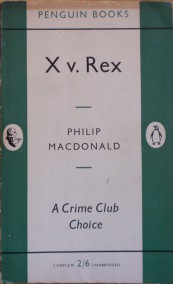 Philip MacDonald first came to my attention for having written a handful of impossible crime novels but this is not one of them, and nor does it feature his series sleuth Anthony Gethryn. I stumbled across my copy of X v. Rex in a second-hand bookshop a good while ago and, as he was out of print at the time (one Gethryn novel, The Rasp, has since been republished by Collins) I picked it up for future perusal. And so, with the Crimes of the Century at Past Offences dipping into 1933, here we are – with policemen in and around London being targeted by a killer, and a government sliding into disarray as the previously unimpeachable bastion of order is attacked seemingly at will.
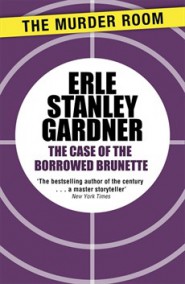 There’s an appealing irony in the assertion that you know an author has hit the big time when everyone remembers the name of their characters over that of the creator themself: Lisbeth Salander, Jack Reacher, Tarzan, Jason Bourne, we erudite types remember them, of course, but the world at large – fuelled no doubt by TV and films – associates more with their representations than their origins. Erle Stanley Gardner – a King of Crime, lest we forget – is not just less well-known than his character, but also the piece of music that character is himself overshadowed by; all together now… Frankly, he must be like the biggest-selling author in the world on those terms. Well, uh, yeah, he kinda is, actually. And yet, despite my avowed love of the man and his writing, it’s taken me 70 posts to get round to reviewing him here; what gives?
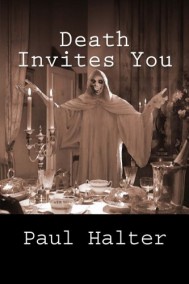 As I said in my review the other week, if you’re starting completely new with Paul Halter and/or impossible crimes then this is the perfect place to do it. The balance of plot and character is just right, the contortions for the murder of a man over a table set for a meal in his locked study – matching exactly the novel he was writing – are not too outré for the novice and, while the locked room element isn’t completely original, there’s no excess of foliage to obscure your view of what’s going on. This was the first book to feature Archibald Hurst and his harried genius amateur Alan Twist together, and it’s a relationship that feels natural from the very first page of them discussing impossible crimes while drinking in a pub. If Hurst ends up rather abject following his expressed desire for some “really meaty” case to get involved with, the reader is treated to the beginnings of a rather special relationship that will bring a great many hours of reading pleasure.

