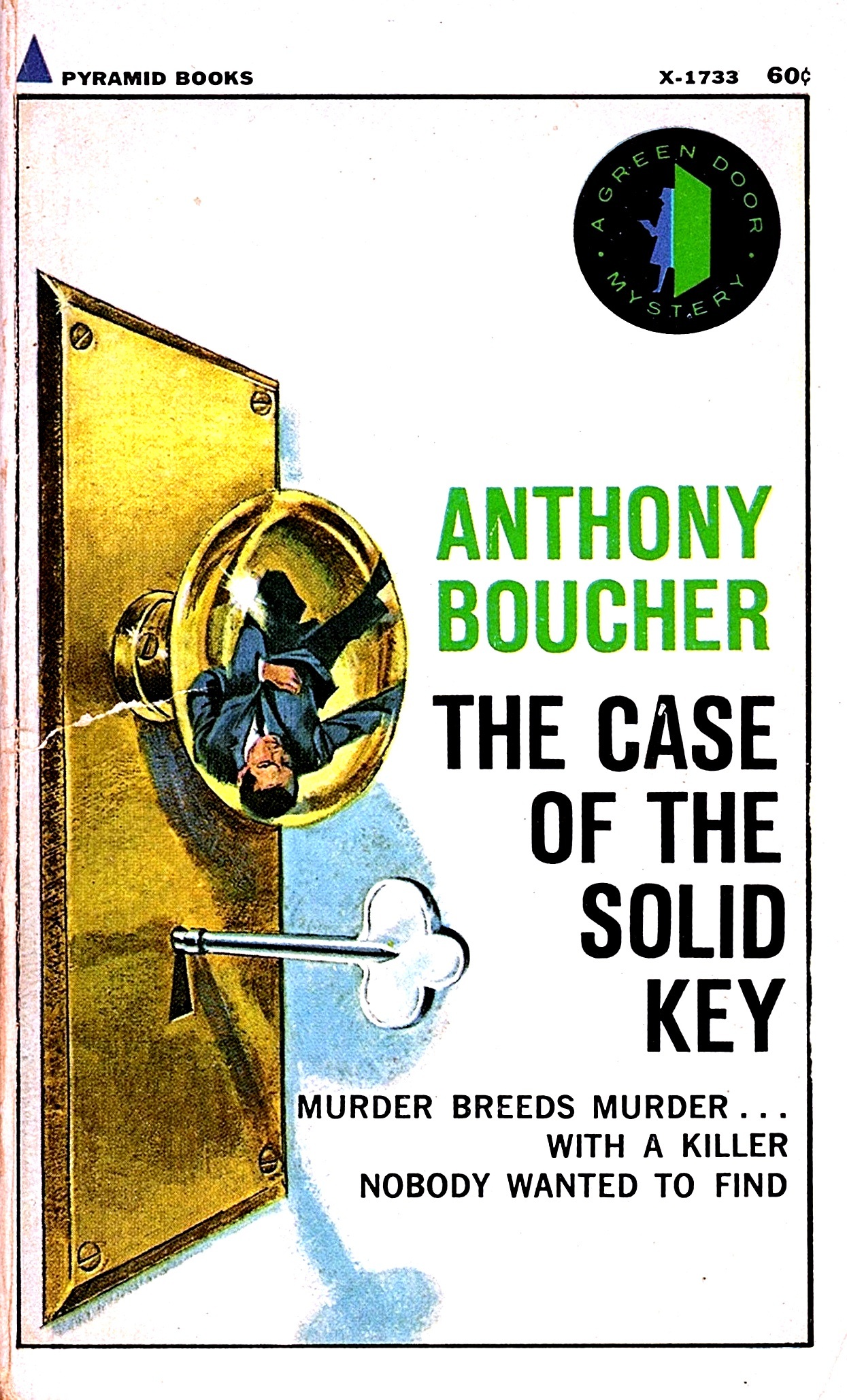
#1249: Nine Times Nine (1940) by Anthony Boucher [a.p.a. by H.H. Holmes]

Nine Times Nine

star filledstar filledstar filledstar filledstars
“A man is shot in a room from which, apparently, no one could have made an exit. Now what’s the first rational possibility that strikes you?”.  It is the shooting of Wolfe Harrigan which Detective Lieutenant Terrence Marshall must solve: rationalist and exposure of religious chicanery Harrigan having apparently been shot by Ahasver, the yellow robe-wearing, centuries-old Wandering Jew who leads the Children of Light church in Los Angeles…and was on stage at the time of said shooting. And when the “rankly fantastic notion of a secret passageway” in Harrigan’s study is dismissed, what possible explanation can there be? Men don’t just vanish into thin air…
Continue reading

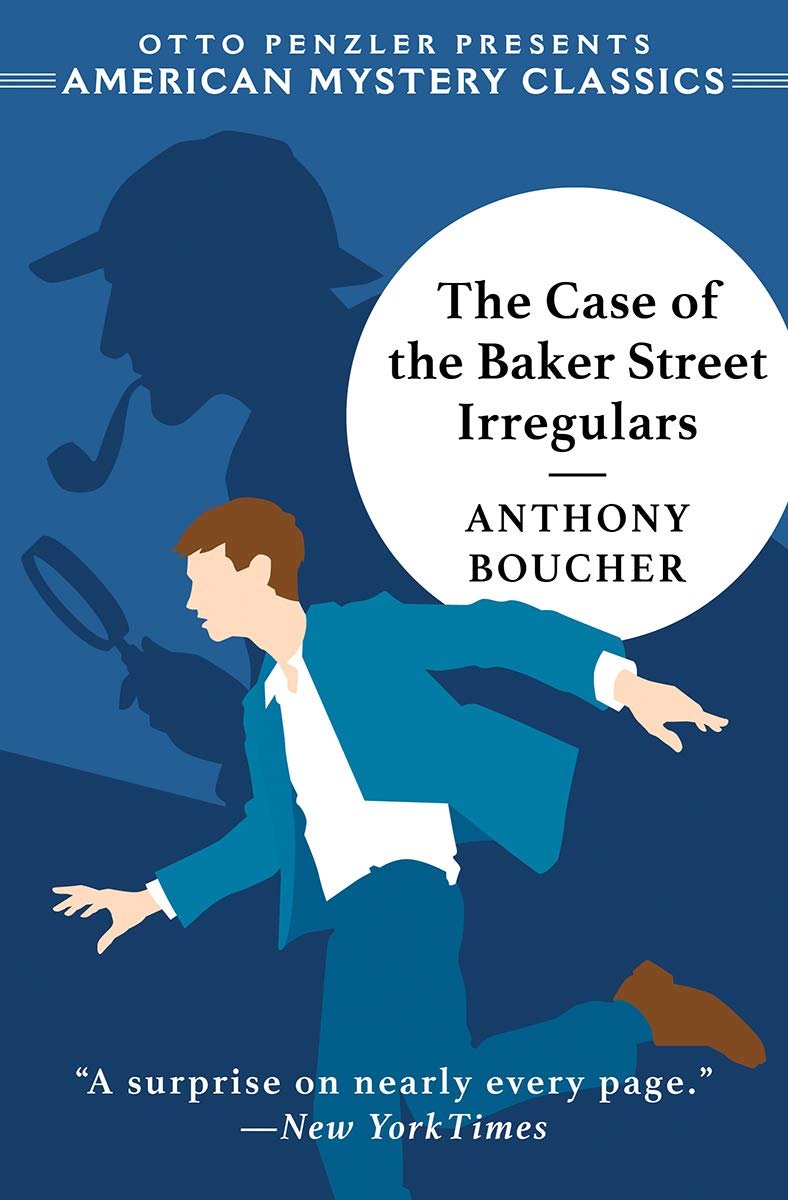
#770: The Case of the Baker Street Irregulars (1940) by Anthony Boucher

Baker Street Irregulars

star filledstar filledstar filledstar filledstars
God, I needed this. Not that my reading has been hard work of late — I’m keeping within fairly safe ground, the last year having taking its toll on my…everything — but this is the first book I’ve read in a while that has been so damn fun. Remember fun? We used to have it all the time. For 90% of The Case of the Baker Street Irregulars (1940) I was swept up in the sheer joy of the ornate, ridiculous planning that goes into a puzzle mystery, in wave after wave of wildly unpredictable developments, and in the excitement of celebrating the voracious fandom the mystery genre excites. For the other 10%…well, we shall get to that in due course.

Continue reading

#554: The Case of the Solid Key (1941) by Anthony Boucher

Case of the Solid Keystar filledstar filledstar filledstar filledstars
Several years ago, discovering that the impossible crime novel was a thing, I read Anthony Boucher’s Nine Times Nine (1940), originally published as by H.H. Holmes, and loved it.  I then discovered TomCat’s list of favourite impossible crime novels and was intrigued by the fact that, eschewing the accepted classic that Nine Times Nine is, Boucher’s later, less discussed The Case of the Solid Key (1941) was included there instead (TC, it must be said, is something of an iconoclast…).  More Boucher followed, some of it disappointing, and last year I finally ran to ground a copy of TCotSK in a secondhand bookshop in Philadelphia and — at long, long last — here we go.

Continue reading

#247: The Sister Ursula Stories of Anthony Boucher (1943-45)

exeunt-murderers

Having worked my way through Anthony Boucher’s short stories featuring the alcoholic yet still razor-sharp ex-cop Nick Noble, I’m now onto the second section of his collected short stories, comprising those featuring crime-solving nun Sister Mary Ursula of the Order of Martha of Bethany from Boucher’s locked room novels Nine Times Nine (1940) and Rocket to the Morgue (1942).

Continue reading

#152: The Nick Noble Stories of Anthony Boucher (1942-54)

William Anthony Parker White, under the nom de plume Anthony Boucher, is widely considered to have been one of the most influential voices of his generation when it came to matters of detective fiction.  As an anthologist and reviewer his opinions counted greatly for their insight and fairness, but as well as talking the talk he also walked the walk in a series of seven novels and over 70 short stories published in the most highly-regarded detective and SF magazines of the day.

And yet for all his output, and in part on account of his genre-changing, it’s difficult to know how Boucher’s fictional writing should be remembered.  His novels cover no fewer than three different “series”, with the longest-running — centred around Irish PI/Gentleman Detective Fergus O’Breen — comprising only three of them, and the most famous — locked room murder Nine Times Nine (1940) — featuring the marvellous wannabe-detective nun Sister Ursula but succeeded by a follow-up (1942’s Rocket to the Morgue) so inane that most people have probably never picked it up based on reputation alone (which is a shame, because Sister Ursula is one of the most wonderful characters to come out of this era).

Continue reading