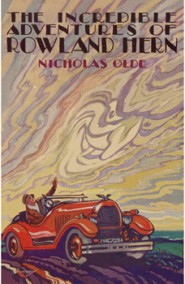
Credit: Facsimile Dust Jackets
Credit: Facsimile Dust Jackets

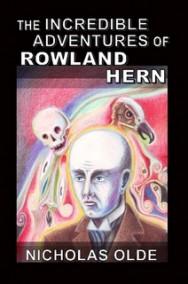 Nicholas Olde, who presumably published this under a pseudonym because his real name was Amian Lister Champneys and that’s simply too awesome, left us only this one work of crime fiction to remember him by. It’s presented in 17 chapters of about ten pages each with most being a distinct story, except ‘The Two Telescopes’ which has three chapters to itself. To avoid hideous verbosity, I shall split this review over two posts and rate each story separately to see how I like doing things that way. No spoilers, of course. Both covers I’ve seen for this book – my Ramble House edition (shown here) and the Heineman first edition I’ll attach to the next post – have a semi-supernatrual flavour that isn’t really accurate. Hern is a genius detective in the classic mould, fond of obscure pronouncements and startling logical connections and always privy to more information than he lets on to his unnamed chronicler, and therefore the reader, until the closing explanation. It would be very easy to compose him of shades of other fictional detectives, but these stories are interesting enough that they really should be allowed to stand on their own. That said, I may need to make some such comparisons below just to give you an appropriate flavour without spoiling anything…
 The use of real figures in fiction, and particularly crime fiction, usually goes one of two ways. Philip Kerr has enjoyed tremendous success with his Bernie Gunther novels set in and around Nazi Germany and tying in all manner of historical figures, but his earlier Dark Matter – utilising Isaac Newton as a detective – was less successful. And at least Kerr has the freedom of those real people being long departed (conspiracy theories aside) and so largely free to do with as he pleased. When Philip Wylie and Bernard A. Bergman originally published The Smiling Corpse, the four very real detective writers at its centre (plus sundry background artists) were still very much alive, so one can understand their caution in wanting to keep their names of the final manuscript. Imagine a novel published today in which Lee Child, Michael Connelly, Patricia Cornwell and one of James Patterson’s co-writers solved a crime and you get some idea of what we’re talking about.
 The Invisible Event