Ramble House
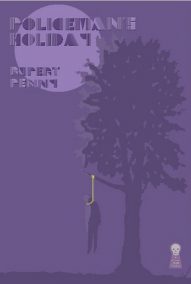 “If a man’s mind be wandering,” said Francis Bacon, “let him study the mathematics”. Well, the mathematics take up an unreasonably large amount of my time as it is, and for me nothing helps my wandering mind quite like classic detective fiction. So, with 2016 having been an underwhelming year in books so far, and coming back off a 2 month hiatus with my hand injury, I’m keen to get a bit of enthusiasm back into my reading. Hence I shall spend the next little while focussing on the sure-fire hits in my collection: expect much Max Afford, Leo Bruce, John Dickson Carr, Agatha Christie, Paul Halter and others, as well as some classic locked room nonplussing, in the weeks to come while I try to reorient myself within my chosen enthusiasm.
#75: The Border Line (1937) by Walter S. Masterman
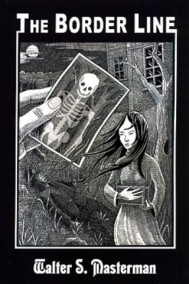 I am from a televisual generation and so struggle to comprehend the power radio held in its pomp – people actually believing that Orson Welles’ radio broadcast of The War of the Worlds was genuinely detailing an alien invasion of Earth, for instance. So, to me, the idea of presenting the haunting of a Spooky Old House as a radio show seems a bit…pointless. Nevertheless, Jack Hartley and his BBC radio chums descend upon Cold Stairs, the ancestral home of Sir John Harman (5 bed, 2 bath., stunning aspect in own woodland), to record ghostly goings on and bumps in the night with the intention of making a broadcast of it. Or that should really be ‘bumping offs in the night’ as some poor soul is murdered by the evil spirit that resides in the vicinity – the same spirit that shocked his housekeeper’s son so badly he fell down the stairs and crippled himself – and then it turns out that Harman’s introverted, reserved niece has been communing with something calling itself the King of the Forest, and that’s really the beginning of everyone’s problems.
Given that John Pelan’s superb introduction makes much of Masterman’s standing in the Science Fiction/Supernatural Horror genre, I wasn’t entirely sure what I’d be getting here: Ramble House are known for their commitment to the, er, more uncommon corners of genre fiction, after all, and so the deaths, photographs of skeletons, and blindfolded meetings with sinister wood-dwelling monsters all stirs a stew that could turn out to be a dream as easily as it could leave you with no explanation whatsoever.
Continue reading
#69: Death’s Mannikins, a.k.a. The Dolls of Death (1937) by Max Afford
 An isolated ancestral home ruled over by an eccentric patriarch with a keen interest in esoterica and a private museum of medieval weapons, into which an eager young man is brought by an acquaintance only for murder to insinuate its way among the denizens…yup, John Dickson Carr’s The Bowstring Murders (1933) certainly is a classic of the genre. What’s that you say? Death’s Mannikins? Oh, wow, uh, this is awkward. Okay, let’s start again: an isolated ancestral home ruled over by an eccentric patriarch with a keen interest in esoterica and a private museum of medieval weapons, into which an eager young man is brought by an acquaintance only for murder to insinuate its way among the denizens…yeah, no, there’s no getting away from those similarities. And, y’know what? I only bring it up because there’s more than a touch of Carr about this, Afford’s second Jeffery Blackburn novel, and that’s really not a bad thing.

I mean, take the following:
It was as though the second tragedy acted as sudden leaping flames under a simmering pot. The scalding, seething flux exploded and boiled over, galvanizing each person under that roof into an insane panic that throbbed and hummed and zoomed from cellar to tower with the horrible impotence of a monstrous and unclean bluebottle trapped against a window.
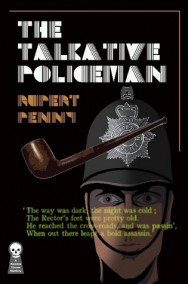 Aaah, Christmas. A time for cheer, goodwill to all men, on-trend ironic jumpers and spending time with the people you love. Look around the crime fiction blogosphere and these loved ones include a tremendous number of murderers, victims, stooges, detectives and classic authors, and so for me the time is ripe for a return to my overriding obsessions: this week it’s Ernest Basil Charles Thornett’s turn as his debut under the guise of Rupert Penny with The Talkative Policeman. And of course it’s a return to impossible crimes after a couple of weeks away with what the synopsis calls a “longer-than-usual impossible mystery,” and since Penny has written a couple of absolute doozys in this vein an extra bt of content is only to be a cause for celebration. Clap hands. Settle in. Let’s go.
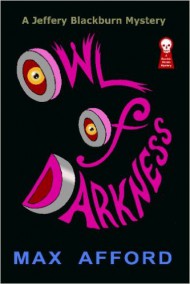 Regular readers of this blog – hello, Mum – will be aware of how much I appreciate die-hard devotees like Fender Tucker and Tom and Enid Schantz, whose (respectively) Ramble House and Rue Morgue Press imprints have for years been keeping the kind of classics everyone had long forgotten about in print just for the love of them. I won’t condescend to imply that everything they publish is of equal quality, but some of it is more equal than others and they have jointly brought some absolute delights to my attention. Unfortunately the latter’s Smallbone Deceased (1950) by Michael Gilbert proved not to be my kind of thing and so I couldn’t really review it having not read it, but it does give me a chance to talk about Max Afford’s Owl of Darkness which is published by the former and I read in those bleak and hazy dark days I now think of as ‘pre-blog’.


 The Invisible Event