#1329: The Greene Murder Case (1928) by S.S. van Dine


Having curbed the slaughter in his first two books, S.S. van Dine’s early promise that The Greene Murder Case (1928) is “the first complete and unedited history of the Greene holocaust” certainly sets you up for carnage galore. And the book offers this and more: a veritable cornucopia of almost everything the detective novel should have, as if, having learnt from his opening brace, Van Dine was keen to cram in just about every trick, revelation, and reversal1 he could possibly envisage. And yet, for all its trappings, the book does suffer from the same problem as its predecessors in that the killer is blindingly obvious, and no amount of telling me otherwise will change my mind.

Continue reading

#1299: Murder by the Clock (1929) by Rufus King


In principle, the core concept of Murder by the Clock (1929), the debut novel for both author Rufus King and character Lieutenant Valcour, is a good one: the youthful Mrs. Endicott calls the police because she fears her husband has gone out that evening to pay off a blackmailer, only for Valcour, the policeman who responds to the call, to find Mr. Endiciott dead in his closet at the close of the first chapter. Thus, the focus of the mystery becomes the Endicott ménage itself, as the questions of who would have killed the master of the house, and why, take understandable prominence. And some fun ideas remain, but the book containing them doesn’t quite compel as it might.

Continue reading

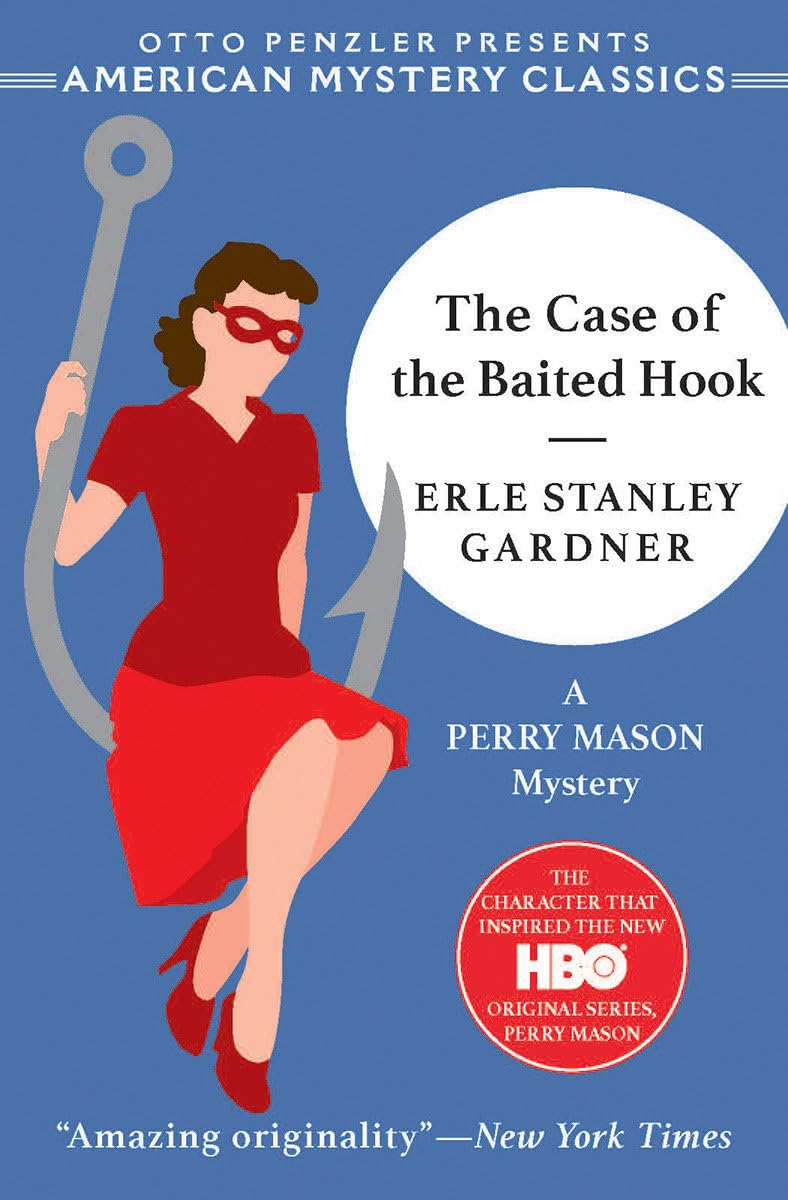
#1255: The Case of the Rolling Bones (1939) by Erle Stanley Gardner

Case of the Rolling Bones

star filledstar filledstar filledstar filledstars
At a rough estimate, I reckon I’ve read 40 to 50 of Erle Stanley Gardner’s books featuring Perry Mason.  Precisely which ones?  Yeah, I’m vague on that.  But The Case of the Rolling Bones (1939) — which I make the fifteenth time Mason sallied forth to lock legal horns on behalf of some wronged party — I definitely remembered…until I was about halfway through it recently and realised that, no, I probably hadn’t read this before. In a way, then, it’s lovely to be able to find more classic-era Mason titles which I can treat as completely ‘new to me’ reads, and this is a strong entry in Gardner’s output that has a very clever idea at its core, warranting its recent reprinting in the American Mystery Classics range.

Continue reading

#1211: The Benson Murder Case (1926) by S.S. van Dine

Benson Murder Case

star filledstar filledstar filledstar filledstars
Apparently, you either love Philo Vance — dilettante, bon vivant, sleuth — or you wish to give him the much-vaunted “kick in the pance”.  I, having read his sixth investigation The Kennel Murder Case (1933) some ten-plus years ago, don’t remember having any opinion on the man at all, so when the American Mystery Classics range put out its usual high-quality version of The Benson Murder Case (1926), debut of Vance and author S.S. van Dine alike, an opportunity was to be seized. And so, encouraged by some comments made to me at the recent Bodies from the Library conference, here we are. And it all went rather well, don’t’cha’know.

Continue reading

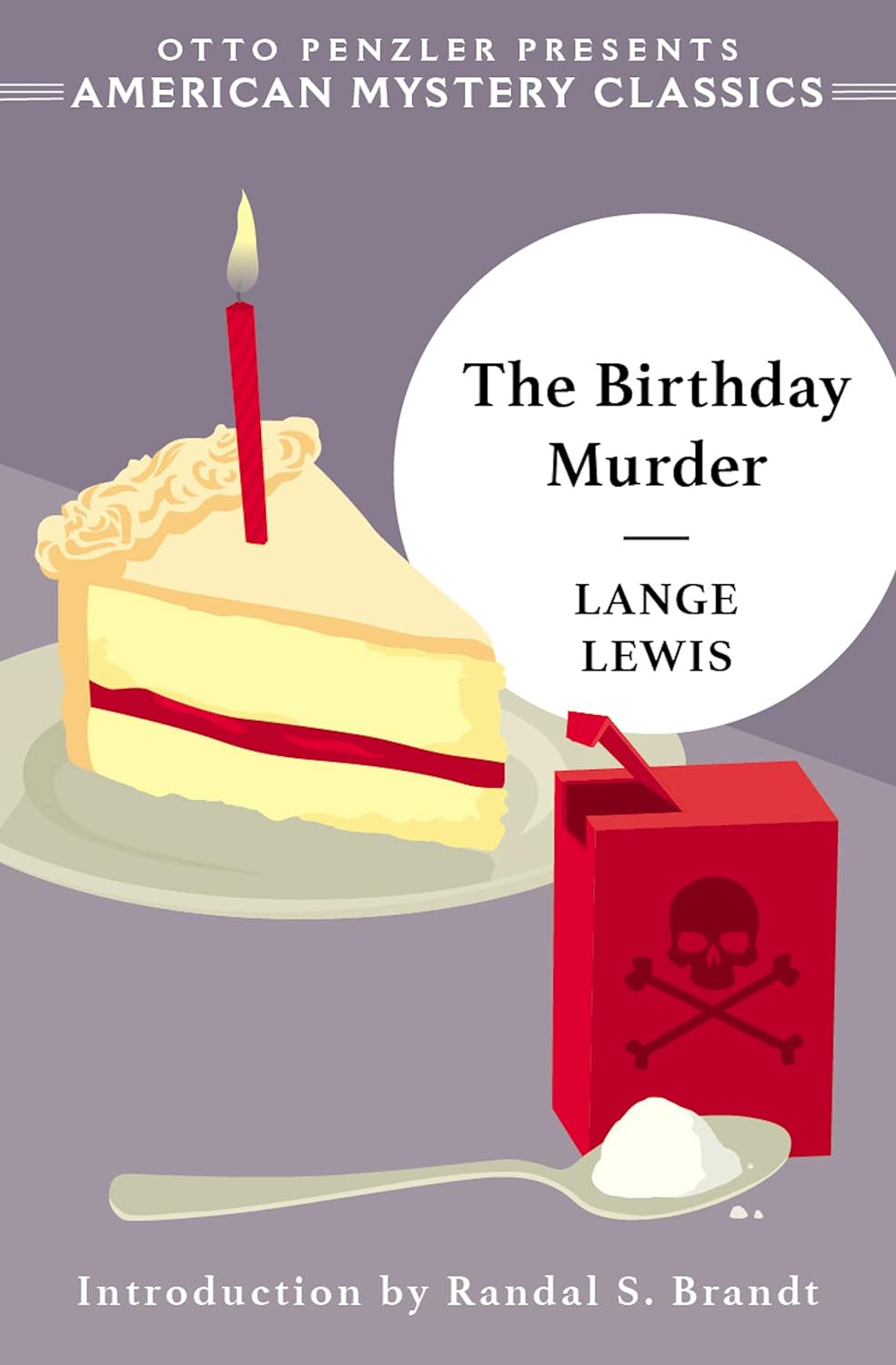
#1195: The Birthday Murder (1945) by Lange Lewis

Birthday Murder

star filledstar filledstar filledstarsstars
Having researched and written a book in which a woman poisons several people, Victoria Hime inevitably ends up as the prime suspect when someone close to her is poisoned by the same means. The fact that several people came and went from the Himes’ house on the day of the poisoning is the only light offered to Los Angeles detective Lieutenant Richard Tuck, but while the method remains clear there’s the small matter of opportunity and motive…all of which keeps swinging back to Victoria, the case against her “signed, sealed, and delivered” at almost every turn. Except we, the reader, know she didn’t do it…so what really happened?

Continue reading

#1155: Blind Man’s Bluff (1943) by Baynard Kendrick

Blind Man's Bluff

star filledstar filledstar filledstar filledstars
I’ve already looked at one story with this title this week, so let’s complete the set, eh? This Blind Man’s Bluff (1943) is the fourth of Baynard Kendrick’s mysteries featuring Captain Duncan Maclain, and the second to be reprinted in the American Mystery Classics range. Having previously enjoyed The Odor of Violets (1941), I’m pleased to report that this is a stronger mystery, with a steadier core plot and enough unusual ideas stirred in to make a third visit with Maclain, should the AMC so wish it, rather appealing. The detective story and the pulp thriller have rarely meshed so well in my — admittedly, limited — experience, and I’m keen for more.

Continue reading

#1130: The Red Widow Murders (1935) by John Dickson Carr [a.p.a. by Carter Dickson]

red-widow-murders

star filledstar filledstar filledstar filledstars
I’ve written previously about The Red Widow Murders (1935) — John Dickson Carr’s first take on the Room That Kills, originally published under his Carter Dickson nom de plume — but this American Mystery Classics reissue is a chance to look at the book more broadly and attach a star value to it. This third reading reinforced my impression that it’s perhaps too busy a book, redolent with the enthusiasm the youthful Carr brought to his early efforts when his eagerness outweighed his skill with juggling plot, but reading it three times also give me a good perspective on its many successes, not least of which is just how busy Carr manages to make it.

Continue reading

#1109: The Alarm of the Black Cat (1942) by Dolores Hitchens [a.p.a. by D.B. Olsen]

Alarm Black Cat

star filledstar filledstar filledstarsstars
The Cat Saw Murder (1939), Dolores Hitchens’ first book featuring septuagenarian spinster sleuth Rachel Murdock, saw Miss Rachel move into some vacant accommodation following a vague suspicion only for murder to occur and our protagonist to slowly put together the pieces based on her observation of the sundry types living around her, achieved with the help of her black cat Samantha. The Alarm of the Black Cat (1941), the second Miss Rachel novel, also does this, and exposes what I feel might be a recurrent flaw in this series going forward: namely that Hitchens is superb at suspense, but sorely lacks when it comes to plot construction and detection.

Continue reading

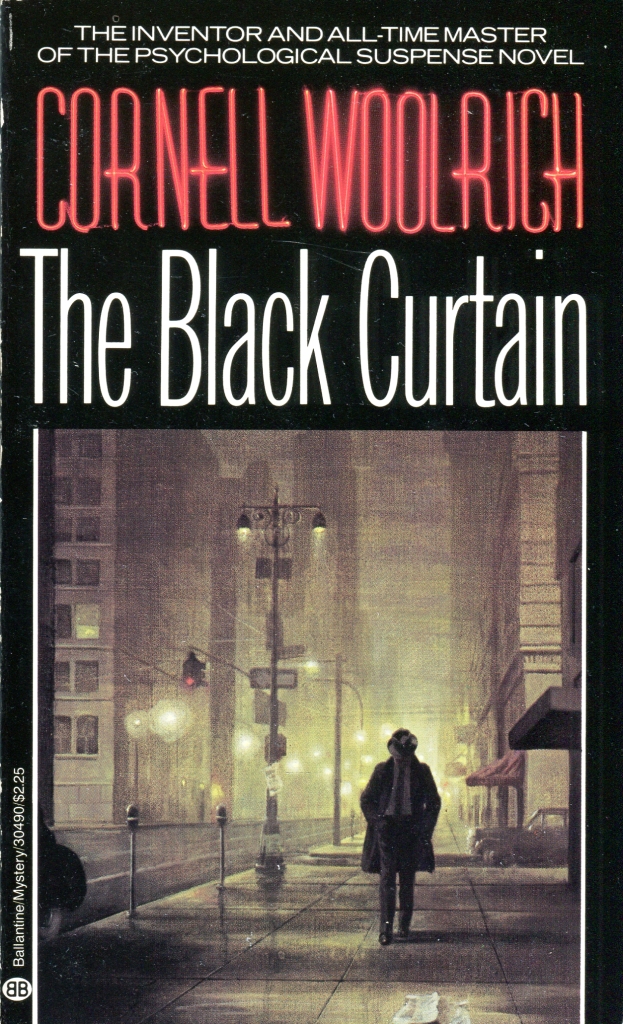
#1073: The Black Curtain (1941) by Cornell Woolrich

Black Curtain

star filledstar filledstar filledstarsstars
I’m starting to develop the belief that the novelistic output of Cornell Woolrich can be broadly summed up in a single word: ‘Loss’. The six novels of his I’ve read so far all concern the desperate search for — and horror associated with — something either already lost or on the verge of being so, be it love, opportunity, or escape.  And The Black Curtain (1941) extends this theme by finding yet another string of loss to add to the great man’s bow in Frank Townsend’s misplacement of perhaps the most crucial of all things: himself. And, this being a work of suspense writing, when he starts to uncover what the eponymous curtain obscures, he’s not necessarily going to be thrilled with what he finds.

Continue reading

#1058: The Cat Saw Murder (1939) by Dolores Hitchens [a.p.a. by D.B. Olsen]

Cat Saw Murder

star filledstar filledstar filledstarsstars
If, like me, you were dissuaded from reading The Cat Saw Murder (1939) by Dolores Hitchens because the titles brings on the hives of a cozy Cat Catches Criminals caper, rest assured that this is very much not that type of book. The cat does indeed see murder — the surprisingly violent hacking to death of Lily Stickleman in the shabby beachside boarding house where she resides while waiting for an inheritance — but the sleuthing is done by a combination of Lieutenant Stephen Mayhew and the elderly Miss Rachel Murdock. Samantha, the eponymous moggy, provides a clue and a little intrigue of her own, but she’s much more dragged in rather than an essential catalyst (Ithankyou).

Continue reading