![]()
![]()
![]()
![]()
![]()
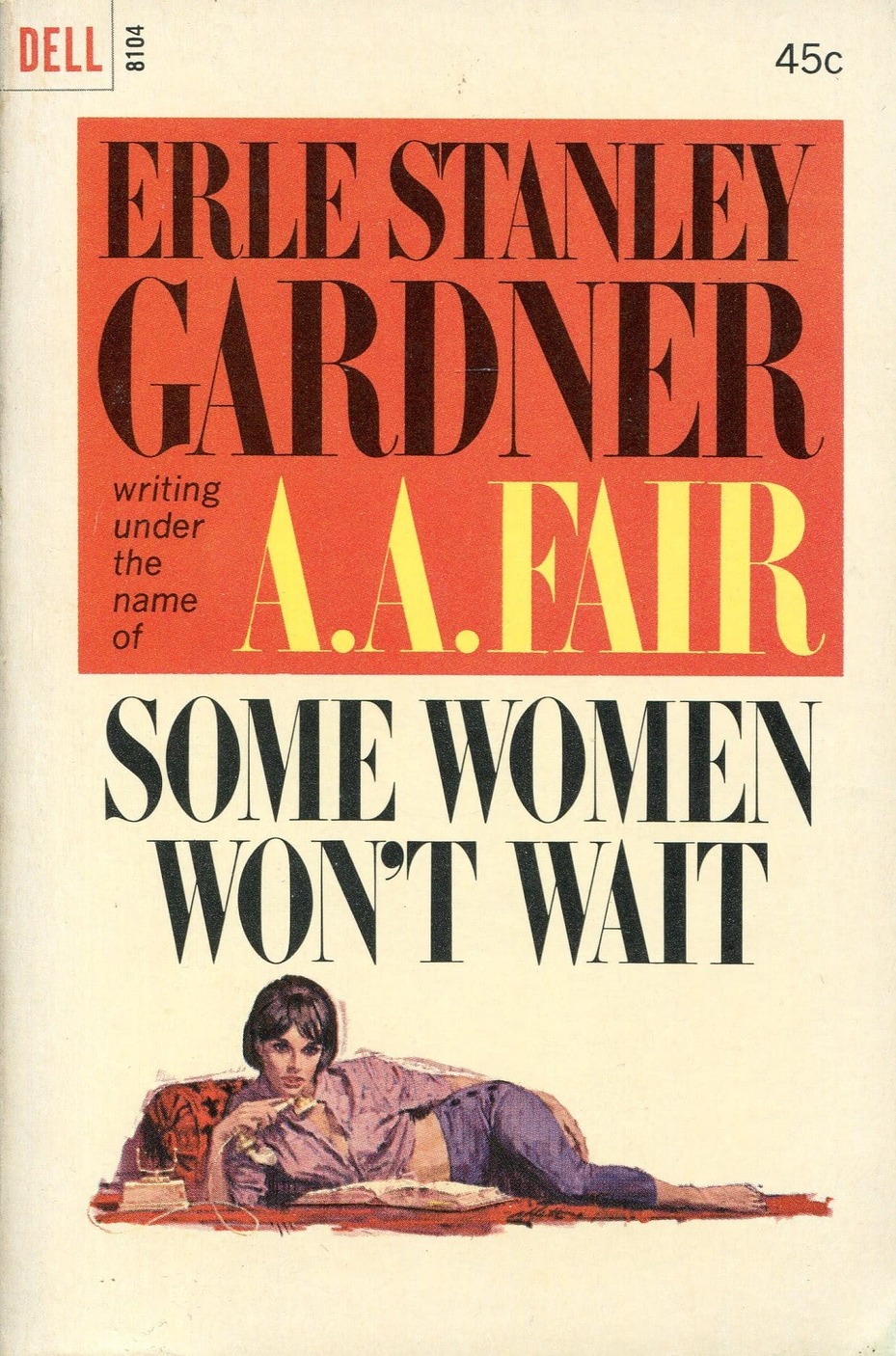
The fourteenth published tale by Erle Stanley Gardner about L.A. P.I.s Bertha Cool and Donald Lam, Some Women Won’t Wait (1953) marks the halfway point of my reading all thirty titles for the blog — ‘cos, y’know, there’s that unpublished one — very nearly five years after I started. And while I won’t say that the machine is starting to bleed to death here, it’s probably the simplest Cool and Lam case put on paper to date: relying essentially on a moment of misdirection akin to a classic novel of Golden Age detection rather than the imbrication of a variety of switchbacks that have been the hallmark of the series thus far.
P.I.
#1416: How Weary, Stale, Flat and Unprofitable – Crime Fiction Clichés from The Mystery Writer’s Handbook (1956) ed. Herbert Brean
Being something of a fan of the mystery writer Herbert Brean, I am ever on the lookout for work by him, especially the short stories ‘Murder Buys a Ticket’, a.k.a. ‘Nine Hours Late on the Opening Run’ (1941) and ‘The Man Who Talked with Spirits’ (1943) listed in Adey. In these searches, I recently discovered that Brean acted as editor for The Mystery Writer’s Handbook (1956), in which members of the Mystery Writers of America (MWA) provided advice for people looking to write “detective, suspense, mystery, and crime stories”.
Continue reading#1408: Little Fictions – The 13 Crimes of Science Fiction: ‘The Detweiler Boy’ (1977) by Tom Reamy
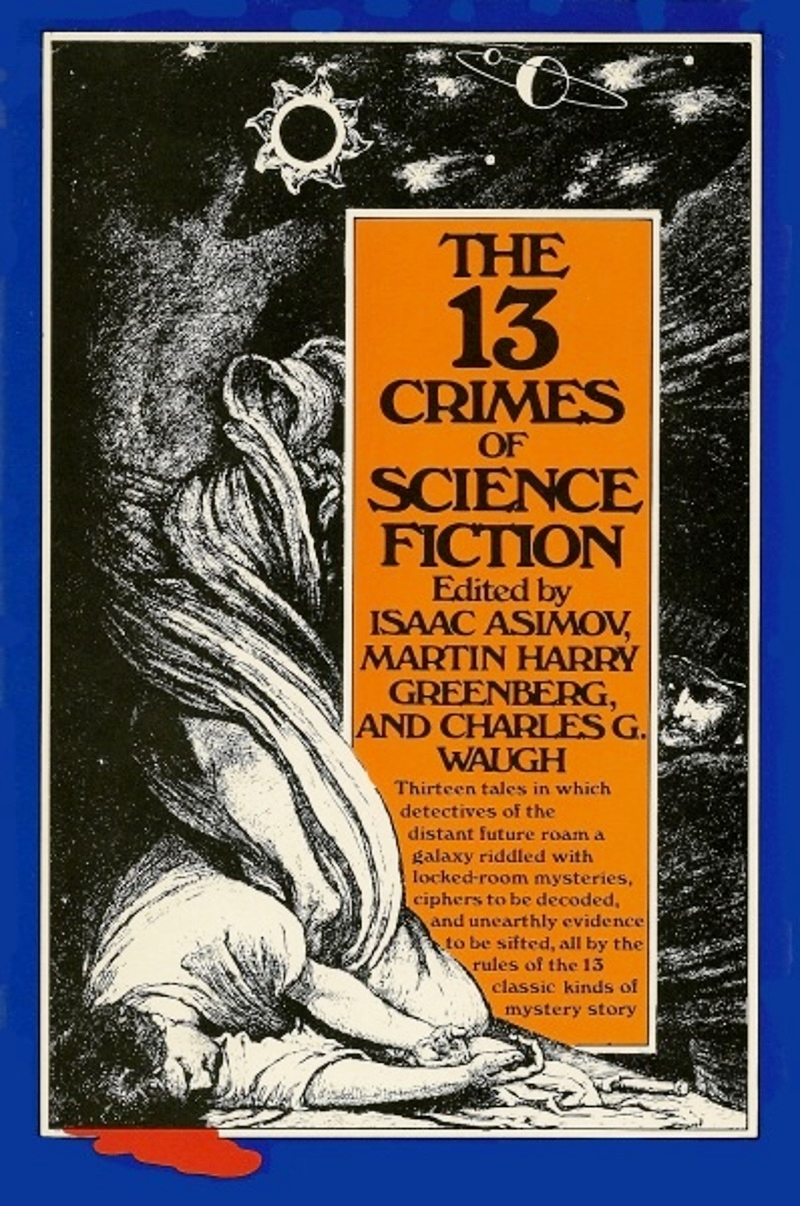
I am a fan of a good crossover mystery, in which the tenets of crime and detection are placed into a science fiction/Fantasy milieu. So when I heard of a collection called The 13 Crimes of Science Fiction [ss] (1979), you’re darn tootin’ it was only a matter of time before I got to it.
Continue reading#1359: Top of the Heap (1952) by A.A. Fair
![]()
![]()
![]()
![]()
![]()
Official Case #13 for the Cool & Lam Detective Agency, Top of the Heap (1952) finds A.A. Fair, nom de plume of Erle Stanley Gardner, on slick-but-unmemorable form — mixing ingredients in a way that is at once comfortably familiar for this series yet tries to ring a few changes at the same time. And while it’s certainly not a bad book, for this reader — an avowed fan of Gardner and Fair both — it all sort of fell apart in the closing stages in which so much surmise is piled up that it’s to be wondered whether some sort of meta-textual commentary on the concept of ‘solving’ a case is being offered. It’s not, but, wow, is Donald Lam ever out on a limb or five here, and it shows.
#1326: Bedrooms Have Windows (1949) by A.A. Fair
![]()
![]()
![]()
![]()
![]()
The twelfth published novel from Erle Stanley Gardner under his A.A. Fair nom de plume, Bedrooms Have Windows (1949) finds L.A. P.I.s Bertha Cool and Donald Lam once more skirting the law in pursuit of a case whose precise shape is obscured by the sheer number of actions dragged across its trail. And while this should be getting pretty tiresome by now, the truth is that since series nadir Crows Can’t Count (1946) Fair has delivered some blisteringly fast and fun little crime thrillers that go a long way to show how to write entertainingly: let everything fly at the page, and have someone as unshakeable as Donald on hand to unpick whatever madness you throw him into.
#1301: Mining Mount TBR – Psych: Mind Over Magic (2009) by William Rabkin
Tuesdays this month will once again be dedicated to digging books out of my TBR pile that have lingered unloved and are likely to remain so without drastic intervention. First up, Mind Over Magic (2009) by William Rabkin, a tie-in novel from the TV show Psych (2006-14), which I’ve left unread because I figured I should watch the show first. But then I read it anyway; wow, I’m so ungovernable.
Continue reading#1285: “It’s a classic locked-room thing.” – The Weight of Evidence (1978) by Roger Ormerod
Having enjoyed-if-not-loved my first encounter with Roger Ormerod’s work, Time to Kill (1974), he’s hovered on the fringes of my awareness as someone I should get back to. So a timely recommendation for The Weight of Evidence (1978) sees us pick up again with David Mallin
Continue reading#1275: Fools Die on Friday (1947) by A.A. Fair
![]()
![]()
![]()
![]()
![]()
As my grandfather used to say, “When you fall off the horse, get back on the horse”. And that’s why he made such a controversial judge at gymnastic competitions. But the fact remains that lately I’ve had some disheartening reading experiences with favoured authors — John Dickson Carr, J.J. Connington, Freeman Wills Crofts, A.A. Fair, Craig Rice, Cornell Woolrich J.J. Connington again, maybe Rice a second time — and so the tempting thing is to leave them alone for a while, wait for that memory to fade, and then return. But, no, I’m not doing that, I’m reading Fair again now, because why not? That’s what the horse is here. It was a pommel horse all along.
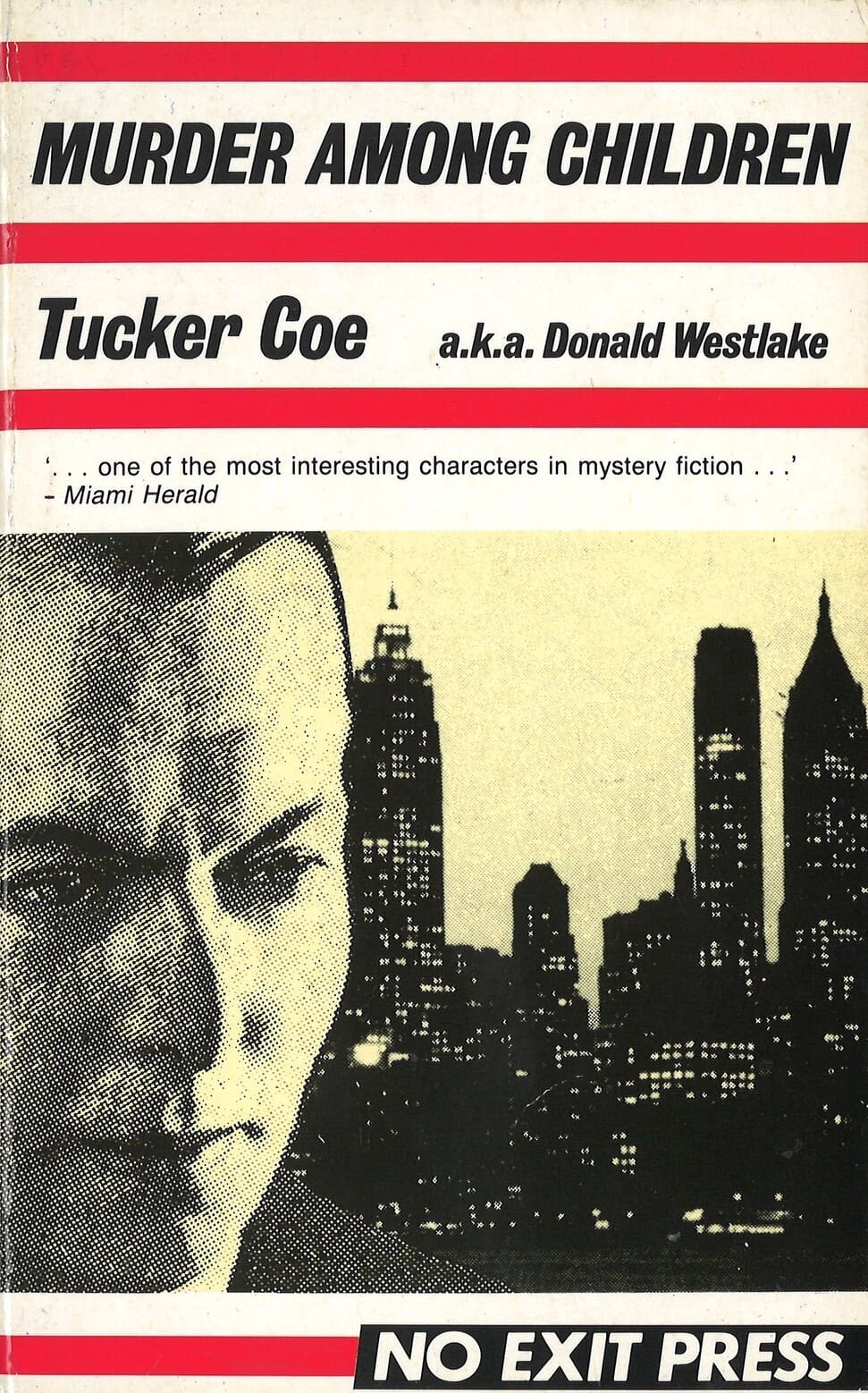
#1254: “I would find no friends in this building, only memories, all of them knife-edged.” – Murder Among Children (1967) by Tucker Coe [a.p.a. by Donald E. Westlake]
#1230: Crows Can’t Count (1946) by A.A. Fair

![]()
![]()
![]()
![]()
![]()
How do you go about discussing a book you couldn’t even be bothered to finish? The tempting thing is not to review it at all, but I’m committed to certain undertakings on this blog — the complete works of Freeman Wills Crofts, the complete John Thorndyke stories of R. Austin Freeman, more Walter S. Masterman than most people will ever consume — and the full Cool & Lam by A.A. Fair, nom de plume of Erle Stanley Gardner, is one of them. So how to write about Crows Can’t Count (1946), the tenth published Cool & Lam novel, and the first time this normally lively and entertaining series has draaaaaaagged me into the doldrums of an almost spiritual level of indifference?