-
Subscribe
Subscribed
Already have a WordPress.com account? Log in now.
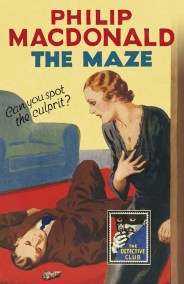 Much like in one of those hilarious romantic comedies from the early 2000s starring Ben Stiller or Jennifer Lopez, Philip MacDonald and I got off to a rocky start that seemed to be improving, on the way to falling lovingly into each other’s arms by the end credits. It began badly with X v. Rex (1933), showed signs of improvement with Murder Gone Mad (1931), and so by now we’re at the montage stage — I’m the aggressive go-getter, he won’t compromise where his family’s concerned…how can two such different souls ever hope to find common ground? Can’t I see that his brand of innovation is made for me? Won’t he just do the decent thing and write a novel of detection with actual clues? Hairy Aaron, we’re so stubborn…
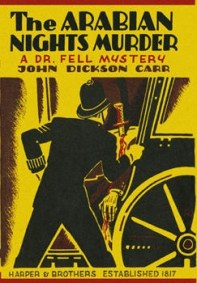 In the orchestra of John Dickson Carr’s detective fiction, his early years from It Walks by Night (1930) up to arguably The Arabian Nights Murder (1936) are very much the accordion section. Events occur in concentrated bursts, with clues and characters squeezed together to make the notes of the plot emerge, only to then be drawn apart before inexorably squeezing together again for another dense exposit you must pore over in order to follow the necessary developments. From The Punch and Judy Murders (1936) until the 1940s he wrote in the fine, clean, overlapping lines of the harp, and then the violins took over… but enough of this analogy, back to this book and the wheeze of a bellows working overtime.
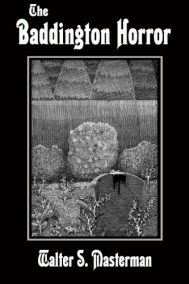 I love a country house mystery, especially those with a body on page one. So when the murder of ex-judge Sir Ernest Ferber in his private garden by man he sentenced harshly and the subsequent suicide of his assailant at the scene is communicated in the opening ten lines of The Baddington Horror, we’re off to a very good start. To my understanding, Walter S. Masterman wrote as many ‘weird tales’ as he did novels of detection, and so it was always a little uncertain what I was going to get here. But the first chapter could not be more Golden Age detection if it tried: murdered aristocrat, retired amateur detective who takes an interest, two big coincidences, and away we go…
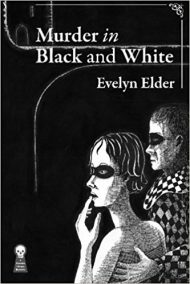 Identity and location, as I’ve said before, are really the two hooks on which a staggering majority of the detective genre hangs. And if you want to get the most out of the impossible shooting tale Murder in Black and White by Evelyn Elder — pseudonym of Detection Club alumnus Milward Kennedy — you’re going to need patience in figuring out the latter. Because while he has a good sense of character and action, as soon as anyone is required to go anywhere, or it becomes necessary to understand the internal layout of the ancient French citadel-cum-château that features so prominently, it’s as if his narrative powers desert him and he’s writing with a stick of celery.
 Summoned by a distant relative to a secluded family pile, a young(ish) man finds himself isolated with a fixed cast of closely-related characters as money-hungry relatives, murder, and all other sorts of puzzle plotting chicanery inveigle themself onto the scene. Yes, in many ways No Flowers By Request takes the exact same ingredients as The Search for My Great-Uncle’s Head — vast swathes of it will appear ominously familiar — and plays perfectly in the 1937 tradition that Rich has got us investigating this month for Crimes of the Century. But does the rest of the book hold up past these fundamentals? And is it any good, after the failure of Jonanthan Latimer’s stirring of these same ingredients?
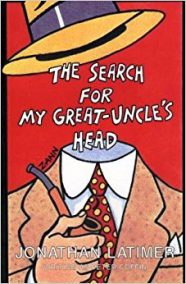 Summoned by an elderly relative to their secluded family pile, a young man finds himself isolated with a fixed cast of closely-related characters as murder, missing documents, an escaped lunatic, and all other sorts of puzzle plotting chicanery inveigle themself onto the scene. Yes, in many ways The Search for My Great-Uncle’s Head is a vade mecum for the Golden Age of detective fiction — vast elements of it will appear achingly familiar — and plays perfectly in time with the tattoo of 1937 that Rich has got many of us investigating this month for Crimes of the Century at Past Offences. But does the rest of the book hold up past these fundamentals?
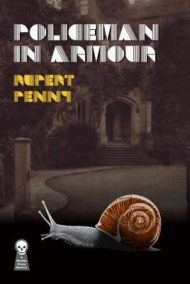 I am swiftly approaching the point where I will be reluctant to read any more Rupert Penny; he published a mere nine books, of which Policeman in Armour is the fifth I’ve read, and I don’t want to find myself in a situation where there’s no new Rupert Penny to pick up and lose myself in. I still have plenty to be getting on with — half of Carr, 10 Christies, 17 Berrows, countless undiscovered gems — but Penny holds a special significance for me because he is such a superb classicist and produced detective plots that walk the fine line between several stools without tripping and getting trapped between any of them (I apologise for any pain that mixed metaphor may have caused you).
 After many years reading, talking about, reviewing, and now blogging on the subject of detective fiction I am presented with a real difficulty here: I honestly don’t know quite what to write about Noel Vindry’s classic The Howling Beast for fear of giving anything away. It is a balancing act of a book that, while probably not completely successful by today’s standards, is hugely enjoyable and absolutely something that those who count themselves as puzzle fans or lay claim to an interest in the emergence and development of detective fiction really should read. And I’m not just being vague here because I don’t want to criticise it — I really enjoyed it, and there’s one key thing it does absolutely brilliantly, and I’m especially keen to preserve that for those of you who should experience this pure. So, with that out of the way, here goes.
 The Invisible Event