One haunted house. One impossible crime. One killer weekend. Thus runs the promise on the front cover of Murder Most Haunted (2025), the debut novel of Emma Mason, and that was enough to get in on my TBR as a modern example of the impossible crime that we’re no longer pretending I read just for TomCat‘s sake. So, did it deliver on those promises?
Continue readingMansion Mysteries
#1376: Adventures in Self-Publishing – The Christmas Miracle Crimes (2023) by A. Carver
When A. Carver published The Christmas Miracle Crimes (2023) close to Christmas 2023, I was caught off-guard: with that title, one feels it should be read in the Winter, and I try to be about four to five weeks ahead on my blogging and so it had to wait until 2024. Then I just…didn’t read it in 2024, so Winter 2025 finally comes to the rescue
Continue reading#1371: The Sealed Room Murder (1934) by James Ronald [a.p.a. by Michael Crombie]
![]()
![]()
![]()
![]()
![]()
It’s fairly incredible to me that I have a copy of The Sealed Room Murder (1934), originally published by James Ronald under his Michael Crombie nom de plume, at all. Only the recent efforts of Chris Verner and Moonstone Press to bring Ronald’s criminous oeuvre back into print for sensible money have made this and others available to fans like me without endless connections and deep pockets, and I remain extremely grateful for their undertaking. The book, then, delivers largely what one has been able to come to expect from Ronald’s earlier, pulp-adjacent writing, with much thrill and little substance: fun, but not worth the sorts of money previously requested online.
#1354: “A number of those in this house will never see tomorrow’s sun!” – The Rose Bath Riddle (1933) by Anthony Rud
#1344: The Spiral Staircase, a.k.a. Some Must Watch (1933) by Ethel Lina White
![]()
![]()
![]()
![]()
![]()
Thanks to the ongoing efforts of the wonderful British Library Crime Classics range, I have an improving impression of the work of Ethel Lina White — the excellent ‘Water Running Out’ (1927) was included in the Crimes of Cymru [ss] (2023) collection and The Wheel Spins (1936) was a superb little thriller which did well with its highly appealing setup. All of which saw me snap up a copy of The Spiral Staircase, a.k.a. Some Must Watch (1933) when one drifted into my orbit, and, well, this shows again how effective White can be with a small number of people in a restricted setting…even if, at times, she’d rather have them get together and talk over old ground instead of getting on with the story.
#1335: The Man Who Slept All Day (1942) by Craig Rice [a.p.a. by Michael Venning]
![]()
![]()
![]()
![]()
![]()
Reading her novels chronologically, I’m moved to declare that 1942 was a big year for Craig Rice. Prior to then, she had written five fast-moving, wildly inventive mysteries featuring wisecracking lawyer John J. Malone and Jake and Helene Justus, but 1942 saw Rice diversify with (not necessarily in this order) a Malone novel in The Big Midget Murders (1942) that ramped up plot complexity, The Sunday Pigeon Murders (1942) taking on a new setting with a more dim-bulb presence at its core, atmosphere overwhelming the slow-moving Telefair (1942) and now, with The Man Who Slept All Day (1942), long character-work taking over from plot mechanics so that you really do care about the people involved. That noise you hear is the stretching of some wings.
#1329: The Greene Murder Case (1928) by S.S. van Dine
![]()
![]()
![]()
![]()
![]()
Having curbed the slaughter in his first two books, S.S. van Dine’s early promise that The Greene Murder Case (1928) is “the first complete and unedited history of the Greene holocaust” certainly sets you up for carnage galore. And the book offers this and more: a veritable cornucopia of almost everything the detective novel should have, as if, having learnt from his opening brace, Van Dine was keen to cram in just about every trick, revelation, and reversal1 he could possibly envisage. And yet, for all its trappings, the book does suffer from the same problem as its predecessors in that the killer is blindingly obvious, and no amount of telling me otherwise will change my mind.
#1293: The Whistling Hangman (1937) by Baynard Kendrick
![]()
![]()
![]()
![]()
![]()
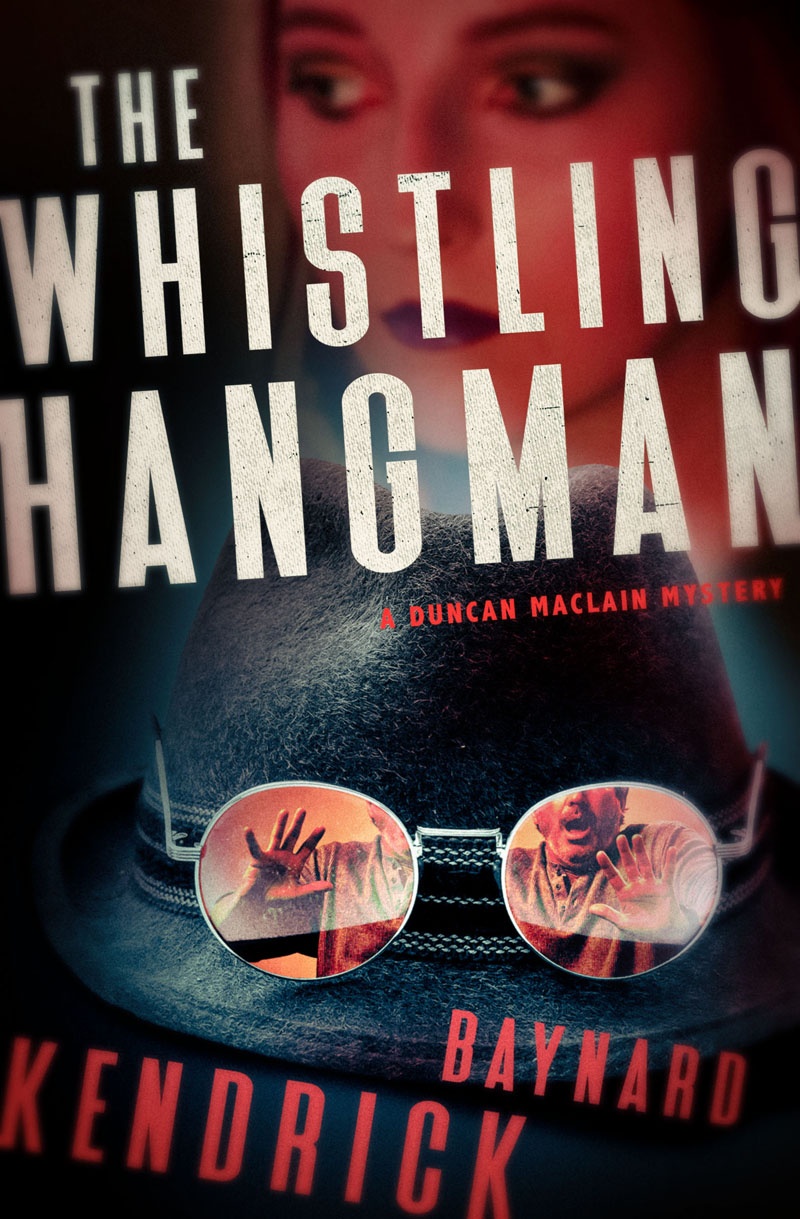
One of my favourite discoveries of recent years has been the character of Captain Duncan Maclain, the blind protagonist of a baker’s dozen of books by Baynard Kendrick. Having enjoyed The Odor of Violets (1941) and Blind Man’s Bluff (1943) as part of the American Mystery Classics range, I’ve been keeping an eye out for other books in the series, and got very lucky stumbling into a copy of The Whistling Hangman (1937) that was so severely beaten it must have owed money to six different loan sharks. And this was an especially exciting find as the novel has been praised by TomCat, apparently featuring some more ingenious impossible deaths in a large New York hotel…and, yeah, largely lives up to its billing.