#83: “One gets to remembering things in a place like this…” – a meta-analysis of Agatha Christie’s At Bertram’s Hotel (1965)

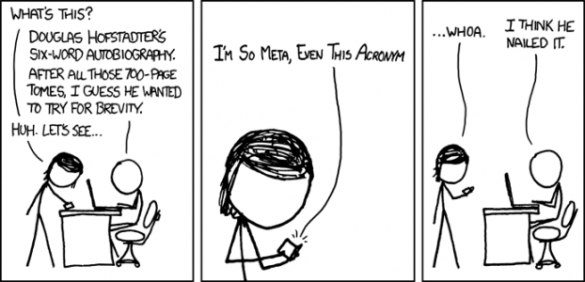
It is a truth universally acknowledged that as Agatha Christie approached the twilight years of her career the quality of her output dipped somewhat.  And yet, as I’ve said elsewhere, what these novels appear to lack in merit from a plot perspective they arguably make up for in a kind of critical self-analysis of her own position in the firmament of crime fiction.  And At Bertram’s Hotel, the tenth Miss Marple novel, provides yet more opportunity to potentially read too much into her writing from this perspective.  I mean, don’t get me wrong, she’s no Douglas Hofstadter, but who’s to say this is a completely bad turn of events*?

meta Continue reading

#13: Five to Try – Non-series Christie

With 80 crime novels and story collections to her name, it’s perhaps unsurprising that Agatha Christie had quite a few repeating characters to call upon: Hercule Poirot, Jane Marple, Tommy and Tuppence Beresford, and Superintendent Battle all got to be the focus of several books.  Ariadne Oliver, Colonel Johnny Race, and Mr. Satterthwaite cropped up a few times each, as arguably did James Parker Pyne and Mr. Harley Quinn through their short stories.  But then what about the others, the one-offs, those sleuths who strutted and fretted their hour upon the stage and then were heard no more?  What immortality do they get?  Well, since you ask…

Continue reading

#12: The Mirror Crack’d from Side to Side (1962) by Agatha Christie

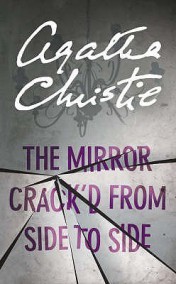
Mirror Crackd“Write what you know” is the kind of aphorism doled out to aspiring authors like public money at a bank’s board meeting, and aged 72 Agatha Christie – world’s biggest-selling author of crime fiction, with a West End play entering its eleventh consecutive year – knew a lot about being old and a lot about crime.  So is it any surprise that this return to crime-solving elderly spinster Miss Jane Marple is so damn good?  It’s the first Miss Marple book to actually feature the wily old fox with any regularity since They Do it with Mirrors (1952) as she only really put in a cameo in both A Pocket Full of Rye (1953) and 4:50 from Paddington (1957).  Of the 16 books Christie would publish from this until her death six of them would feature Marple, composing practically half of the canon, and arguably a familiarity with her subject helped; it’s an impression reinforced by the opening pages of The Mirror Crack’d… wherein the indignities of old age are charmingly laid out from Aunt Jane’s perspective and you can almost see Christie winking at you while she writes.

Continue reading

#11: Five to Try – Non-Carr impossible murders

Simple criteria: novels only, readily available, not conceived in the fertile ground of John Dickson Carr’s imagination.  I’ve also restricted the impossible crime to being the comission of the murder – people stabbed or shot while alone in a room, effectively – more to help reduce the possible contenders than anything else.  Several stone cold classics are absent through the inclusion of other invisible events but that’s a future list (or five…).

Carr – doyen of the impossible crime, responsible for more brilliant work in this subgenre than any other three authors combined – will eventually get his own list (or five…), I just have to figure out how to separate them out; restricting it to five novels was hard enough for this list, but if you’re looking to get started in locked room murders these would be my suggestions:

Continue reading

#7: Five to Try – Golden Age crime fiction

So I love my classic crime, we’ve established that, but where does this leave you?  After all, having someone go on about themselves all the time gets a bit boring.  You’re always saying that, aren’t you?  Sensible person that you are.  So, just for you – yes, you – here’s a list of five books I’d recommend if you’re thinking of getting started reading classsic crime fiction but are a little overwhelmed by all these books by dead authors (I feel the same about classical music, for what it’s worth).

My criteria are fairly simple: novels only, first published between 1920 and 1950, and widely available for purchase now.  It’s all very well having someone recommend the most amazing book ever, but if it was last in print in 1932 and only changes hands in book-fair back rooms for the kind of money that it takes to keep your kids in shoes for a decade…well, that’s just someone showing off, isn’t it.  Why share a love of something that can’t itself be shared?  The list is alphabetical by author, too, because that just seems sensible:

Continue reading