![]()
![]()
![]()
![]()
![]()
Having written six fast-paced and energetically witty mysteries featuring Jake and Helene Justus and their lawyer friend John J. Malone, Craig Rice decided that 1942 would be a year of experimentation. Some worked, some was hard work, and some was probably successful if you like that kind of thing. Thankfully, 1943 saw her return to Malone & Co., though the ghost of experimentation wasn’t completely laid and a little of the need to innovate — no bad attitude, not if you see yourself in writing for a while — carried through to Having Wonderful Crime (1943). So Jake, Helene, and Malone decamp to New York rather than Chicago, but murders happen in the Big Apple too, and before long we’re caught up in one.
Georgiana Ann Randolph Craig
#1335: The Man Who Slept All Day (1942) by Craig Rice [a.p.a. by Michael Venning]
![]()
![]()
![]()
![]()
![]()
Reading her novels chronologically, I’m moved to declare that 1942 was a big year for Craig Rice. Prior to then, she had written five fast-moving, wildly inventive mysteries featuring wisecracking lawyer John J. Malone and Jake and Helene Justus, but 1942 saw Rice diversify with (not necessarily in this order) a Malone novel in The Big Midget Murders (1942) that ramped up plot complexity, The Sunday Pigeon Murders (1942) taking on a new setting with a more dim-bulb presence at its core, atmosphere overwhelming the slow-moving Telefair (1942) and now, with The Man Who Slept All Day (1942), long character-work taking over from plot mechanics so that you really do care about the people involved. That noise you hear is the stretching of some wings.
#1272: Yesterday’s Murder, a.k.a. Telefair (1942) by Craig Rice
![]()
![]()
![]()
![]()
![]()
As my grandfather used to say, “When you fall off the horse, get back on the horse”. And that’s why he lost his job as a stuntman in Western movies. But the fact remains that lately I’ve had some disheartening reading experiences with favoured authors — John Dickson Carr, J.J. Connington, Freeman Wills Crofts, A.A. Fair, Craig Rice, Cornell Woolrich, J.J. Connington again — and so the tempting thing is to leave them alone for a while, wait for that memory to fade, and then return. But, no, I’m not doing that, I’m reading Rice again now, because why not? That’s what the horse is here. It was a literary horse all along.
#1241: The Sunday Pigeon Murders (1942) by Craig Rice

![]()
![]()
![]()
![]()
![]()
Having published five books about lawyer John J. Malone and his friends Jake Justus and Helene Brand between 1938 and 1941, Craig Rice evidently felt the need for change. Consequently, only one of the four books she published in 1942 featured that triumvirate. I’ve been unable to track down Telefair, a.k.a. Yesterday’s Murder (1942) or The Man Who Slept All Day (1942) — the second published under the nom de plume Michael Venning — but I do have The Sunday Pigeon Murders (1942), the first of two novels Rice would complete about Robert Emmett ‘Bingo’ Riggs and Boniface ‘Handsome’ Kusak. And, as a fan of Rice’s writing, I can comfortably say that, well, I found this one a little flat.
#1170: The Big Midget Murders (1942) by Craig Rice

![]()
![]()
![]()
![]()
![]()
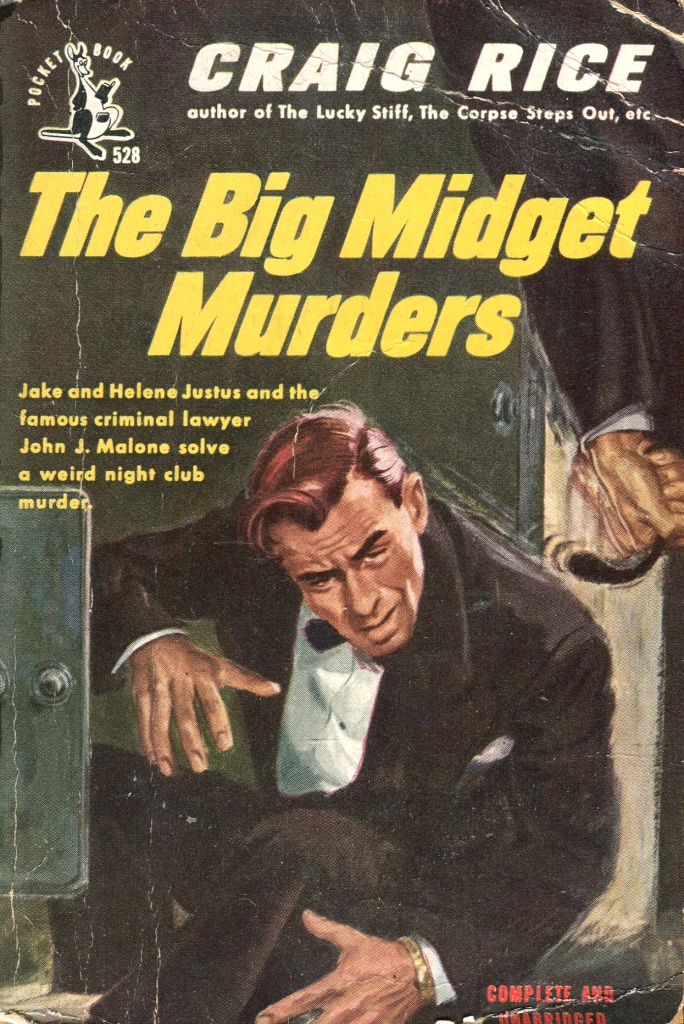
Though Jay Otto is “less than three feet high…his proportions were almost exactly the same as those of a full-sized man; his head was not too large for his body; his arms and legs were proportionately the right length”. The man is also a gifted mime, proving quite the hit at the opening night of Jake Justus’s new nightclub, the Casino. Which means it’s a blow for Jay and Jake alike when this “big midget” is found hanged in the wardrobe in his dressing room from a rope made of eleven mismatched stockings. And it’s even more of a blow for Jake, his wife Helene, and their lawyer friend John J. Malone when Jay’s body vanishes after they hide it to protect the reputation of the night spot.
#1094: Trial by Fury (1941) by Craig Rice

![]()
![]()
![]()
![]()
![]()
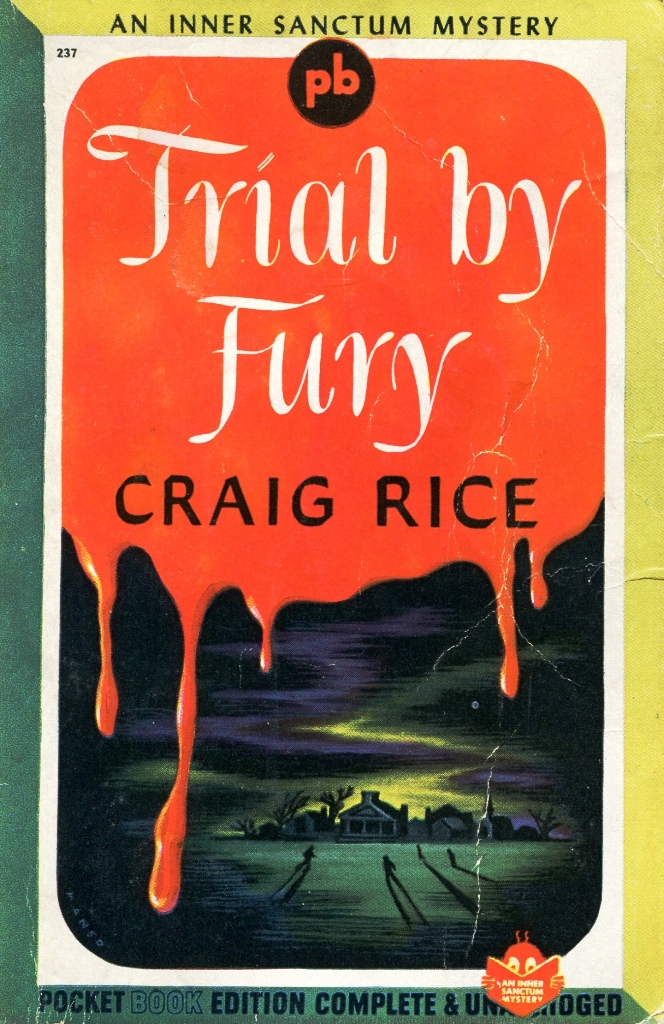
“This is the sort of thing we came to the country to get away from,” Jake Justus laments when, being given a tour of the Jackson County Courthouse in Wisconsin, the dead body of ex-Senator Gerald L. Peveley rolls down an emergency stairwell and lands at his feet. And with the D.A. insisting that “nobody here could have murdered him [because] we all know each other” it’s only a matter of time before Jake finds himself arrested and his wife Helene must enlist the services of Chicago-based lawyer John J. Malone, who has joined the Justuses on four previous murder investigations, to dig them out of trouble…a task that will only get harder as the murders in the town multiply.
#1009: The Right Murder (1941) by Craig Rice

![]()
![]()
![]()
![]()
![]()
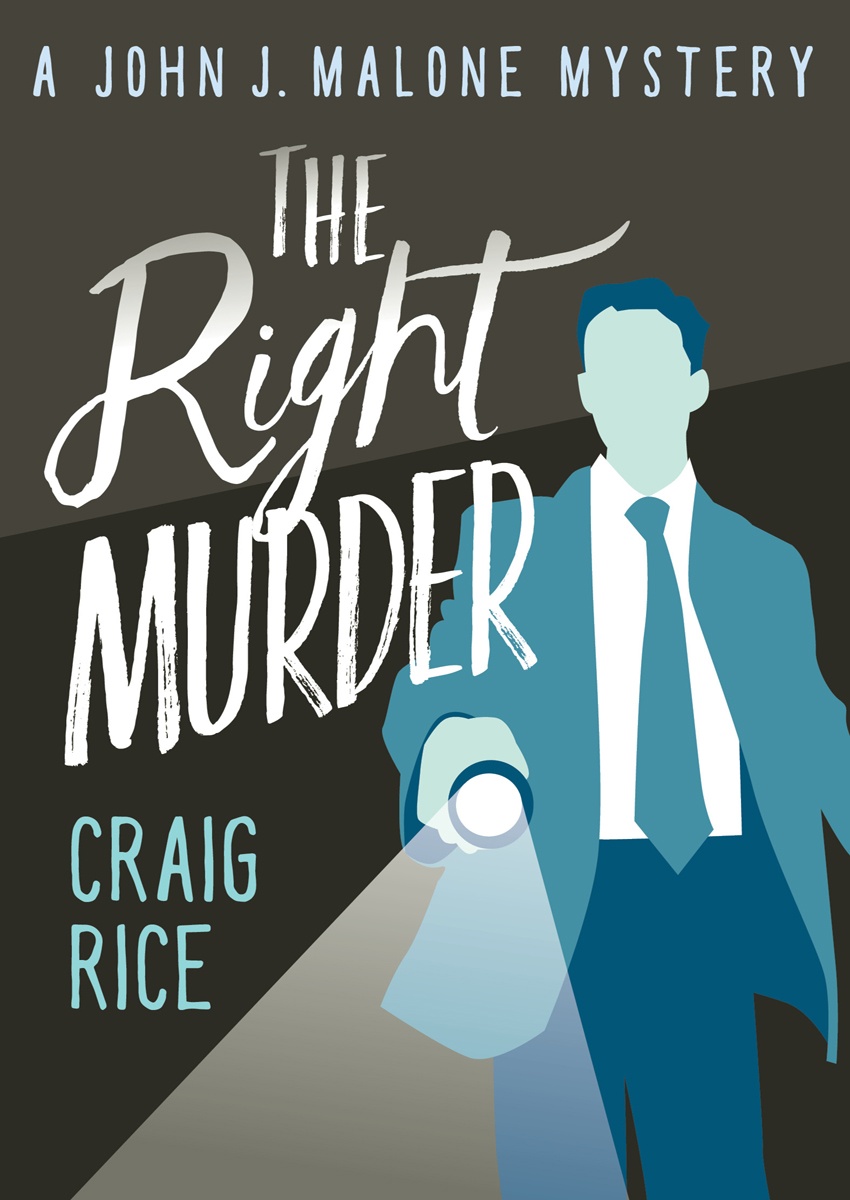
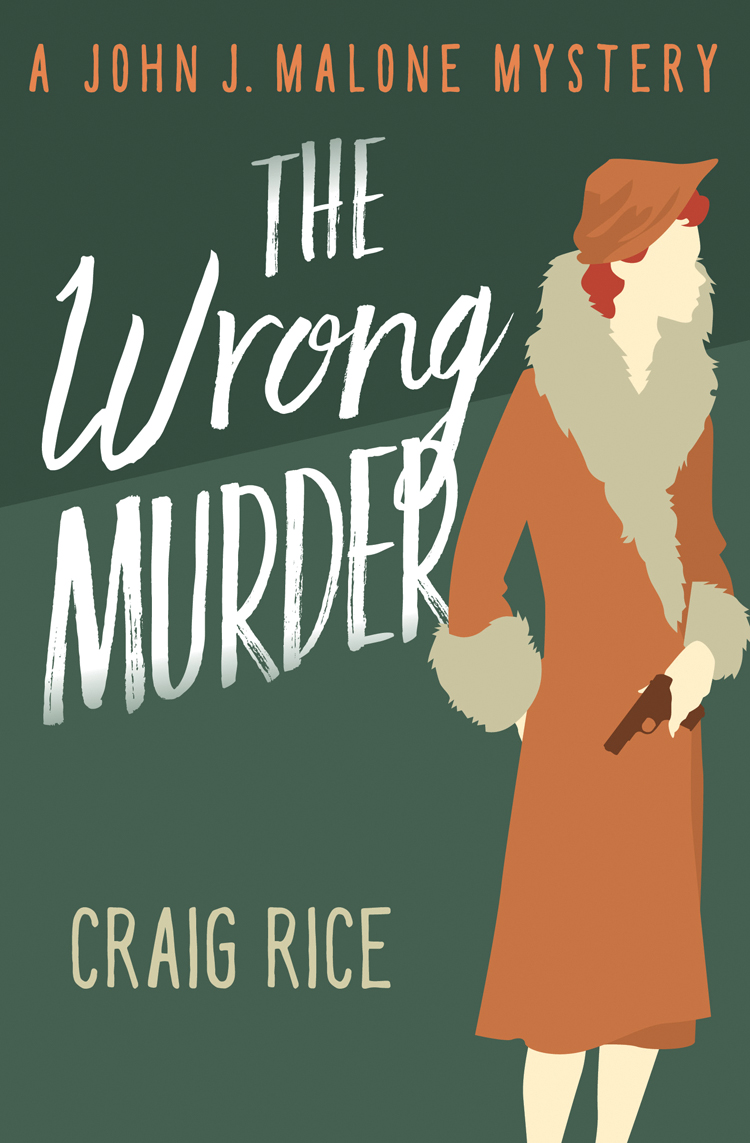
“Now you take this guy who was killed New Year’s Eve. If he was gonna be killed, why couldn’t he have had his passport on him, or a driver’s license, or even a calling card? No. Not a damn thing. So I have to go to all the trouble of finding out who he was. When I do find out, then what? More trouble.” Homicide Captain Daniel von Flanagan has a point, as there’s also the matter of the dead man staggering into a bar where lawyer John J. Malone was drowning his sorrows and croaking out “Malone!” before expiring on the floor, added to Malone’s insistence that he’d never seen the man before. And what of the key numbered 114 the man slipped to Malone…a key that was apparently stolen from the lawyer only moments later?
#954: The Wrong Murder (1940) by Craig Rice

![]()
![]()
![]()
![]()
![]()
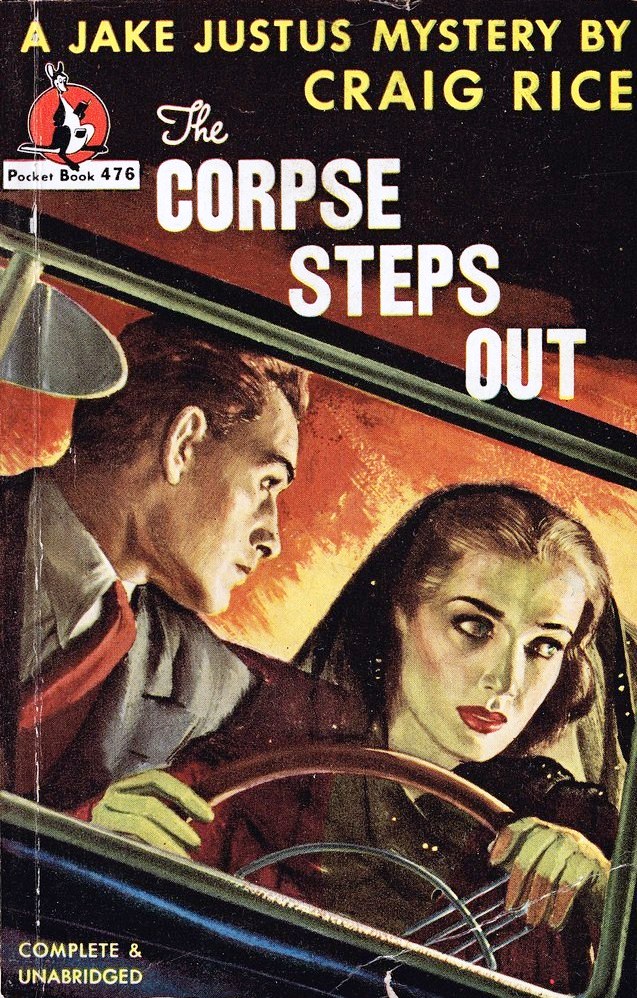
At the bunfight following his marriage to Helene Brand, theatrical agent Jake Justus, reflecting that “he had had more than his fair share of homicides”, is unprepared for Mona McClane boasting that she will kill someone “in broad daylight on the public streets, with…plenty of witnesses”. Surely she can’t be serious? And so a bet is struck — powered, no doubt, by the veneer of alcohol that drives so much of Craig Rice’s wild plotting — that, if Mona commits the murder, Jake will prove her guilty of it. And then a man is shot dead on the busiest corner in Chicago during the Christmas rush, with Mona McClane spotted in the vicinity just moments before.
#879: The Corpse Steps Out (1940) by Craig Rice

![]()
![]()
![]()
![]()
![]()
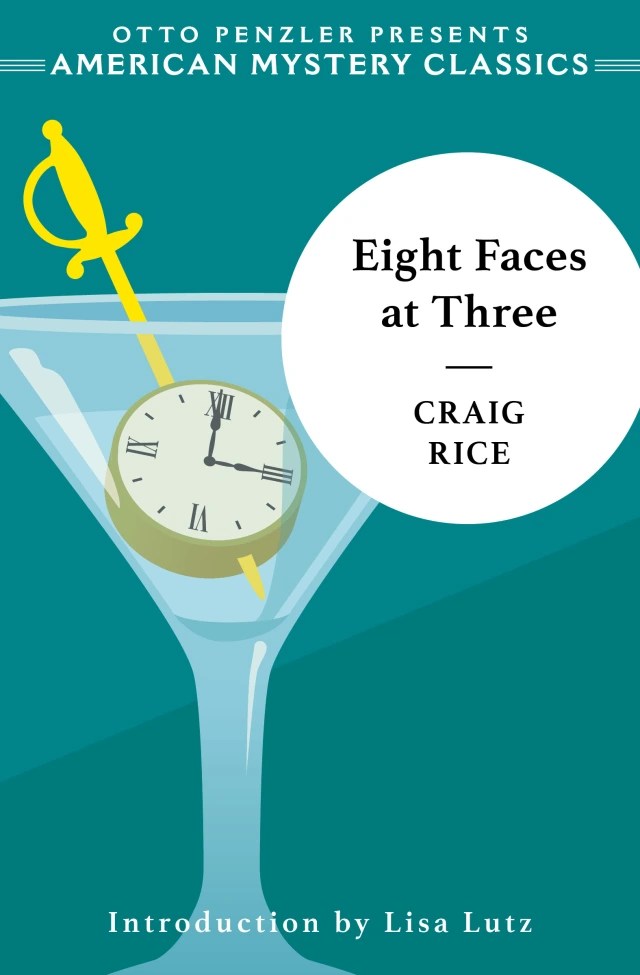
One of the joys of this blog is sharing the excitement of discovery with people who understand. I like to think that I would have come to the work of Freeman Wills Crofts, R. Austin Freeman, Cornell Woolrich and others in due course, but having my exposure to and growing excitement for their fictional endeavours charted here among fellow fans makes it feel even more special. Add to that list Georgiana Ann Randolph Craig, whose work as Craig Rice I’m now three novels deep into and who is someone can confidently say I’m going to love even more in the years ahead. I mean that in all earnestness: Craig Rice and I are going to be friends for a long time.
#846: Eight Faces at Three, a.k.a. Death at Three (1939) by Craig Rice

![]()
![]()
![]()
![]()
![]()
At the risk of upsetting the accepted order of things, I have a serious question: in placing Queens of Crime alongside Agatha Christie, why is the scope always so narrow? The Sayers-Marsh-Allingham-Tey debate rages ever onward, but, after reading just two of her novels, I’m going to throw a hat labelled ‘Craig Rice’ into the ring and stand back to see what happens. Her debut Eight Faces at Three (1939) ain’t perfect, and the review will explain in more detail, but to summarise: buy this now, because we need to convince the American Mystery Classics that a full reprint of Craig Rice is something they should commit to. You can thank me later.