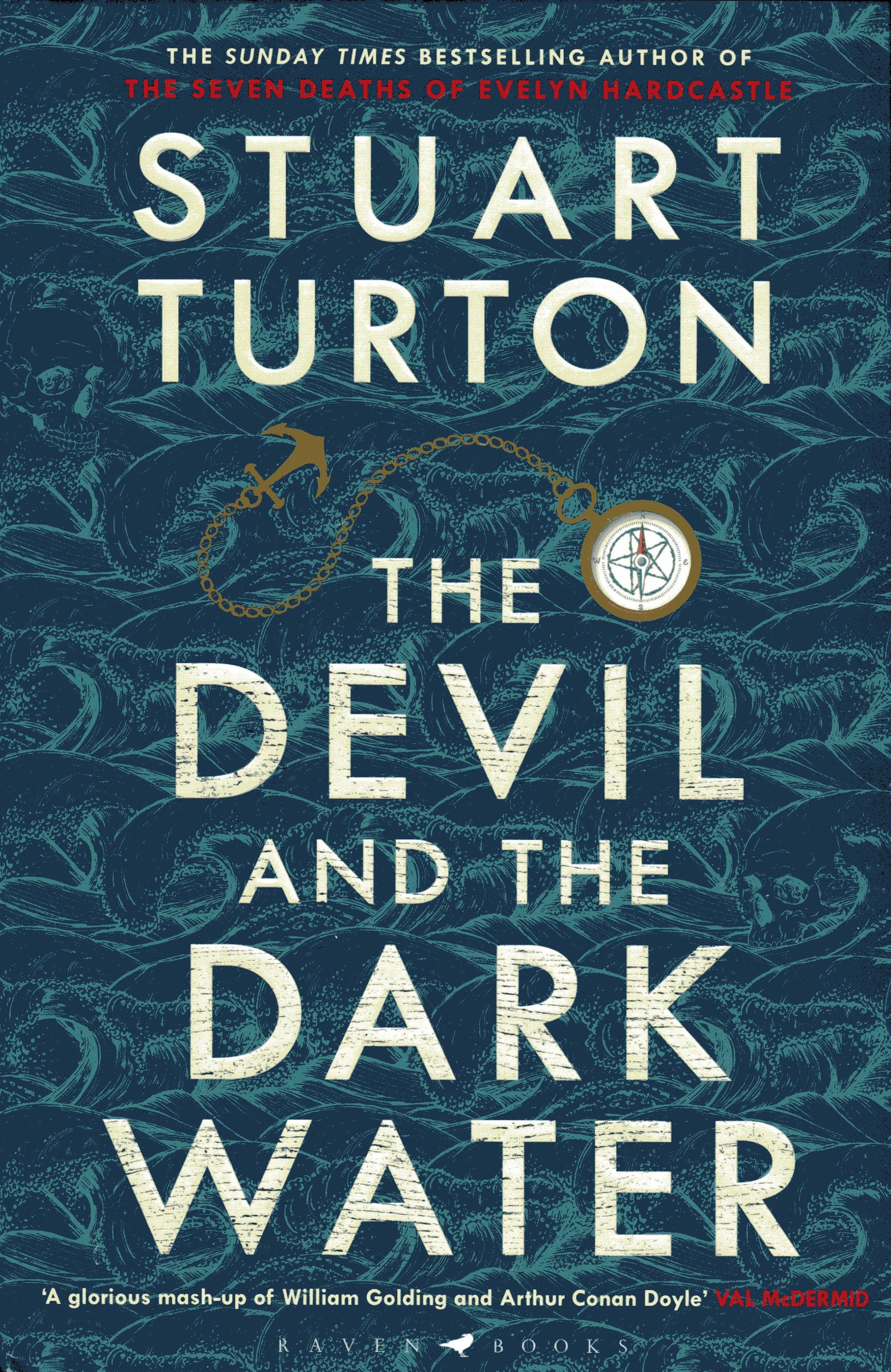
#728: A Little Help for My Friends – Finding a Modern Locked Room Mystery for TomCat Attempt #15: The Devil and the Dark Water (2020) by Stuart Turton

While I don’t quite share the optimism of my fellow impossible crime aficionado TomCat that a second Golden Age of detective fiction is on the horizon, there can be no denying that some great neo-orthodox detective novels have been written in recent years by the likes of James Scott Byrnside, Anthony Horowitz, and (with a heavy emphasis on the neo) Stuart Turton.

Continue reading
In GAD We Trust – Episode 13: Agatha Christie’s Poirot: The Greatest Detective in the World (2020) by Mark Aldridge [w’ Mark Aldridge]

This year’s celebrations of the centenary of Hercule Poirot’s debut and, arguably, the dawn of the Golden Age of Detection have obviously been overshadowed by wider events, but there’s still much to celebrate — not least of which is a new book about Poirot from Mark Aldridge.

Continue reading

#704: “That’s an interesting choice of phrase, young man…” – The Dead Sleep Lightly (1983) by John Dickson Carr [ed. Douglas G. Greene] Part 1 of 2

It’s fair to say that no-one has done more for the curation of John Dickson Carr’s work than Douglas G. Greene: collecting various obscure short pieces in the likes of The Door to Doom and Other Detections (1980), Merrivale, March, and Murder (1991), and Fell and Foul Play (1991), writing the staggeringly comprehensive (and recently reprinted) biography The Man Who Explained Miracles (1995), and enabling, through Crippen & Landru, publication of two — soon to be three — collections of Carr’s radio scripts edited by Tony Medawar.

Continue reading

#694: “It was a small matter but very conclusive.” – The Singing Bone, a.k.a. The Adventures of Dr. Thorndyke [ss] (1912) by R. Austin Freeman

Singing Bone, The

It was my understanding that William Shakespeare invented the word “eyeball”.  The noun eye was extant at the time, as was the concept of a ball being something round, but that Shakespeare was the one to take the two principles and conflate them.  It turns out he didn’t [see the comments below this post], but presumably someone did, and that’s all I really need to be the case for this opening paragraph.

Continue reading