Erle Stanley Gardner


#308: The D.A. Holds a Candle (1938) by Erle Stanley Gardner
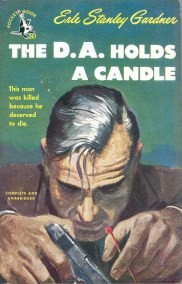 After the disappointment of last week, I should dive straight back in to another dense impossibility and to hell with any lingering doubts. But, well, my meretricious moods find me yearning for a little comfort reading, and so it’s back to Doug Selby and the gang. Here we find newly-elected D.A. Selby and Sheriff Rex Brandon contending with obstreperous reporters, influential businessmen, political opportunism, and a host of tangled stories and motives when trying to unpick the riddle of a dead body found bearing a note that states the intention of the possessor to have killed someone else…but no second body to back up the claim. And hold onto your hats, because that’s not the only thing that doesn’t add up.
Continue reading
#276: The D.A. Calls it Murder (1937) by Erle Stanley Gardner
 Erle Stanley Gardner, in my view one of the four most important male authors of classic crime fiction, is of course best known for the savvy machinations of Perry Mason, a man who never met a legal loophole he didn’t like. Yet between 1937 and 1949 he wrote nine books that just might comprise some of his most interesting writing, those featuring D.A. Doug Selby. Selby is a more naive presence than Mason — equally ready to fight his corner, yet strangely trusting in a way that at times proves his undoing — and in order to bring these books a little more attention I’m going to work through them in order over the next few months (yes, yes, we’ve heard this before… well I need a break from that, and this is the perfect antidote).
Continue reading
#139: Hard Case Crime Publishing ‘Lost’ Erle Staney Gardner Novel!

 There’s an appealing irony in the assertion that you know an author has hit the big time when everyone remembers the name of their characters over that of the creator themself: Lisbeth Salander, Jack Reacher, Tarzan, Jason Bourne, we erudite types remember them, of course, but the world at large – fuelled no doubt by TV and films – associates more with their representations than their origins. Erle Stanley Gardner – a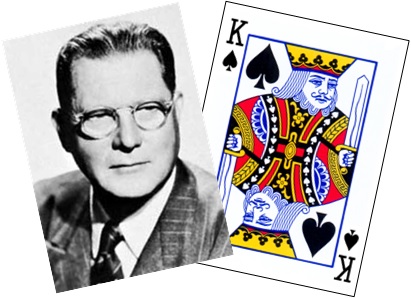
 The Invisible Event