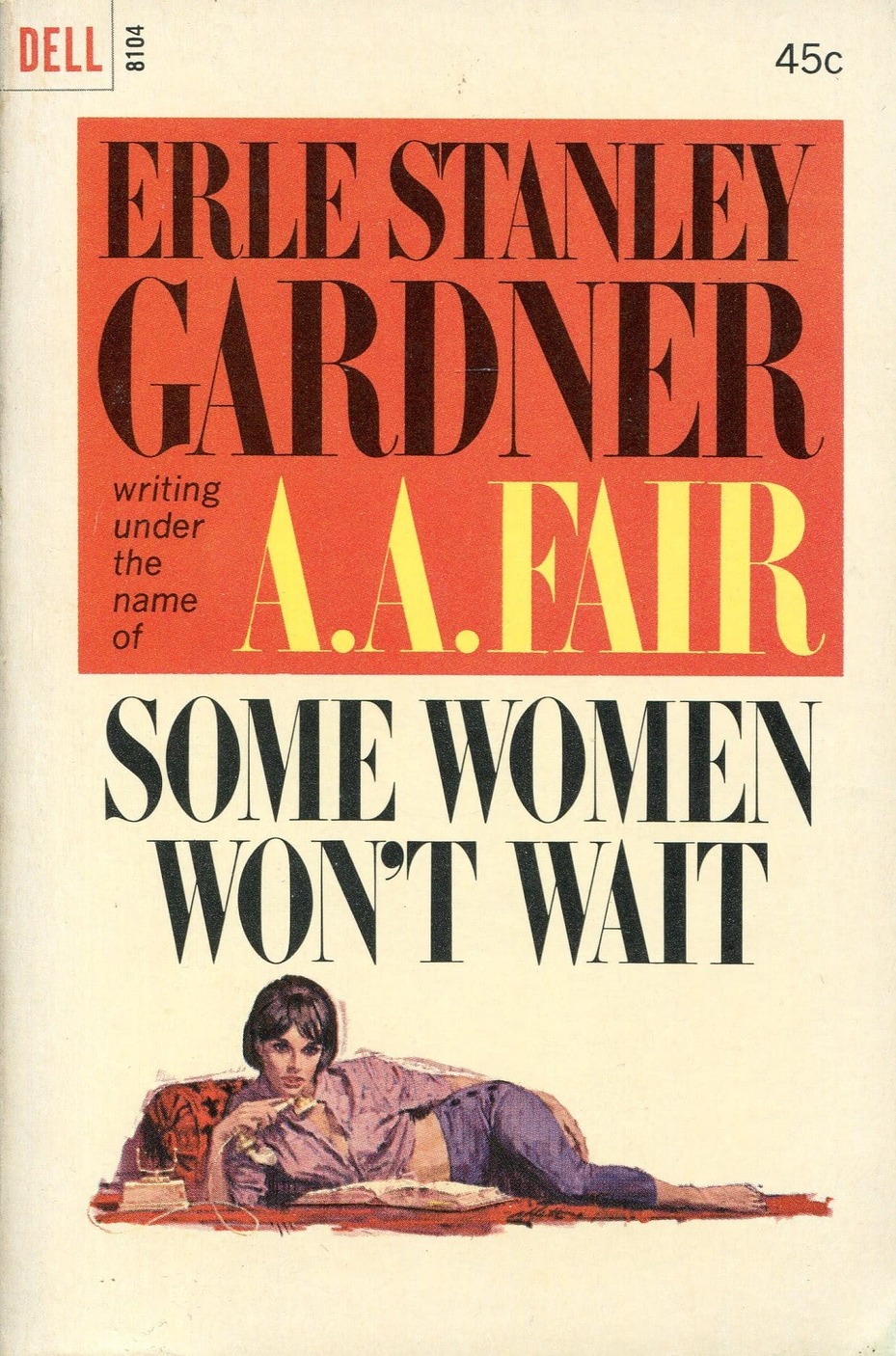
#1359: Top of the Heap (1952) by A.A. Fair


Official Case #13 for the Cool & Lam Detective Agency, Top of the Heap (1952) finds A.A. Fair, nom de plume of Erle Stanley Gardner, on slick-but-unmemorable form — mixing ingredients in a way that is at once comfortably familiar for this series yet tries to ring a few changes at the same time. And while it’s certainly not a bad book, for this reader — an avowed fan of Gardner and Fair both — it all sort of fell apart in the closing stages in which so much surmise is piled up that it’s to be wondered whether some sort of meta-textual commentary on the concept of ‘solving’ a case is being offered. It’s not, but, wow, is Donald Lam ever out on a limb or five here, and it shows.

Continue reading

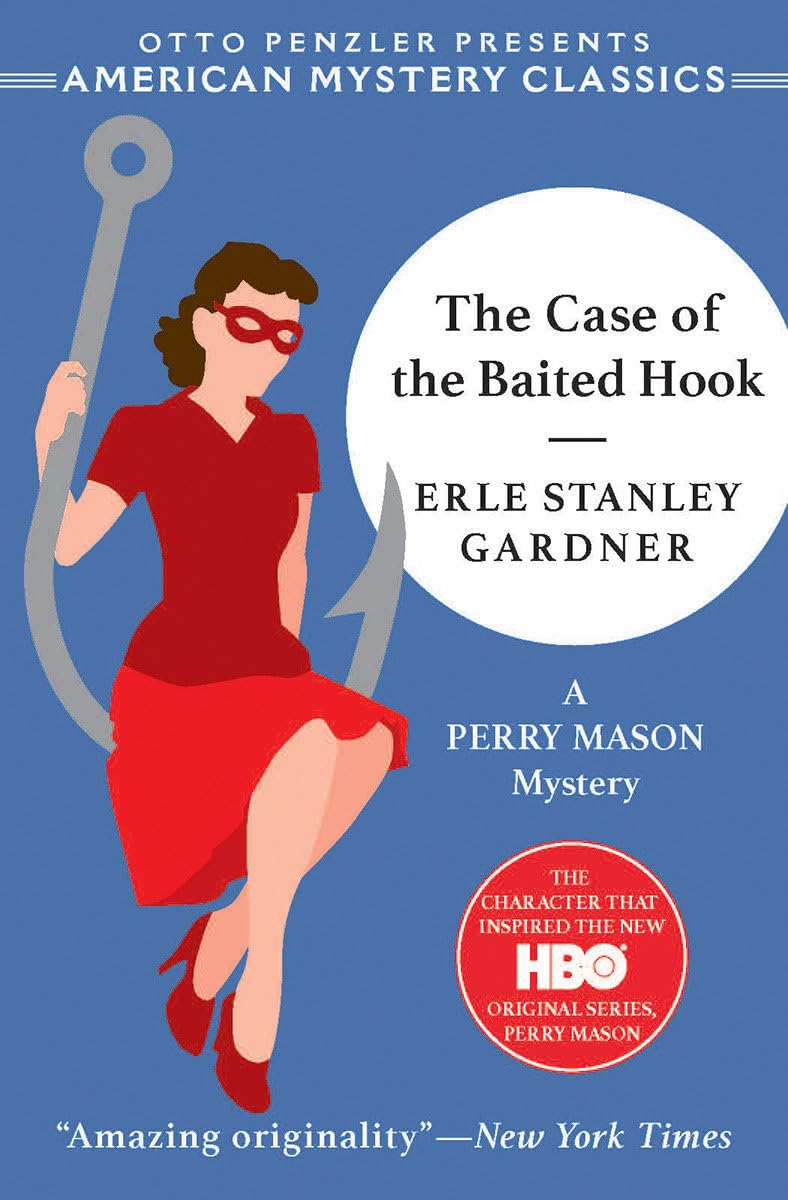
#1327: “There’s a plain, logical solution to the whole business…” – The Case of the Substitute Face (1938) by Erle Stanley Gardner

While Brad adopts a thematic approach to reading the Perry Mason novels of Erle Stanley Gardner, I’m more a sort of wander in the meadow, la-la-la, isn’t everything beautiful kinda guy, and so I’m just getting it into my head I want to (re)read one and picking them up on a whim. But let’s attempt some method and stick to the approximate era of the last one I reviewed, eh?

Continue reading

#1326: Bedrooms Have Windows (1949) by A.A. Fair


The twelfth published novel from Erle Stanley Gardner under his A.A. Fair nom de plume, Bedrooms Have Windows (1949) finds L.A. P.I.s Bertha Cool and Donald Lam once more skirting the law in pursuit of a case whose precise shape is obscured by the sheer number of actions dragged across its trail. And while this should be getting pretty tiresome by now, the truth is that since series nadir Crows Can’t Count (1946) Fair has delivered some blisteringly fast and fun little crime thrillers that go a long way to show how to write entertainingly: let everything fly at the page, and have someone as unshakeable as Donald on hand to unpick whatever madness you throw him into.

Continue reading

#1275: Fools Die on Friday (1947) by A.A. Fair


As my grandfather used to say, “When you fall off the horse, get back on the horse”.  And that’s why he made such a controversial judge at gymnastic competitions. But the fact remains that lately I’ve had some disheartening reading experiences with favoured authors — John Dickson Carr, J.J. Connington, Freeman Wills Crofts, A.A. Fair, Craig Rice, Cornell Woolrich J.J. Connington again, maybe Rice a second time — and so the tempting thing is to leave them alone for a while, wait for that memory to fade, and then return. But, no, I’m not doing that, I’m reading Fair again now, because why not? That’s what the horse is here. It was a pommel horse all along.

Continue reading

#1255: The Case of the Rolling Bones (1939) by Erle Stanley Gardner

Case of the Rolling Bones

star filledstar filledstar filledstar filledstars
At a rough estimate, I reckon I’ve read 40 to 50 of Erle Stanley Gardner’s books featuring Perry Mason.  Precisely which ones?  Yeah, I’m vague on that.  But The Case of the Rolling Bones (1939) — which I make the fifteenth time Mason sallied forth to lock legal horns on behalf of some wronged party — I definitely remembered…until I was about halfway through it recently and realised that, no, I probably hadn’t read this before. In a way, then, it’s lovely to be able to find more classic-era Mason titles which I can treat as completely ‘new to me’ reads, and this is a strong entry in Gardner’s output that has a very clever idea at its core, warranting its recent reprinting in the American Mystery Classics range.

Continue reading

#1244: To Take a Backward Look – My Ten Favourite Mysteries of the 1930s

I picked my ten favourite crime and detective novels published in the 1930s a little while ago for my online book club, but I only do a Ten Favourite… list every four months or so and thus am only just getting round to writing it up now. I am so late to the party that it might as well never have happened, but I ironed a shirt specially so, dammit, I’m going to dance. Or something.

Continue reading

#1230: Crows Can’t Count (1946) by A.A. Fair

Crows Can't Count

star filledstarsstarsstarsstars
How do you go about discussing a book you couldn’t even be bothered to finish? The tempting thing is not to review it at all, but I’m committed to certain undertakings on this blog — the complete works of Freeman Wills Crofts, the complete John Thorndyke stories of R. Austin Freeman, more Walter S. Masterman than most people will ever consume — and the full Cool & Lam by A.A. Fair, nom de plume of Erle Stanley Gardner, is one of them. So how to write about Crows Can’t Count (1946), the tenth published Cool & Lam novel, and the first time this normally lively and entertaining series has draaaaaaagged me into the doldrums of an almost spiritual level of indifference?

Continue reading

#1189: Give ‘Em the Ax, a.k.a. An Axe to Grind (1944) by A.A. Fair

Give Em the Axe

star filledstar filledstar filledstarsstars
On the day when the United States of America celebrates its independence, let’s turn our eye upon American author Erle Stanley Gardner, here publishing the ninth novel to feature Bertha Cool and (the triumphant return of) Donald Lam, Give ‘Em the Ax, a.k.a. An Axe to Grind (1944). Having been invalided out of the Navy with tropical fever, Donald is back in America and straight back to work: initially asked to rustle up some dirt on the suspected gold-digging new wife of a businessman, it’s not long before things become unsurprisingly more complex, and the small matter of murder rears its head. How, though, does a car accident which Bertha witnesses play into proceedings?

Continue reading

#1165: Cats Prowl at Night (1943) by A.A. Fair

Cats Prowl at Night

star filledstar filledstar filledstar filledstars
Look, I can’t swear to it, but I have a suspicion that Cats Prowl at Night (1943), the eighth published book in Erle Stanley Gardner’s series featuring Bertha Cool and Donald Lam, written under this A.A. Fair nom de plume, just might be the first title of his I ever read. Reading it now, some 20 years later, it tickled enough memory buttons to be tauntingly familiar while also furiously out of reach, but the distinct aspect that separates this book from its brethren — namely the absence of pocket dynamo Donald Lam from its pages — feels familiar, if only because I get the sense I started these books with no sense of Lam as a character.

Continue reading