-
Subscribe
Subscribed
Already have a WordPress.com account? Log in now.
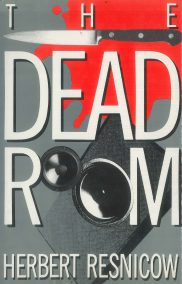 When the unpopular patriarch of a family is found stabbed to death in his locked study, it’s clear that one of the six family members gathered at the ancestral pile must be the murderer (the servants, of course, are excluded immediately). It’s up to our plucky amateur detective team to work out how he was killed and beat the police to the killer before it’s too late while also beginning to realise how they really feel about each other… So far, so Golden Age. Now substitute the following nouns: patriarch/inventor, family/hi-fi company, study/anechoic chamber (sound-testing room, if you will), family members/company executives, ancestral pile/company studio, and servants/technicians. What you have now is the plot of Herbert Resnicow’s The Dead Room. It’s that simple a switch – but for the trappings of its location, this could not be more of a Golden Age detective story, and the entire enterprise is undertaken in the same spirit as those classics. Continue reading
  There are times when it’s possible to pinpoint the exact moment when a novel doesn’t fulfil its promise, and given the intricacy of many novels of detection these can sometimes be very keenly felt. Perhaps the detective is an absolute duffer (an accusation frequently levelled at Freeman Wills Croft’s Inspector French), or the guilty party comes disappointingly out of nowhere (as in John Dickson Carr’s The Blind Barber), or perhaps the solution offered up to a brilliant problem is a shade on the simplistic side (the disappearance from the locked bathroom in John Sladek’s otherwise-superb Black Aura springs to mind). For this second novel by husband and wife team Kelley Roos, I’d say the main problem is in the selection of the victim: the setup is excellent, the characters are a delight, and come the murder…the most obvious victim is selected and the book never quite recovers.
 The Invisible Event