#1320: A Minor Operation (1937) by J.J. Connington


If the year 2020 will be remembered for anything, it will be that I bought a set of 18 J.J. Connington novels on eBay and started my way through them. Of those 18, only A Minor Operation (1937) — Connington’s sixteenth novel and the eleventh to feature Chief Constable Sir Clinton Driffield — showed any signs of being read, implying that this one book alone was bad enough for the seller to completely eradicate Connington from their shelves. Well, having finally reached this accurséd title, I really enjoyed it — finding it one of the strongest of Alfred Stewart’s books yet, only lacking in the final stretch with a too-casual reveal of our killer and a motive that’s perhaps a little too complex to really hit home.

Continue reading

#1269: The Brandon Case, a.k.a. The Ha-Ha Case (1934) by J.J. Connington


As my grandfather used to say, “When you fall off the horse, get back on the horse”. And that’s why he lost his job and the Health and Safety Officer at that horse riding school. But the fact remains that lately I’ve had some disheartening reading experiences with favoured authors — John Dickson Carr, J.J. Connington, Freeman Wills Crofts, A.A. Fair, Craig Rice, Cornell Woolrich — and so the tempting thing is to leave them alone for a while, wait for that memory to fade, and then return. But, no, I’m not doing that, I’m reading Connington again now, because why not? That’s what the horse is here. It was a metaphorical horse all along.

Continue reading

#1235: Gold Brick Island, a.k.a. Tom Tiddler’s Island (1933) by J.J. Connington

Gold Brick Island

star filledstar filledstarsstarsstars
The Castleford Conundrum (1932) represented a change of pace for the detective fiction that Alfred Walter Stewart had been writing under the name J.J. Connington, being decidedly longer on character than his earlier works.  Gold Brick Island, a.k.a. Tom Tiddler’s Island (1933) from the following year shows that Stewart was clearly in for some experimentation in this era, seeing as it’s a separation from detective fiction altogether, rendering itself rather more like an adventure for a grown up Famous Five. Some mysterious types and a honeymooning couple converge on a tiny Scottish island, and the result is…somewhat mixed.

Continue reading

#1184: The Castleford Conundrum (1932) by J.J. Connington

Castleford Conundrum CW

star filledstar filledstar filledstarsstars
It is a truth universally accepted that an author with a sizeable output will probably vary their approach from time to time. And so, in his twelfth mystery novel to be published under his J.J. Connington nom de plume, Alfred Walter Stewart clearly decided that what his increasingly accomplished criminous schemes needed was more character — a little more personality on the part of the people affected. And thus The Castleford Conundrum (1932) positively overflows with delightful character beats which really bring the situation to life…except that they come at the expense of the criminous element, which feels lucky to come in second place where the book’s priorities are concerned.

Continue reading

#1158: The Boathouse Riddle (1931) by J.J. Connington

Boathouse Riddle

star filledstar filledstar filledstar filledstars
Perhaps sensing limitations in the character after five novels, J.J. Connington seemed to retire Chief Constable Sir Clinton Driffield following Nemesis at Raynham Parva (1929) and wrote two novels of diverging quality featuring the bland Superintendent Ross. But, with Ross possibly not finding traction in either his creator’s mind or in that of the reading public, The Boathouse Riddle (1931) sees the return of Sir Clinton, large as life and unknowable as ever, as a murdered groundskeeper interrupts his holiday on the estate of his friend ‘Squire’ Wendover. And so, with nary a sigh, our detective rolls up his sleeves and gets to work…

Continue reading

#1097: Mystery at Lynden Sands (1928) by J.J. Connington

Mystery at Lynden Sands

star filledstar filledstar filledstarsstars
When Derek Fordingbridge, long-supposed-dead heir to the family fortune, apparently resurfaces, his face mutilated in the war and all other identifying characteristics similarly compromised, his uncle Paul is naturally sceptical. When this re-emergence is followed hard upon by the murder of the old family retainer who cared deeply for Derek and the theft of Derek’s diaries from family pile Foxhills…well, it’s almost like we’re in a classically-styled piece of detective fiction, eh? Thankfully Chief Constable Sir Clinton Driffield is in the area and ready to help out Inspector Armadale with his investigations into which of two possible interpretations this should be taken as.

Continue reading

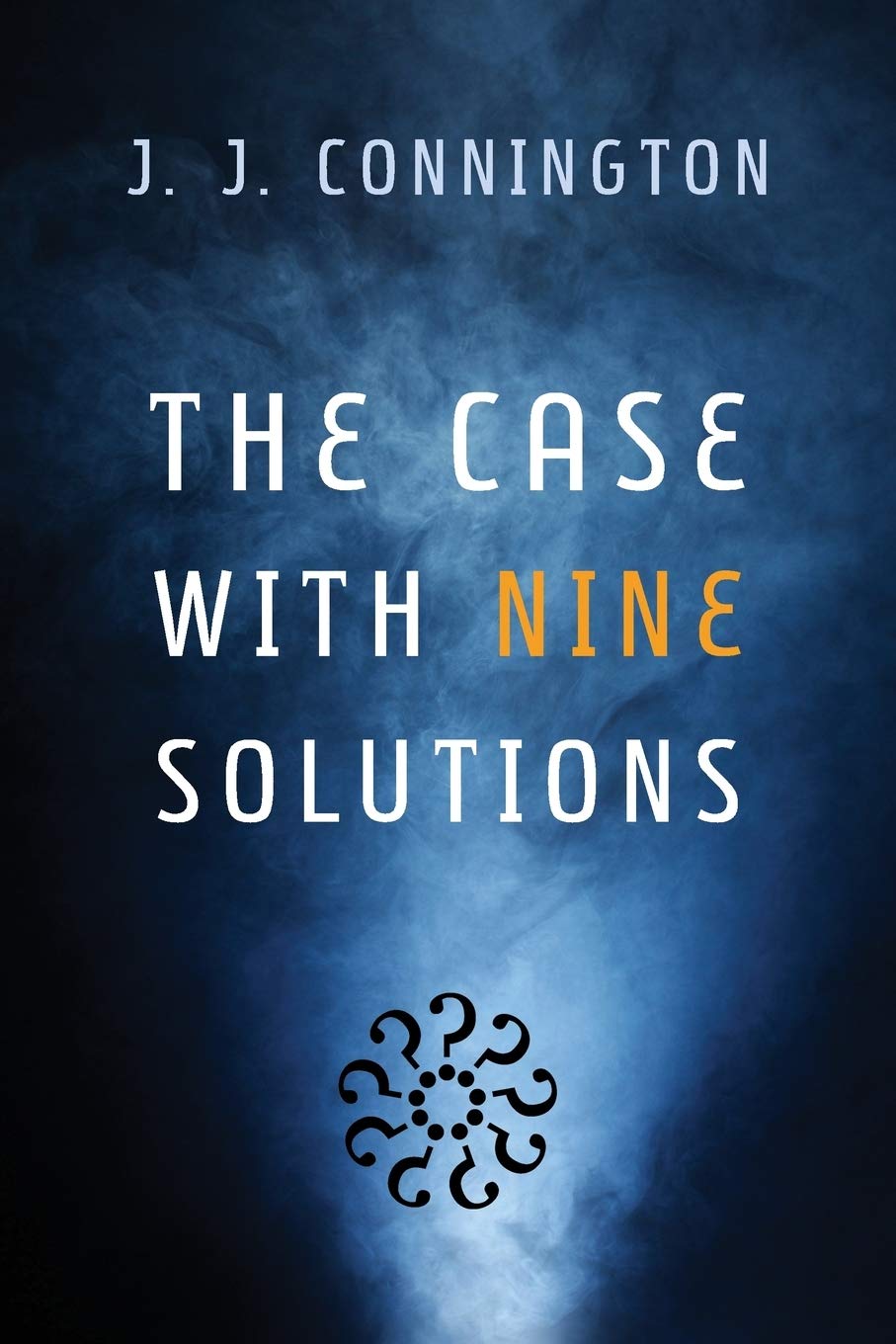
#1067: The Case with Nine Solutions (1928) by J.J. Connington

Case with Nine Solutions

star filledstar filledstar filledstar filledstars
Hard to believe, I know, but I had a life before this blog, and in that life I read The Case with Nine Solutions (1928) by J.J. Connington and was mildly disappointed that those ‘solutions’ were merely permutations on the interpretations put on two deaths and not a Poisoned Chocolates Case-esque reinterpretation of available information to give a nonet of distinct answers to explain away events.  Beyond that, I remembered very little about it and so, now more versed in Connington’s writing, I return — making this the fifth Connington novel I’ve read in the last 12 months, which is probably enough to convince me that I’m now a fan.

Continue reading

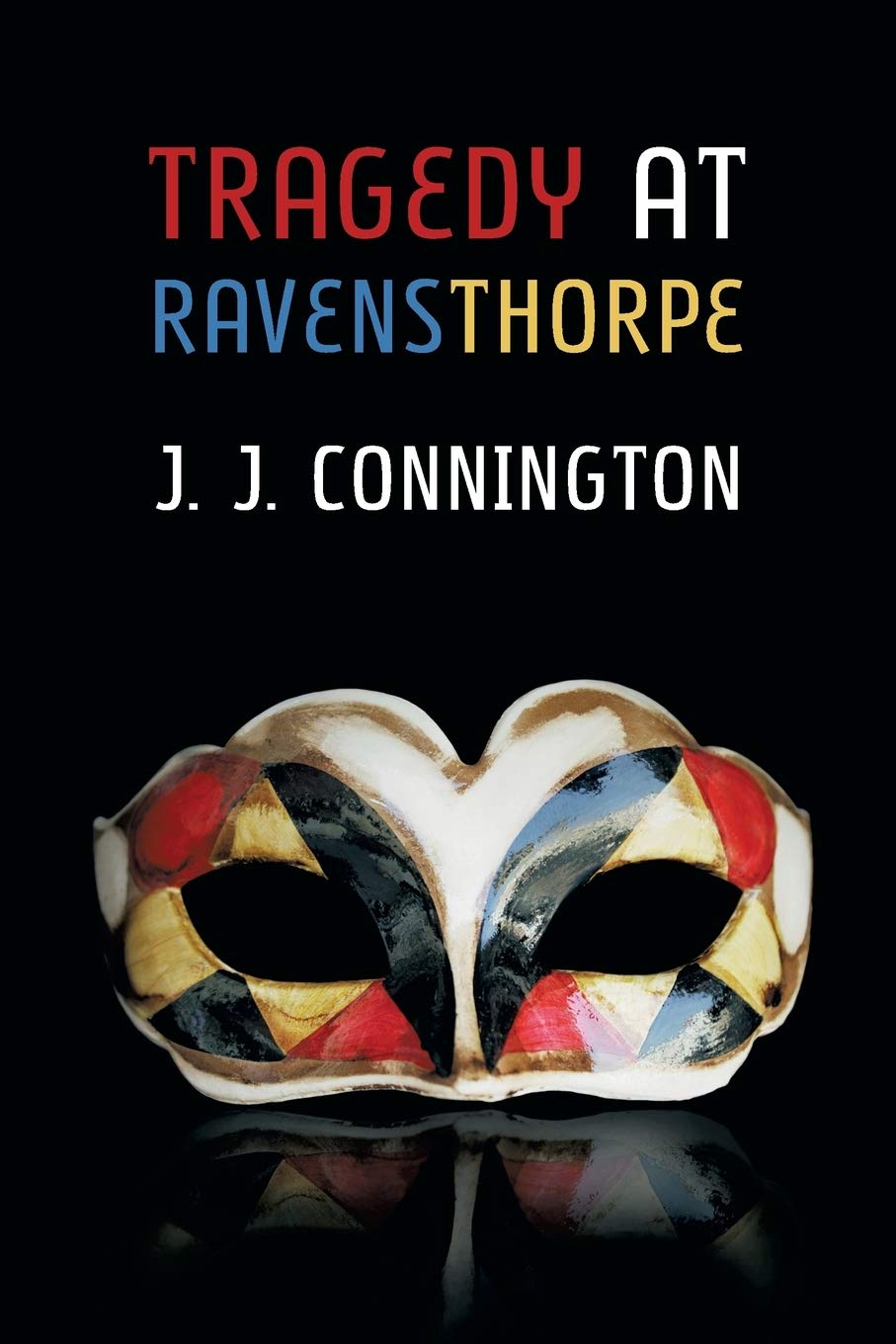
#1031: Tragedy at Ravensthorpe (1927) by J.J. Connington

Tragedy at Ravensthorpe

star filledstar filledstar filledstar filledstars
The second novel to feature Chief Constable Sir Clinton Driffield, Tragedy at Ravensthorpe (1927) joins the likes of The Wintringham Mystery (1927) by Anthony Berkeley in a subgenre I like to think of as Frustrated Japes: someone plans something as a bit of a lark — here the theft of some valuable medallions during a masquerade ball at the eponymous country pile — only for another party to interrupt the undertaking and turn things in an unexpectedly more sinister direction. Thankfully, what results is another zesty, energetic, well-clued mystery from Connington’s pen, albeit one which won’t linger in the memory.

Continue reading

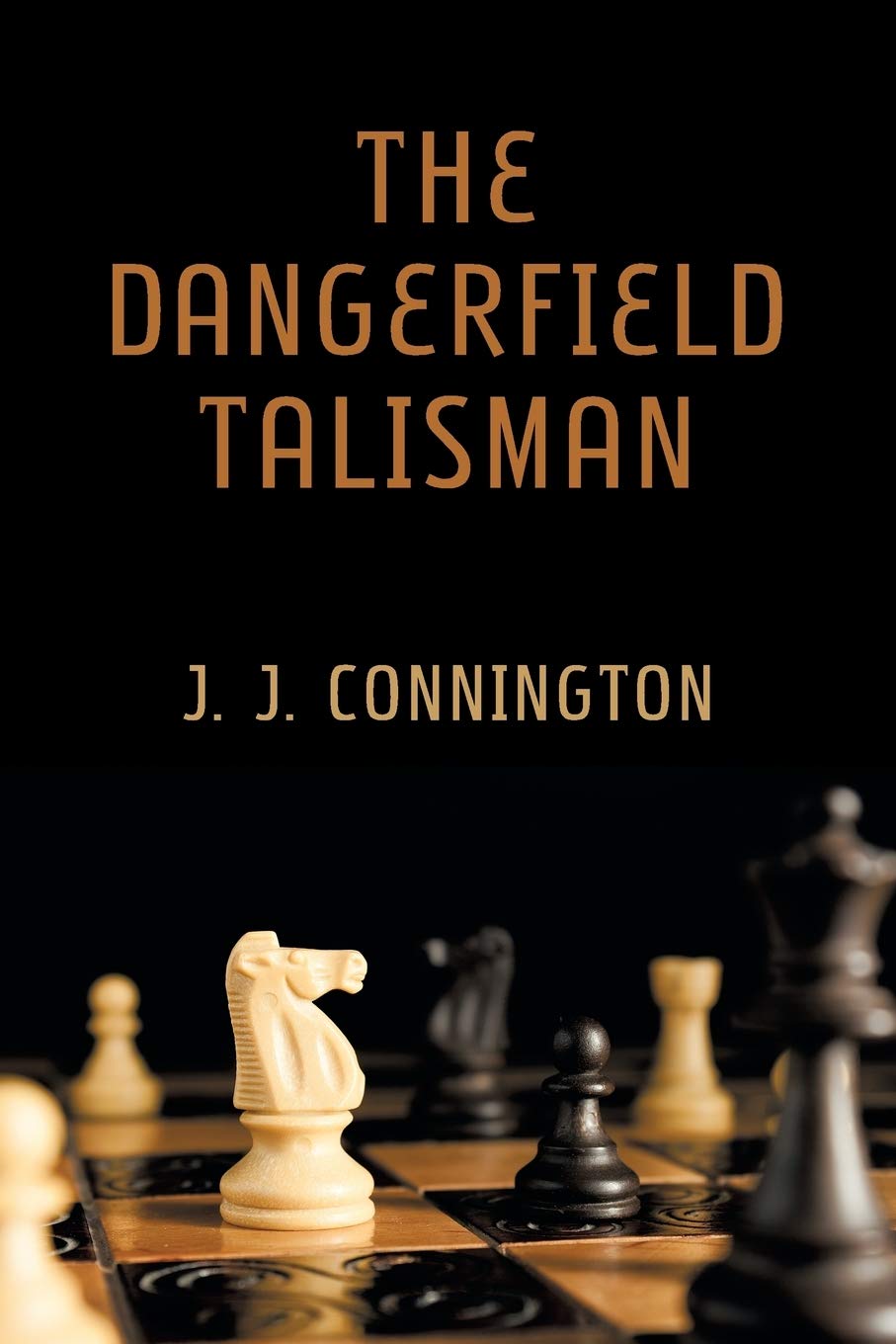
#978: The Dangerfield Talisman (1926) by J.J. Connington

Dangerfield Talisman

star filledstar filledstar filledstarsstars
I don’t normally read two books by the same author within at least a few months of each other, but I so enjoyed J.J. Connington’s criminous debut Death at Swaythling Court (1926) back in September that I was honestly champing at the bit to get back to more of his work. The Dangerfield Talisman, then, (1926) is Connington’s follow-up to Swaythling, with a completely new setting, cast, and conundrum. And Connington himself appears to have been equally keen to get to this one, possibly writing it in a mere seven weeks…and, if that was the case, it’s difficult not to wish that he’d spent a little longer over it.

Continue reading

#960: Death at Swaythling Court (1926) by J.J. Connington

Death at Swaythling Court

star filledstar filledstar filledstarsstars
I’ll be honest, even I’ve lost track of whether I’m reading J.J. Connington chronologically — but I’m going to say that, yes, from this point on the criminous novels by Alfred Walter Stewart that I’ve not reviewed on here will be encountered in publication order.  So, back to the beginning we go, before even Connington’s most prolific sleuth Sir Clinton Driffield ambled onto the scene, with Death at Swaythling Court (1926). In short order, a murdered lepidopterist with an unsavoury past sees suspicion point in many directions, with the crime scene positively awash with clues which can’t seem to be fitted into any pattern.

Continue reading