As is my standard modus operandi, I started Enid Blyton’s Five Find-Outers series midway through with something featuring an impossible crime, and now return to the beginning to read them in order.
We’re back in Boston again this week, in another large house with murder insinuating its way among the denizens. Everyone is snowed in when the death occurs, and so good-ol’-boy Asey Mayo must counter the cunning devilry of an ingenious and unscrupulous killer with his own brand of misleadingly languid style, plenty of homespun wisdom, and lot and lots of phonetic dialogue — in fact, this is the first time I’ve actively wondered whether an author was on some sort of pro rata arrangement for the number of times an apostrophe could be used where a letter would be equally good. So that’s another benchmark reached, I guess.
I feel as if I’m encroaching on the territory of John Norris at Pretty Sinister by reviewing a book that isn’t all that easy to come by; worry not, John, I don’t have well-enough stocked shelves to support this kind of habit, so it’s back to normal next week. This title is one that — like What a Body! (1949), The Rynox Mystery (1930), Death Has Many Doors (1951), and Dead Man Control (1936) — was brought to my attention by the Roland Lacourbe library of highly-regarded impossible crime novels, though due to the absence of a French translation did not qualify for the main list. Well, as you can see from the rating above, I think our Francophone brethren are missing out.
Before we get onto the book itself, it’s worth mentioning that this is the twenty-ninth publication from Locked Room International. Under the stewardship of John Pugmire, we’ve been brought a wonderful mix of classic and modern impossible crime novels and short stories from all corners of the globe, and — given the standard of their recent output — it certainly seems that the best is far from past. I anticipate a great many excellent, obscure, and previously-untranslated works coming our way in the years ahead thanks to LRI, and I wanted to take a moment to recognise the work that goes into making this happen.
I wasn’t sure I wanted to dive into another complex alibi problem so soon after Cut Throat (1932) by Christopher Bush. But if anyone can convince me of the joys of alibi-breaking it’s Freeman Wills Crofts, and so off I went in hope of some fiendish minutiae to get the brain cogitating with possibilities. As it happens, I need not have worried — there is no complex alibi-breaking here. Sure, there’s a grand mix of ratiocination and weighing the odds on the way to intelligent deductive work, but this is decidedly a ‘wrong man on the run’-style thriller before it’s a novel of routine. Were pithiness my forte, I’d probably make an ‘Alfred Hitchcrofts’ reference.
Flour, eggs, sugar, butter. Mix them, put them in the oven, you get a cake. But there are cakes and there are cakes. Equally, books. Give me a baffling murder, the precise focus of which shifts again and again like the first two sections of John Dickson Carr’s The Arabian Nights Murder (1936), and stir in a Croftian alibi trick and I should be in heaven. Alas, this is one of the bad cakes — the sort of well-intentioned thing your seven year-old nephew bakes and you take two bites from out of politeness and then put down and hope no-one brings back to your attention. Christopher Bush has taken promising ingredients and cooked us a turgid mess.
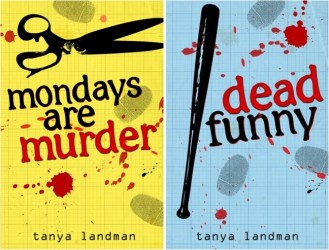
Tuesdays in March were dedicated to YA detective fiction from the Golden Age — justhere on thisblog, I mean, you didn’t miss a memo or anything — and Tuesdays in May will be YA detective fiction from the 21st century. First up are Tanya Landman’s first two Poppy Fields novels, Mondays Are Murder and Dead Funny (both 2009).
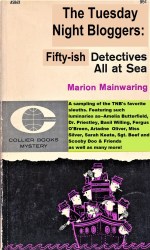
Good heavens, it’s practically the end of the month already, and so this is the final week of the reforming Tuesday Night Bloggers (we’ll be back, I’m sure) in their exploration of the great detectives of fiction.