#1386: Case with No Conclusion (1939) by Leo Bruce


Another man accused of murder, another family member going to an amateur detective to prove his innocence. The classics don’t wear, do they? This time it is Stewart Ferrers accused of murdering local GP Dr. Benson late at night in his own home, and Stewart’s brother Peter who goes to ex-Sergeant Wm. Beef, now set up as a private enquiry agent, in the hope that evidence can be uncovered to cast doubt on the conviction. And along for the ride is Beef’s faithful-if-frustrated chronicler Townsend (now called Lionel despite calling himself Stuart at the end of the previous novel…) who hopes that something interesting might come of this to put him on equal footing with other novelists who relate the cases of their famous detectives.

Continue reading

#1356: Case without a Corpse (1937) by Leo Bruce


I’ll level with you: I’d been kind of dreading having to reread Case without a Corpse (1937), Leo Bruce’s second novel to feature the blunt-but-far-from-dense Sergeant William Beef. Memory told me that the novel was over-long, with a large proportion of it spent on an almost entirely pointless amount of investigation that any sensible reader would know is wasted effort because (rot13 for spoilers, if you’ve never read a book before) boivbhfyl Orrs unf gb or gur bar gb cebivqr gur pbeerpg fbyhgvba ng gur raq. And in rereading it for the first time in about 15 years I’ve discovered that, once again, my memory has been a little unkind, and the book holds up far better than anticipated.

Continue reading

#1314: Cold Blood (1952) by Leo Bruce


Leo Bruce’s eighth and final novel in which Sergeant William Beef sallies forth into polite company to batter them with blunt questions hiding a brilliant mind, Cold Blood (1952) is a strong effort that marks a distinct improvement from preceding title, the over-long and frankly tedious Neck and Neck (1951). It’s the battering to death of a wealthy landowner which concerns us here, with Beef brought in by Cosmo Ducrow’s surviving family to counter the evidence piling up against the dead man’s nephew, Rudolf. But, the more Beef looks, the blacker the case against Rudolf becomes…so is this the final convention-busting solution Bruce has for us at the cap of this series, or is something more subtle going on?

Continue reading

#1253: Neck and Neck (1951) by Leo Bruce

Neck and Neck

star filledstar filledstarsstarsstars
I should have loved Neck and Neck (1951), chronologically the seventh of eight Sergeant Beef novel by Leo Bruce: after all, Kate at Cross-Examining Crime placed it as the sixth-best overall, and we’re nothing if not contrary in our opinions: she has the excellent Case for Sergeant Beef (1947) in seventh place, worse than this — a sure sign this is in fact a superb and under-appreciated gem. Alas, apart from the occasionally adept turn of phrase and a few ideas, this is pretty torpid stuff, in no way justifying the four-year gap between titles in this series…unless it took Bruce that long to write because he kept getting so bored with it himself.

Continue reading

#1221: Case for Sergeant Beef (1947) by Leo Bruce

Case for Sergeant Beef

star filledstar filledstar filledstar filledstars
Ronald Shoulter has been found shot in the appropriately-named Deadman’s Wood, and his sister refuses to believe the police’s easy assumption of suicide.  While “[t]he fashion was for detectives of high social standing and large private incomes”, she “won’t have one of these pansified snobs who are supposed to be brilliant investigators hanging around” and seeks out ex-Sergeant William Beef to get to the bottom of things. And so Lionel Townsend, Beef’s Boswell for four previous cases, finds himself once again, though more unwillingly this time, drawn in to the matter of a devious murder that the earthy Sergeant must untangle.

Continue reading

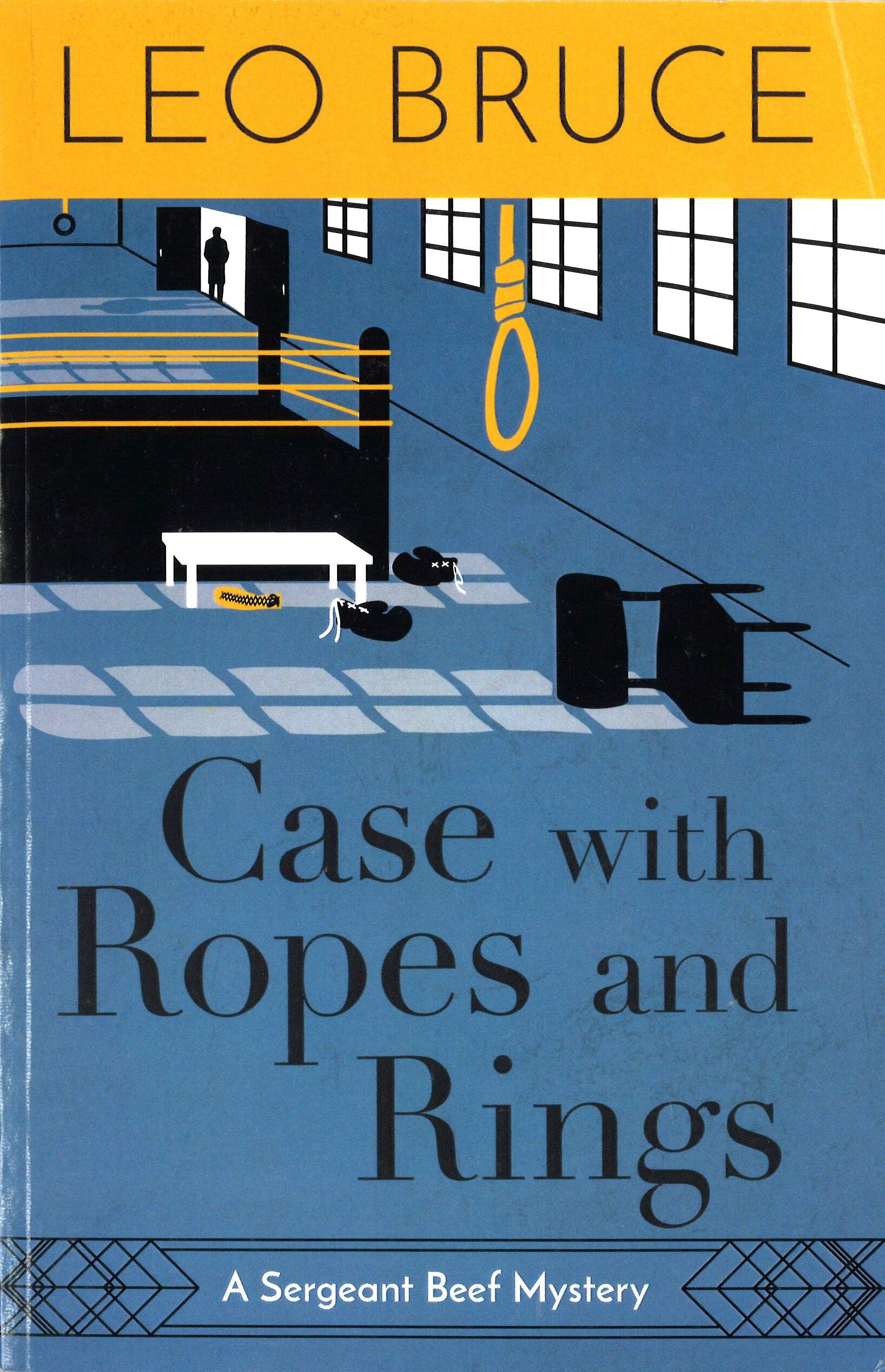
#1192: Case with Ropes and Rings (1940) by Leo Bruce

Case with Ropes and RIngs

star filledstar filledstar filledstar filledstars
Following the revelation at the end of my recent review of Case for Three Detectives (1936) by Leo Bruce that I had not read three of sometime-Sergeant William Beef’s later cases, a friend has staged an intervention and leant me Case with Ropes and Rings (1940), Neck and Neck (1951), and Cold Blood (1952). So let’s mop these three up, and then I can turn my eye upon rereading the earlier titles which have not yet made it onto The Invisible Event. Today, the death by hanging of a popular boy at Penshurt public school raises Beef’s suspicion of murder and, figuring that the boy’s wealthy father might be remuneratively grateful, Beef and his chronicler Lionel Townsend descend on Penshurt and begin to investigate.

Continue reading

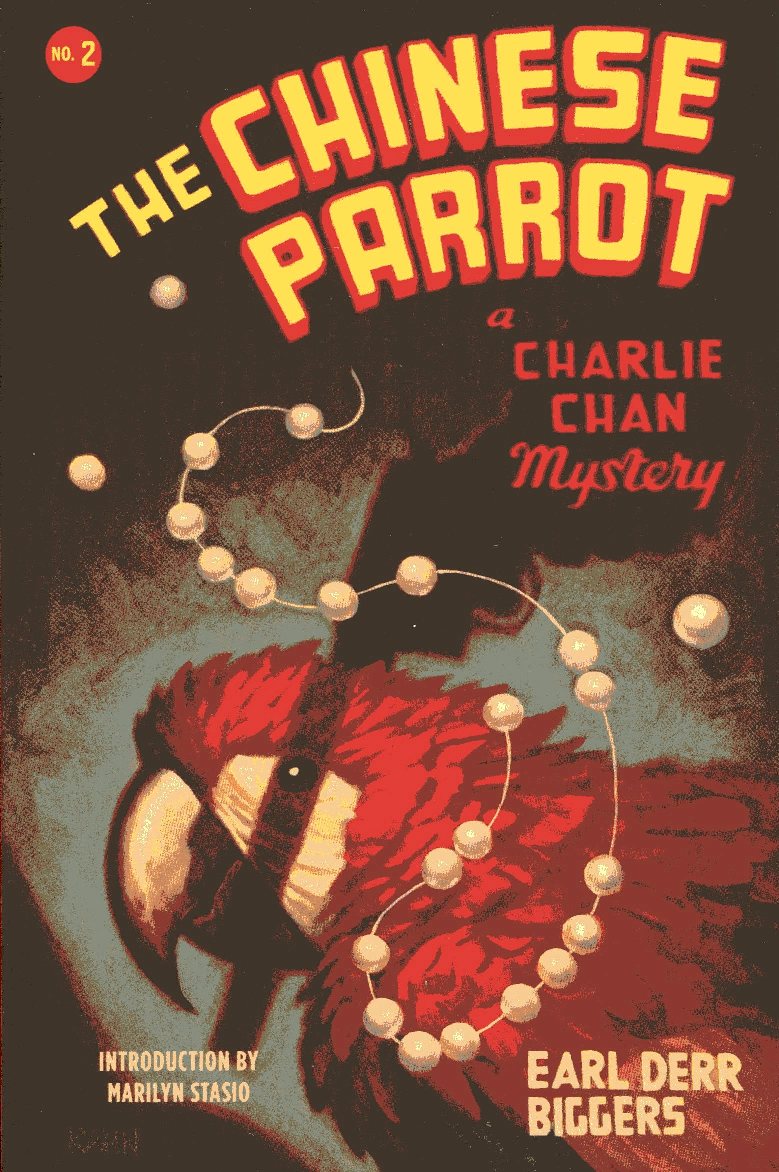
#721: The Chinese Parrot (1926) by Earl Derr Biggers

Chinese Parrot

star filledstar filledstar filledstar filledstars
On Tuesday I looked at Ronald Knox’s omni-misquoted admonishment against detective fiction writers using the ‘sinister Chinese’ stereotype to furnish their villainous plots, so the ground is primed to explore here the other end of that spectrum with the Intuitively Sagacious Minority Written by a Non-Minority Author. And given that the Chinese character Charlie Chan had the era-dense misfortune to be played in some 40 films by two white Americans, there’s a certain anticipatory screwing your courage to the mast before you embark on the books of wondering just how forgiving you’re going to have to be.

Continue reading

#90: The Tuesday Night Bloggers – Running Around with the Circus in Leo Bruce’s Case with Four Clowns (1939)

TNBs Travel

For my final post in this month’s Tuesday Night Bloggers focus on travel in Golden Age crime novels, I thought I’d deviate from the implicit notion of holiday in travel and instead look at itinerancy as explored in Leo Bruce’s fourth Sergeant Beef novel, Case with Four Clowns.  Last week I wrote about how John Dickson Carr made the aspect of travelling central to the mystery he created with ‘Cabin B-13’, and arguably Bruce does a similar thing here, albeit coming from a slightly different perspective and playing up to the travel aspect in a slightly more subtle way.

Continue reading