-
Subscribe
Subscribed
Have a WordPress.com account? Log in now.
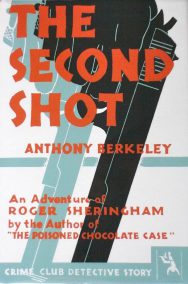 Before Anthony Berkeley’s recurring sleuth Roger Sheringham appears at just past the halfway point of The Second Shot, we are told by narrator Cyril ‘Pinkie’ Pinkerton that we possess all the necessary information to work out who shot bounder and all-round bad apple Eric Scott-Davis. I have two problems with this: firstly it is not true, as there is sundry information revealed in the epilogue that we had no possible way of knowing, and secondly it renders the entirety of Sheringham’s investigation invalid for you, the reader, as you know there’s nothing new to be uncovered. It’s an odd decision for an author who strove hard to redefine the limits of the ‘mere’ puzzle novel, but then Berkeley has always been rather erratic in his output to my tastes.