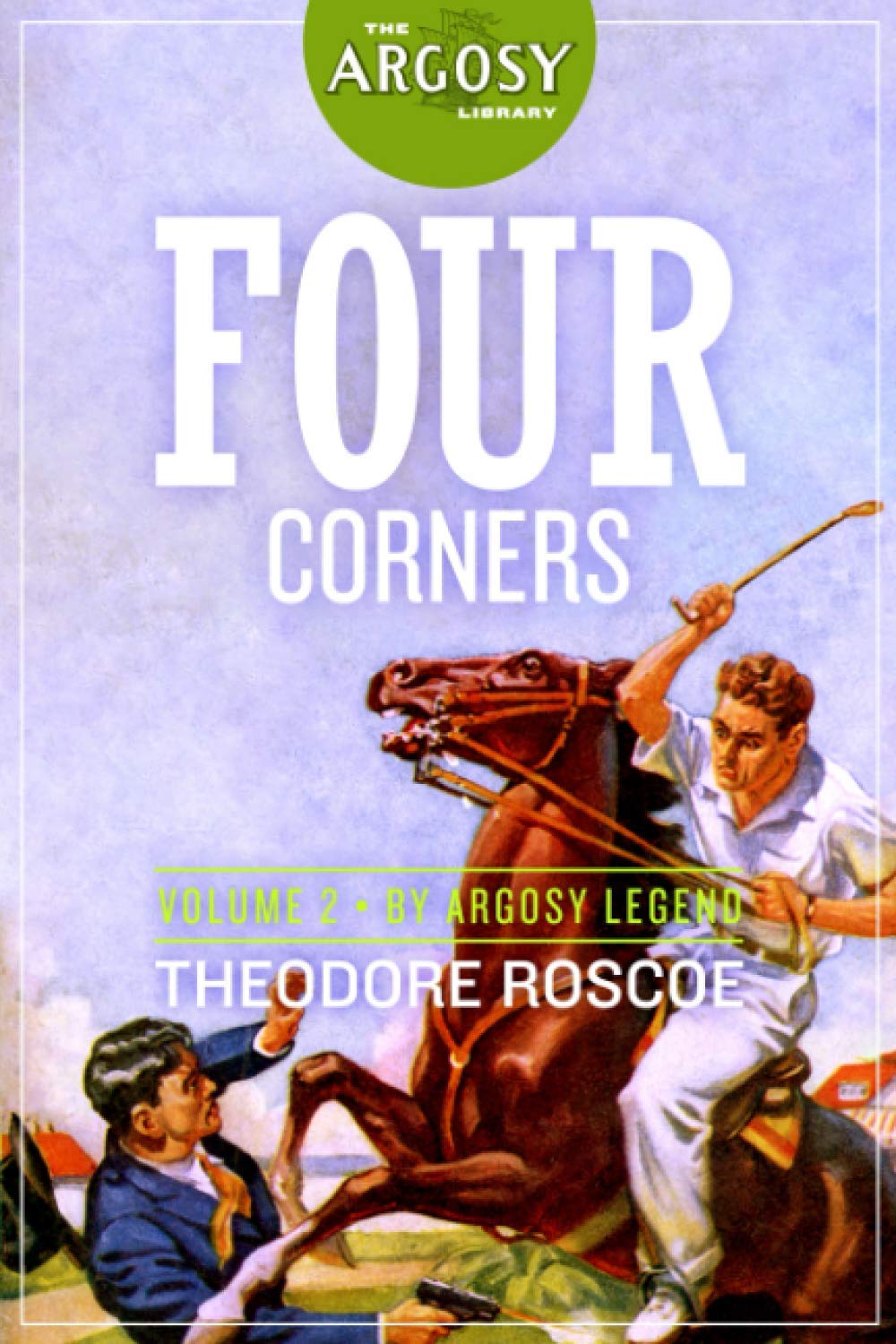
Back in August, I read the first volume of Theodore Roscoe’s stories set in the fictional town of Four Corners, and enjoyed them so much that I’m back this month for the five tales that comprise Volume 2.
Continue readingBack in August, I read the first volume of Theodore Roscoe’s stories set in the fictional town of Four Corners, and enjoyed them so much that I’m back this month for the five tales that comprise Volume 2.
Continue reading
A (fairly) recent review of Hag’s Nook (1933) by John Dickson Carr at Tangled Yarns added to its (slightly less) recent reprinting by Polygon Books put this first appearance by Dr. Gideon Fell on my Hallowe’en reading list…and here we are. A family curse — “the Starberths die of broken necks” — seems as good a topic as any for this annual celebration of eldritch horrors, so let’s dive back in and see what I make of it some ten or more years after my first read.
Continue reading


I’m taking my life in my hands reviewing The Twist of a Knife (2022) by Anthony Horowitz, you realise. After all, if I don’t like it, I might end up like Harriet Throsby, the theatre critic for The Times who criticised Horowitz’s play Mindgame and ended up stabbed to death. No, wait, that was fiction…wasn’t it? That’s the plot of The Twist of a Knife. The meta-fictional element of this series, in which Horowitz teams up with ex-D.I. Daniel Hawthorne to solve a series of murders, is loads of fun, but I do catch myself spending the first quarter of each book thinking “Is that a real person? Wait, did that really happen?”. It’s a difficult act to juggle, but Horowitz has mastered it.
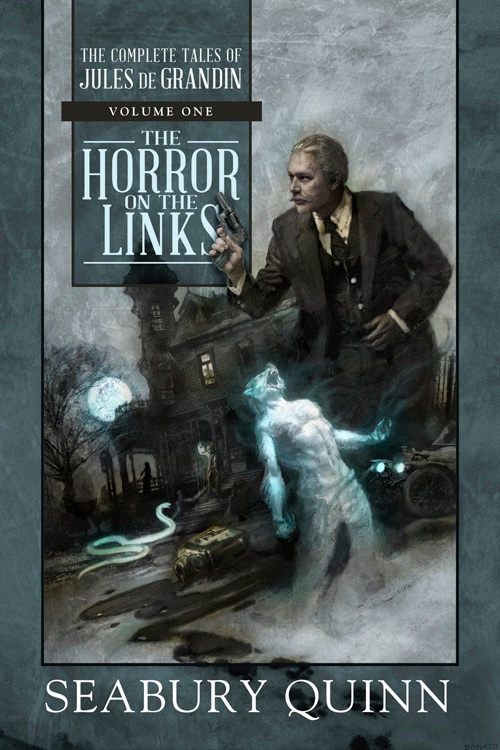
This first volume of The Complete tales of Jules de Grandin, French detective of the occult, contains 23 stories published between 1925 and 1928. Seabury Quinn was brought to my attention on the GAD Facebook group as an author who, like William Hope Hodgson, would mix in rational solutions to apparently supernatural problems so that you’re never sure what you’re getting. Sounds like fun? Let’s see how these stories stand up to scrutiny.
Continue reading
One final dive into the crystal-clear waters of talking about a mystery novel without having to carefully avoid the details — here are Brad, Moira, and myself discussing Mrs. McGinty’s Dead (1952) by Agatha Christie.
Continue reading
I don’t normally read two books by the same author within at least a few months of each other, but I so enjoyed J.J. Connington’s criminous debut Death at Swaythling Court (1926) back in September that I was honestly champing at the bit to get back to more of his work. The Dangerfield Talisman, then, (1926) is Connington’s follow-up to Swaythling, with a completely new setting, cast, and conundrum. And Connington himself appears to have been equally keen to get to this one, possibly writing it in a mere seven weeks…and, if that was the case, it’s difficult not to wish that he’d spent a little longer over it.

This week, nine tales of criminous and/or eerie happenings written by Hirai Tarō who, under the name Edogawa Rampo, is widely acknowledged as the godfather of Japanese mystery writing.
Continue reading
And then there were 32 — the first round of this vote to find the most popular sleuth of detective fiction’s Golden Age having whittled the original 64 names down to half that number, and the votes available for one week from today due to halve it again. So, who survived and who is out of the running?
Continue reading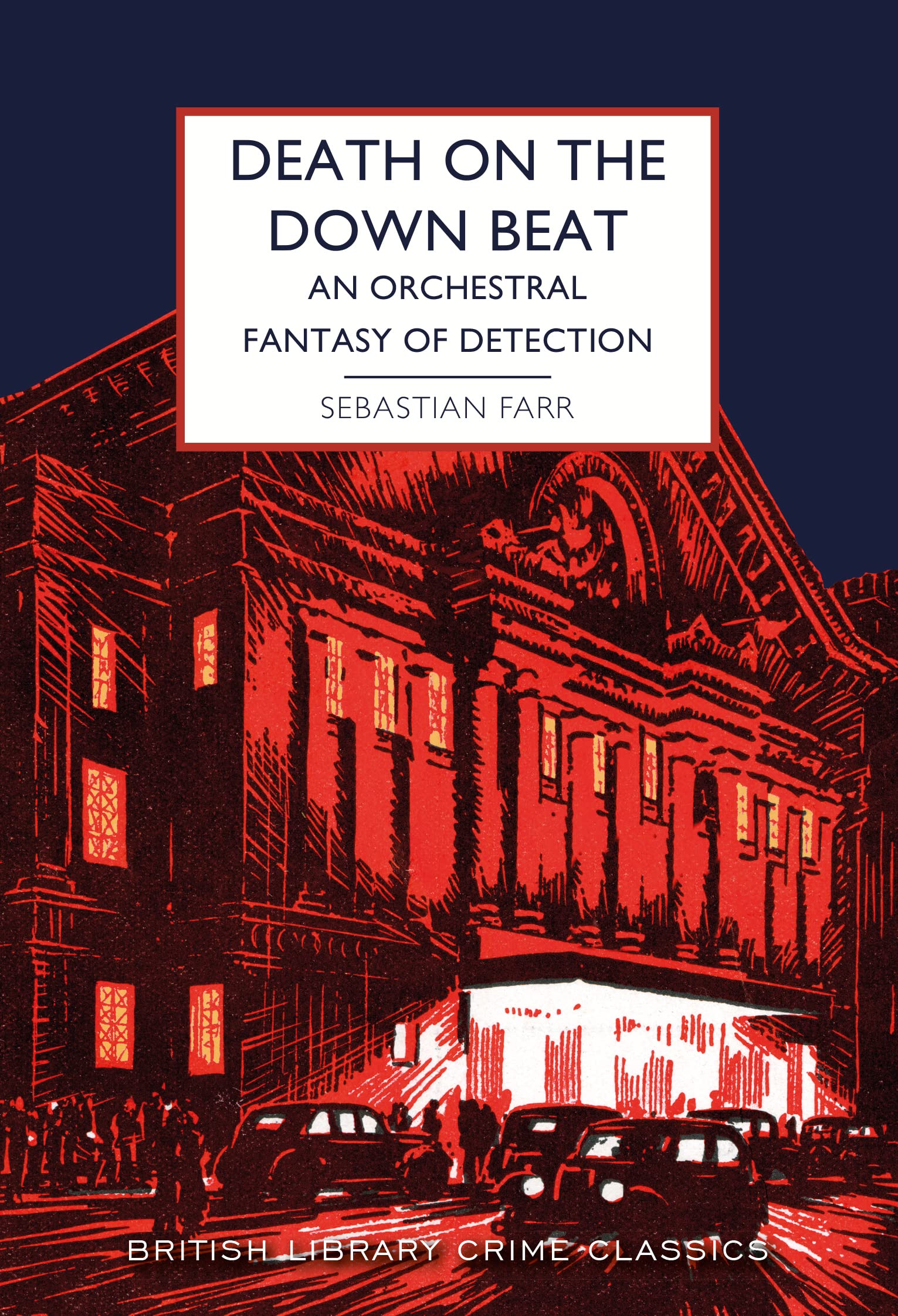
Both versions of Alfred Hitchcock’s The Man Who Knew Too Much (1934/1956) contain excellent scenes in which a killer takes aim at their target in the Royal Albert Hall while the music builds ominously. Sebastian Farr’s Death on the Down Beat (1941) utilises the same idea, but transfers it to an orchestral performance of Richard Strauss’ Ein Heldenleben in the fictional northern city of Maningpool and picks up after the killing, asking what would happen if the murder of an unpopular conductor in such circumstances was investigated a weary detective who just wants to get home to his wife and young children and finds himself frustrated at almost every turn by the intrusion by self-important local types.
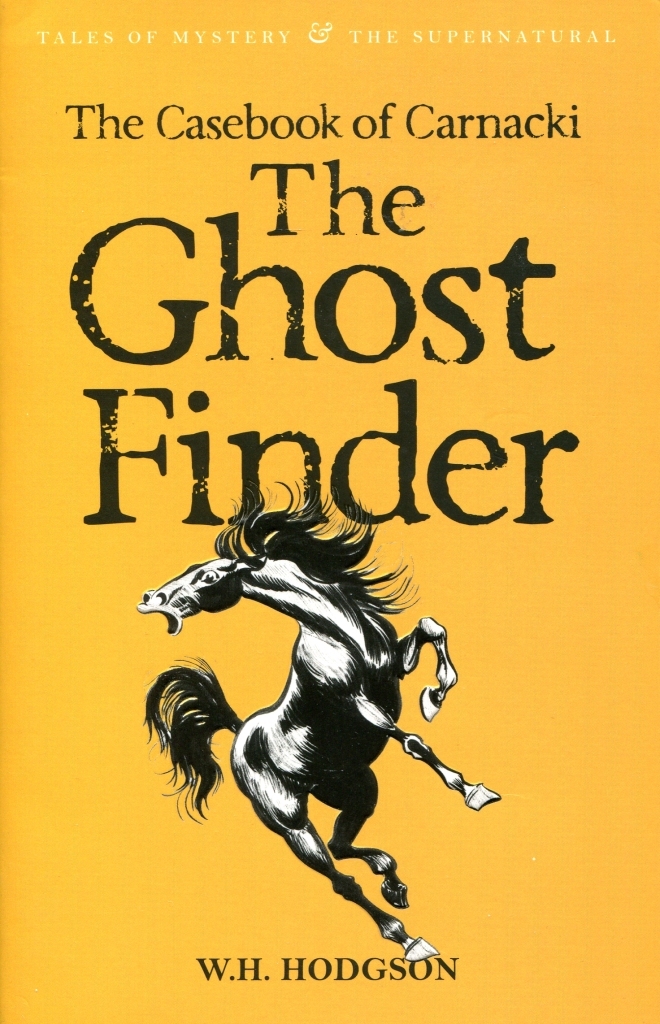
Another author exploring the spOooOOoOky side, with rational solutions just as likely as ghosts and spectres. WooOOoOooOoo, etc.
Continue reading
