#1258: “This is getting serious…” – The Game’s Afoot in Clue (1985) [Scr. & Dir. Jonathan Lynn]

Given the voracity with which Hollywood will seize upon almost any existing intellectual property — video game! card game! product placement! sequel to product placement! spin-off from sequel to product placement! — and make it into a probably disappointing movie, it’s amazing that Clue (1985), based on one of the dullest board games in existence, turned out as well as it did.

Continue reading

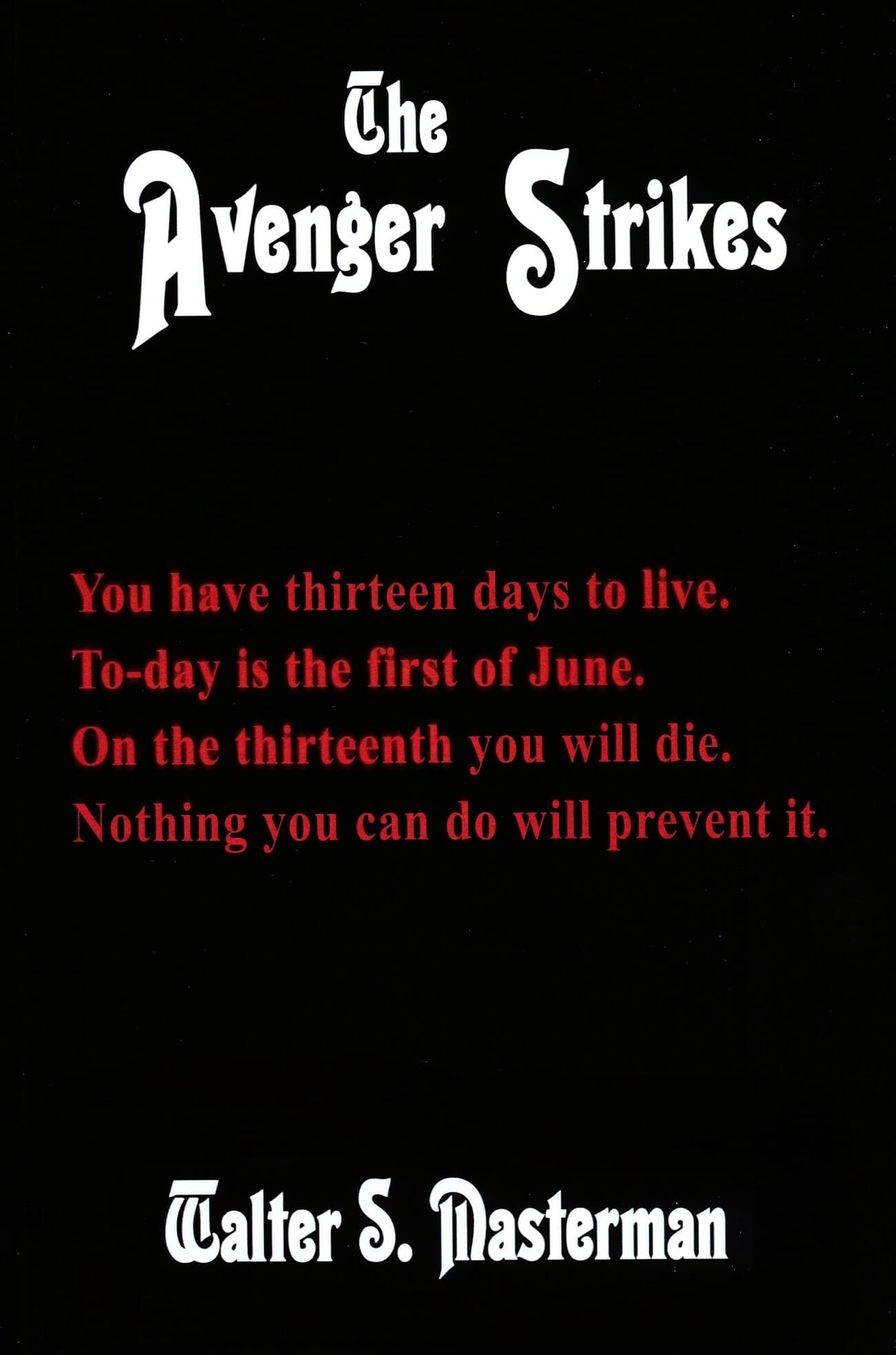
#1257: Death Turns Traitor (1935) by Walter S. Masterman


Death Turns Traitor (1935) is the eleventh book by Walter S. Masterman that I’ve read, and I still don’t know what to make of him. The context of the idea herein — that in 1935 the powers of Europe have agreed a secret treaty to preclude war, yet an influential German secret society called the DUA is doing its best to foment discontent and push the continent over the edge — is fascinating, and Masterman writes some affectingly moody prose, but somehow the two just don’t quite come together. The shortfall is, perhaps, an absence of incident to fill out these 60,000 words, rendering much of what passes somewhat telescoped and thus veering into tediousness.

Continue reading

#1255: The Case of the Rolling Bones (1939) by Erle Stanley Gardner

Case of the Rolling Bones

star filledstar filledstar filledstar filledstars
At a rough estimate, I reckon I’ve read 40 to 50 of Erle Stanley Gardner’s books featuring Perry Mason.  Precisely which ones?  Yeah, I’m vague on that.  But The Case of the Rolling Bones (1939) — which I make the fifteenth time Mason sallied forth to lock legal horns on behalf of some wronged party — I definitely remembered…until I was about halfway through it recently and realised that, no, I probably hadn’t read this before. In a way, then, it’s lovely to be able to find more classic-era Mason titles which I can treat as completely ‘new to me’ reads, and this is a strong entry in Gardner’s output that has a very clever idea at its core, warranting its recent reprinting in the American Mystery Classics range.

Continue reading

#1253: Neck and Neck (1951) by Leo Bruce

Neck and Neck

star filledstar filledstarsstarsstars
I should have loved Neck and Neck (1951), chronologically the seventh of eight Sergeant Beef novel by Leo Bruce: after all, Kate at Cross-Examining Crime placed it as the sixth-best overall, and we’re nothing if not contrary in our opinions: she has the excellent Case for Sergeant Beef (1947) in seventh place, worse than this — a sure sign this is in fact a superb and under-appreciated gem. Alas, apart from the occasionally adept turn of phrase and a few ideas, this is pretty torpid stuff, in no way justifying the four-year gap between titles in this series…unless it took Bruce that long to write because he kept getting so bored with it himself.

Continue reading

#1252: A Little Help for My Friends – Finding a Modern Locked Room Mystery for TomCat Attempt #26: Death on the Lusitania (2024) by R.L. Graham

And so we start the second quarter-century of modern impossible crime novels which we’re no longer pretending I read solely for TomCat‘s benefit. Spoilers: I’m something of a fan of the impossible crime, so I actually read these because I’m hoping to find good modern examples of the form for myself — gasp!

Continue reading

#1251: The Case of the Gilded Fly, a.k.a. Obsequies at Oxford (1944) by Edmund Crispin

Case of the Gilded Fly

star filledstar filledstar filledstar filledstars
Among the five books I have reread for Thursday reviews this January, The Case of the Gilded Fly (1944), the debut of the composer Bruce Montgomery under the name Edmund Crispin, is unique in that I wasn’t completely sure I could remember the guilty party. The method by which our corpse finds itself shot in a room to which there was no access and no open windows through which a bullet could be fired was dimly in my brain somewhere, but I had the very enjoyable experience of rereading something and being able to treat it as a genuine problem…trying to work out if my suspicions came from dim remembrance of the solution or were merely smelly fish. So that was fun.

Continue reading

#1250: “The mere facts are obvious enough; it is their interpretation that yields the knowledge.” – The Puzzle Lock [ss] (1925) by R. Austin Freeman

The last time I read a book by Richard Austin Freeman, my House of Stratus edition told me it was a collection of short stories only for it to turn out to be a novel. So it’s fitting that my next encounter with Dr. John Thorndyke should reverse the situation and what is pitched on the back cover as a novel turn out to be a collection of short stories.

Continue reading

#1249: Nine Times Nine (1940) by Anthony Boucher [a.p.a. by H.H. Holmes]

Nine Times Nine

star filledstar filledstar filledstar filledstars
“A man is shot in a room from which, apparently, no one could have made an exit. Now what’s the first rational possibility that strikes you?”.  It is the shooting of Wolfe Harrigan which Detective Lieutenant Terrence Marshall must solve: rationalist and exposure of religious chicanery Harrigan having apparently been shot by Ahasver, the yellow robe-wearing, centuries-old Wandering Jew who leads the Children of Light church in Los Angeles…and was on stage at the time of said shooting. And when the “rankly fantastic notion of a secret passageway” in Harrigan’s study is dismissed, what possible explanation can there be? Men don’t just vanish into thin air…

Continue reading