“Can you call it homicide if the victim is a hippo?” asks the back cover of this first entry in Stuart Gibbs’ FunJungle series and, from a purely Latin perspective, no you can’t. However, the brilliance of Gibbs’ endeavour here is how much he adheres to the fundamental form of the murder mystery despite this core difference.
Continue readingThe Tuesday Night Bloggers
#857: Minor Felonies – The Secret Detectives (2021) by Ella Risbridger
While far from his best work, The Blind Barber (1934) by John Dickson Carr does contain the brilliant problem of a corpse appearing on a passenger liner mid-voyage with no passenger or crew member apparently having died to provide it. Ella Risbridger’s juvenile mystery debut The Secret Detectives (2021) works from the same principle, with 11 year-old Isobel Petty seeing someone thrown overboard one stormy night…and yet the next morning no-one is missing.
Continue reading#854: Minor Felonies – The Highland Falcon Thief (2020) by M.G. Leonard and Sam Sedgman [ill. Elisa Paganelli]
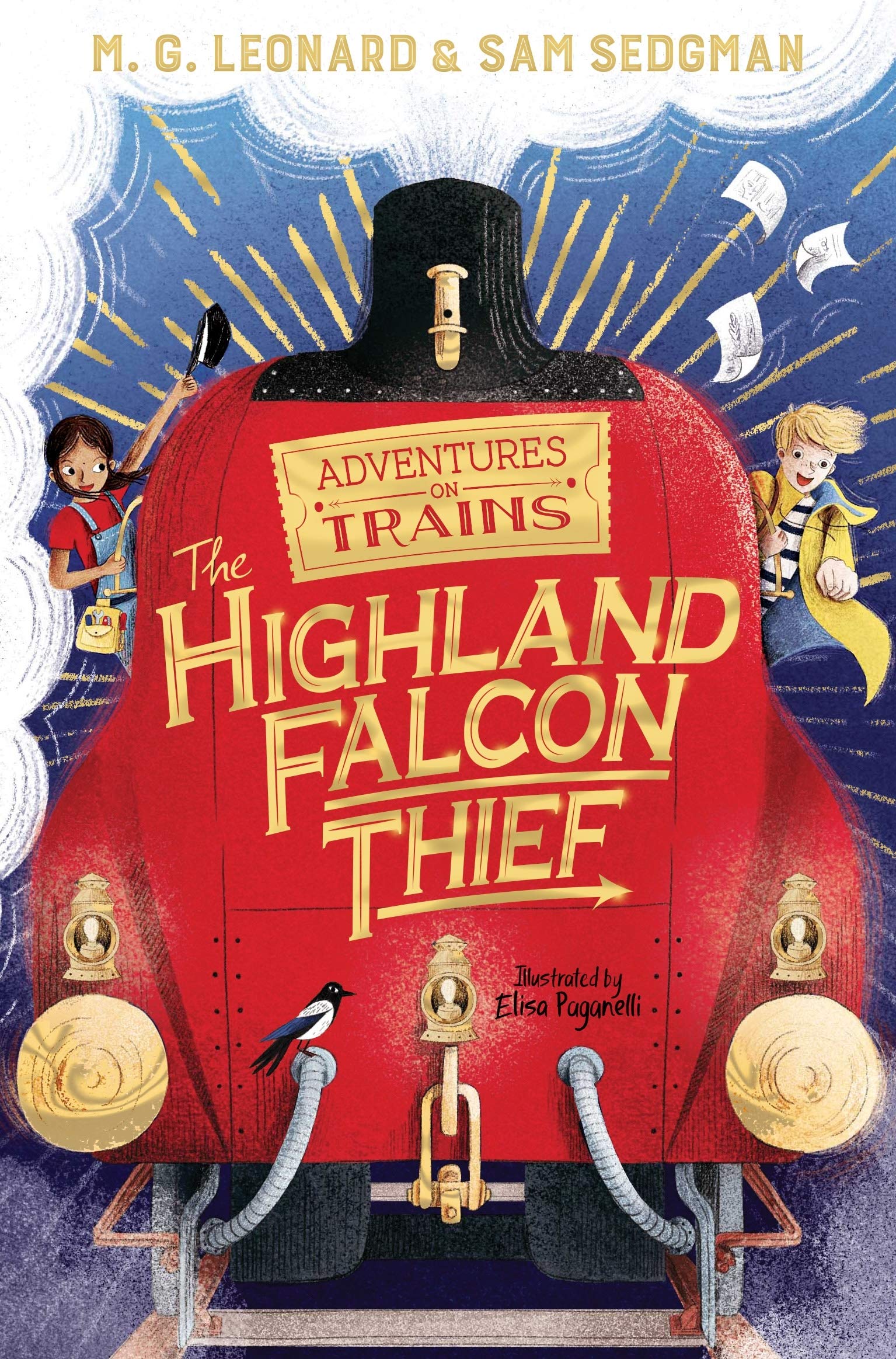
The only frustration I feel towards the Adventures on Trains series by M.G. Leonard and Sam Sedgman is that I didn’t discover it sooner. Because, see, then I’d be four books deep into this wonderful, charming, clever series — with a fifth on the way soon — rather than the mere two I am.
Continue reading#849: (Spooky) Little Fictions – ‘The Grinning God’ (1907) by May and Jacques Futrelle
It’s Hallowe’en — or, er, it will be in a few weeks — and so I’m jumping on the branding train and looking at some short stories that feature ghosts, ghouls, witches, and other season-appropriate horrors which end up having rational resolutions.
Continue reading#845: The Island of Coffins and Other Mysteries from the Casebook of Cabin B-13 (2020) by John Dickson Carr [ed. Tony Medawar and Douglas G. Greene] – Series 2, Episodes 7-12
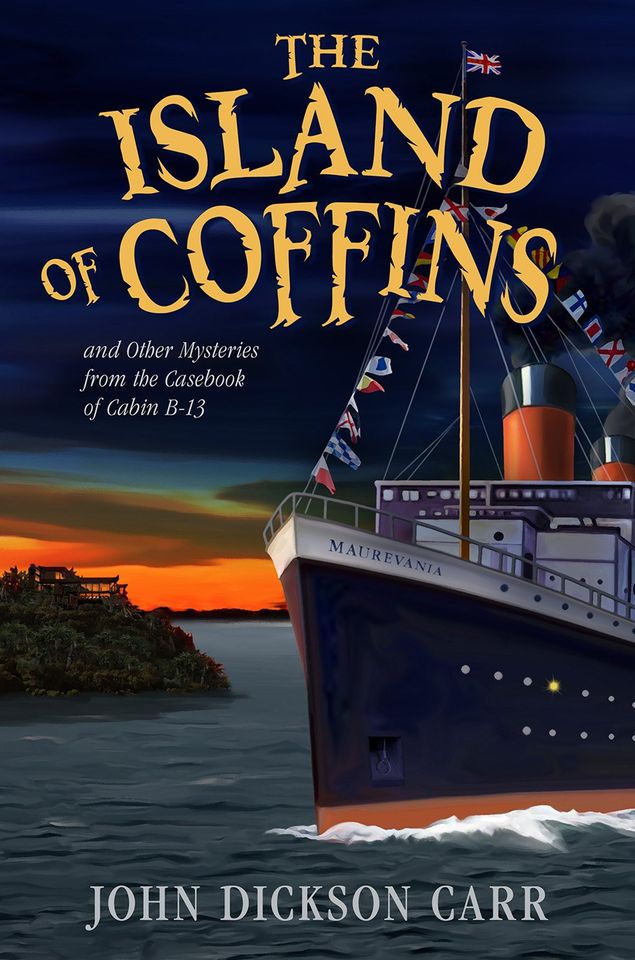
The final six trips aboard the Maurevania during the Golden Age of radio, with Dr. John Fabian leading us through the apparently impossible.
Continue reading#841: The Island of Coffins and Other Mysteries from the Casebook of Cabin B-13 (2020) by John Dickson Carr [ed. Tony Medawar and Douglas G. Greene] – Series 2, Episodes 1-6
Another six tales of intrigue from aboard cruise liner the Maurevania, with ship’s surgeon Dr. John Fabian keen to baffle and then elucidate us from his eponymous quarters.
Continue reading#838: The Island of Coffins and Other Mysteries from the Casebook of Cabin B-13 (2020) by John Dickson Carr [ed. Tony Medawar and Douglas G. Greene] – Series 1, Episodes 7-11
Another tranche of seeming impossibilities from John Dickson Carr’s radio series Cabin B-13, tales of murder and bafflement told by Dr. John Fabian, ship’s surgeon aboard the Maurevania.
Continue reading#835: The Island of Coffins and Other Mysteries from the Casebook of Cabin B-13 (2020) by John Dickson Carr [ed. Tony Medawar and Douglas G. Greene] – Series 1, Episodes 1-6
It is perhaps unsurprising, given the impact of John Dickson Carr’s radio play ‘Cabin B-13’ (1945) from the series Suspense, that a series of mystery and suspense plays should take that title when Carr returned to radio work. Unrelated to that original beyond apparently using the same ship — the Maurevania — as a framing device, the two series of Cabin B-13 (1948-49) nevertheless comprised half-hour problem-of-the-week plays in the same vein, related by ship’s surgeon Dr. John Fabian from his eponymous quarters
Continue reading#832: Minor Felonies – The Mystery of the Grinning Tiger (1956) by Bruce Campbell
I have read some dull books of late, but The Mystery of the Grinning Tiger (1956), the eleventh entry in Beryl and Sam Epstein’s series featuring teenage sleuths Ken Holt and Sandy Allen, might be the dullest yet.
Continue reading#829: Minor Felonies – Aggie Morton, Mystery Queen: The Body Under the Piano (2020) by Marthe Jocelyn
Where does Inspiration stop and Creativity, or its bastard twin Plagiarism, begin? This question is too deep for a review of a book aimed at 12 year-olds — and, indeed, for this blog in general — but it lingers around the edge of a lot of fiction simply because of the number of times recognisable real life events have been folded into entertainment (or, indeed, vice versa).
Continue reading