Today is the tenth Bodies from the Library Conference, at which, until other considerations intervened, I was due to present on the topic of inverted mysteries. And you can bet I would at some point have talked about Six Against the Yard (1936), in which six crime writers put their ‘perfect murder’ on paper and ex-CID man Superintendent Cornish picked holes in their plans.
Continue readingReviews
#1308: You’d Look Better as a Ghost (2023) by Joanna Wallace
![]()
![]()
![]()
![]()
![]()
Like The Serial Killers’ Club (2006) by Jeff Povey and the Darkly Dreaming Dexter (2004-15) series by Jeff Lindsay, Joanna Wallace’s debut You’d Look Better as a Ghost (2023) takes on the challenge of seeing the world through a serial killer’s eyes. Wallace, though, takes the far harder route of not trying to justify her killer’s murderous urges by having them only kill ‘bad people’, and instead invites you to spend nearly 400 pages with Claire, who is unhinged enough to murder a man who accidentally emailed her incorrect information, and who blithely admits that she “like[s] to peel the skin off queue-jumpers”. It shouldn’t work. But, thanks in no small way to some pitch-black humour, boy, does it.
#1306: “Ain’t nothin’ like this ever happened in Northmont afore!” – Diagnosis: Impossible: The Problems of Dr. Sam Hawthorne [ss] (2000) by Edward D. Hoch
You don’t write as much as Edward D. Hoch without hitting the bull’s-eye a few times, so I’m finally doing what I should have done all along and starting the Dr. Sam Hawthorne series from the beginning, with this first collection, Diagnosis: Impossible (2000), a tranche of 12 stories initially published in Ellery Queen Mystery Magazine between 1974 and 1978.
Continue reading#1305: Casual Slaughters (1935) by James Quince
![]()
![]()
![]()
![]()
![]()
I’m not entirely sure where Casual Slaughters (1935) by James Quince first came to my attention, but it might have been this list of 150 largely very good detective novels, compiled by Curtis Evans back in 2010. And since Curtis and I recently agreed about The Dead Man’s Knock (1958) by John Dickson Carr, and since Oreon Books recently reprinted Casual Slaughters and I bought a copy while visiting at the excellent Bodies in the Bookshop in Cambridge, well, the time seemed ripe to pull it out of my TBR to see how I fare. And, as if I needed more convincing, Quince’s title is from Hamlet, this blog takes its name from Hamlet…seriously, could the universe be aligning more?
#1302: The Avenger Strikes (1936) by Walter S. Masterman
![]()
![]()
![]()
![]()
![]()
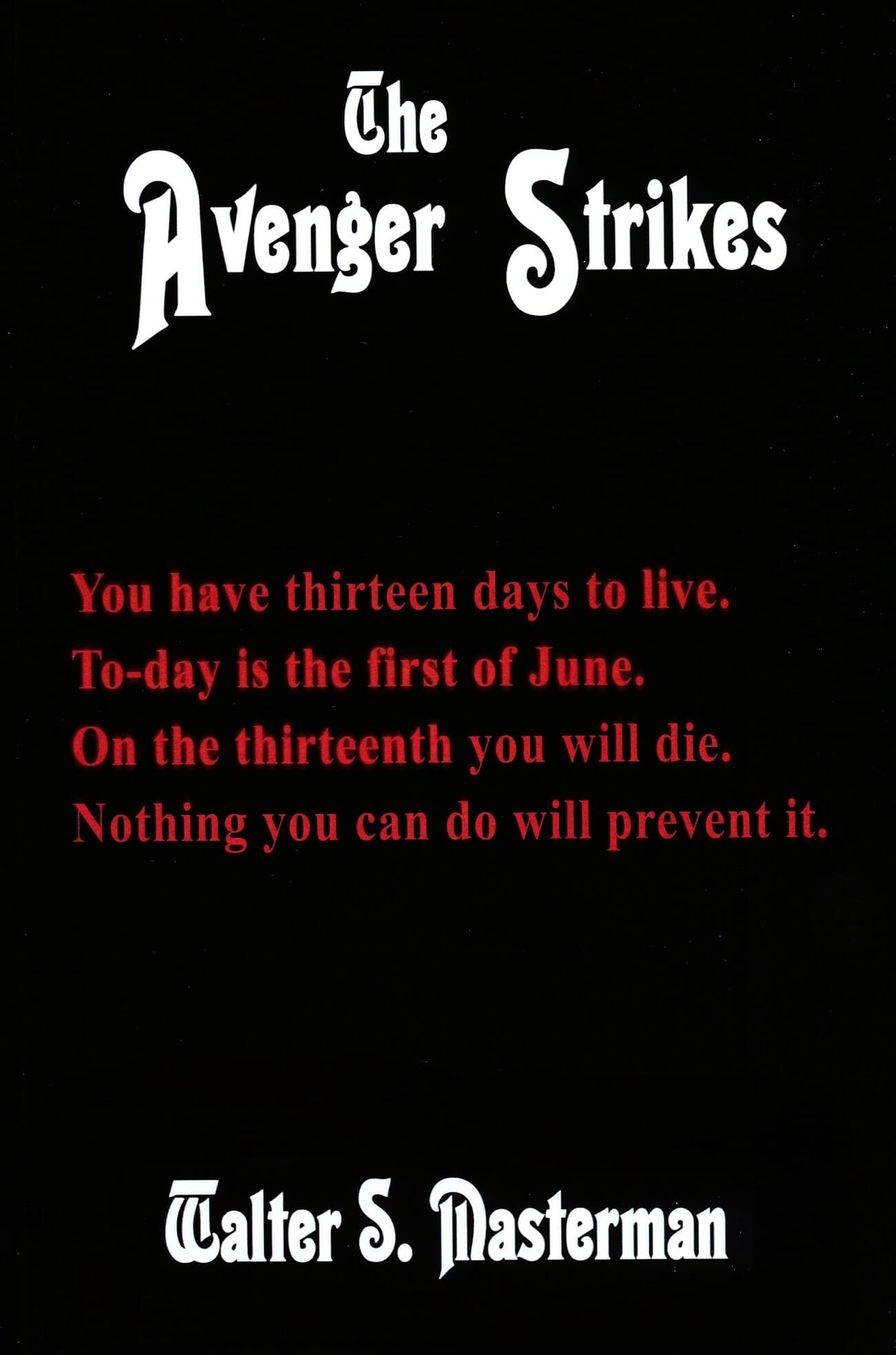
Not to split hairs, but if you receive an anonymous note on the 1st June telling you that you have thirteen days to live, the person threatening your life is going to kill you on 14th June, not the 13th. Either way, the wealthy George Hayling waits the best part of a week, receiving one note a day along similar lines — including a threat to poison his dog, which is duly carried out — before consulting the police. As luck would have it, he’s ushered into the office of Chief Inspector Floyd just as that worthy is completing a discussion with the esteemed Sir Arthur Sinclair, and something about Hayling’s case piques Sinclair’s interest. Only, with so little time remaining, can Sinclair keep the man alive?
#1300: “Any idea who killed her?” – About the Murder of the Circus Queen (1932) by Anthony Abbot
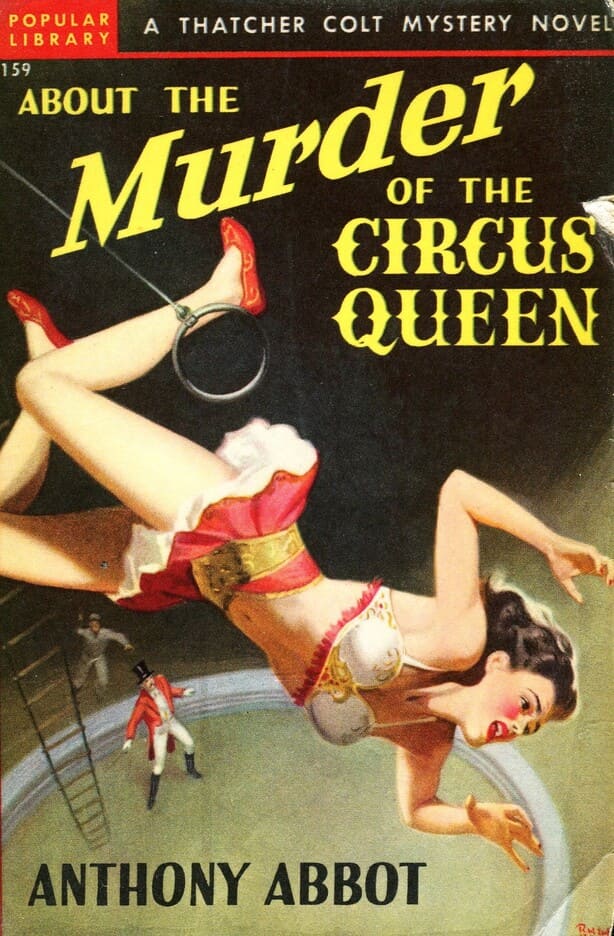
Given the state of limerence in which I exist when it comes to the impossible crime in fiction, it was with great excitement that I received a copy About the Murder of the Circus Queen (1932) by Anthony Abbot, which has not one but two entries in Adey.
Continue reading#1299: Murder by the Clock (1929) by Rufus King
![]()
![]()
![]()
![]()
![]()
In principle, the core concept of Murder by the Clock (1929), the debut novel for both author Rufus King and character Lieutenant Valcour, is a good one: the youthful Mrs. Endicott calls the police because she fears her husband has gone out that evening to pay off a blackmailer, only for Valcour, the policeman who responds to the call, to find Mr. Endiciott dead in his closet at the close of the first chapter. Thus, the focus of the mystery becomes the Endicott ménage itself, as the questions of who would have killed the master of the house, and why, take understandable prominence. And some fun ideas remain, but the book containing them doesn’t quite compel as it might.
#1296: The Hours Before Dawn (1958) by Celia Fremlin
![]()
![]()
![]()
![]()
![]()
I have, since encountering the work of Charlotte Armstrong, developed a newfound appreciation for the novel of suspense. And so when Kate at Cross-Examining Crime mentioned that The Hours Before Dawn (1958) by Celia Fremlin was among her favourite debuts in the genre, I was willing to put my scepticism aside — Kate and I so rarely agree, y’see — and dive into this lovely Faber & Faber reprint. And, y’know, while it doesn’t completely work for me, this story of a new mother trying to fathom whether she’s being driven slightly mad by the sleeplessness induced by her new son, or whether there’s something more sinister behind the oddnesses she keeps encountering, has a lot to recommend it.