I’ve read books in a single day before — hell, I still do — but it’s been a long time since I read a book in one sitting: take a seat, open the book, finish reading it, stand up. Welcome, then, to The Mystery of the Dead Man’s Riddle (1974), the twenty-second book in the Three Investigators series and the sixth to be written by Dennis Lynds under the name William Arden.
Continue readingReviews
#1275: Fools Die on Friday (1947) by A.A. Fair
![]()
![]()
![]()
![]()
![]()
As my grandfather used to say, “When you fall off the horse, get back on the horse”. And that’s why he made such a controversial judge at gymnastic competitions. But the fact remains that lately I’ve had some disheartening reading experiences with favoured authors — John Dickson Carr, J.J. Connington, Freeman Wills Crofts, A.A. Fair, Craig Rice, Cornell Woolrich J.J. Connington again, maybe Rice a second time — and so the tempting thing is to leave them alone for a while, wait for that memory to fade, and then return. But, no, I’m not doing that, I’m reading Fair again now, because why not? That’s what the horse is here. It was a pommel horse all along.
#1273: “Who’s responsible for these deaths?” – Clue (1986) by Michael McDowell
Having recently rewatched and reviewed the movie Clue (1985), a comment in the, er, comments sent me in search of the novelisation of the film that I’d previously had no idea existed…and, well, here we are.
Continue reading#1272: Yesterday’s Murder, a.k.a. Telefair (1942) by Craig Rice
![]()
![]()
![]()
![]()
![]()
As my grandfather used to say, “When you fall off the horse, get back on the horse”. And that’s why he lost his job as a stuntman in Western movies. But the fact remains that lately I’ve had some disheartening reading experiences with favoured authors — John Dickson Carr, J.J. Connington, Freeman Wills Crofts, A.A. Fair, Craig Rice, Cornell Woolrich, J.J. Connington again — and so the tempting thing is to leave them alone for a while, wait for that memory to fade, and then return. But, no, I’m not doing that, I’m reading Rice again now, because why not? That’s what the horse is here. It was a literary horse all along.
#1270: “I flatter myself it is impossible to tell how my stories will end until the last chapter.” – The Clue of the Twisted Candle (1918) by Edgar Wallace
There’s been a some confusing talk of horses here lately, so let’s abandon that metaphor for now and turn to an author who is often entertaining without any weighty expectations of being good: cue Richard Horatio Edgar Wallace and The Clue of the Twisted Candle (1918).
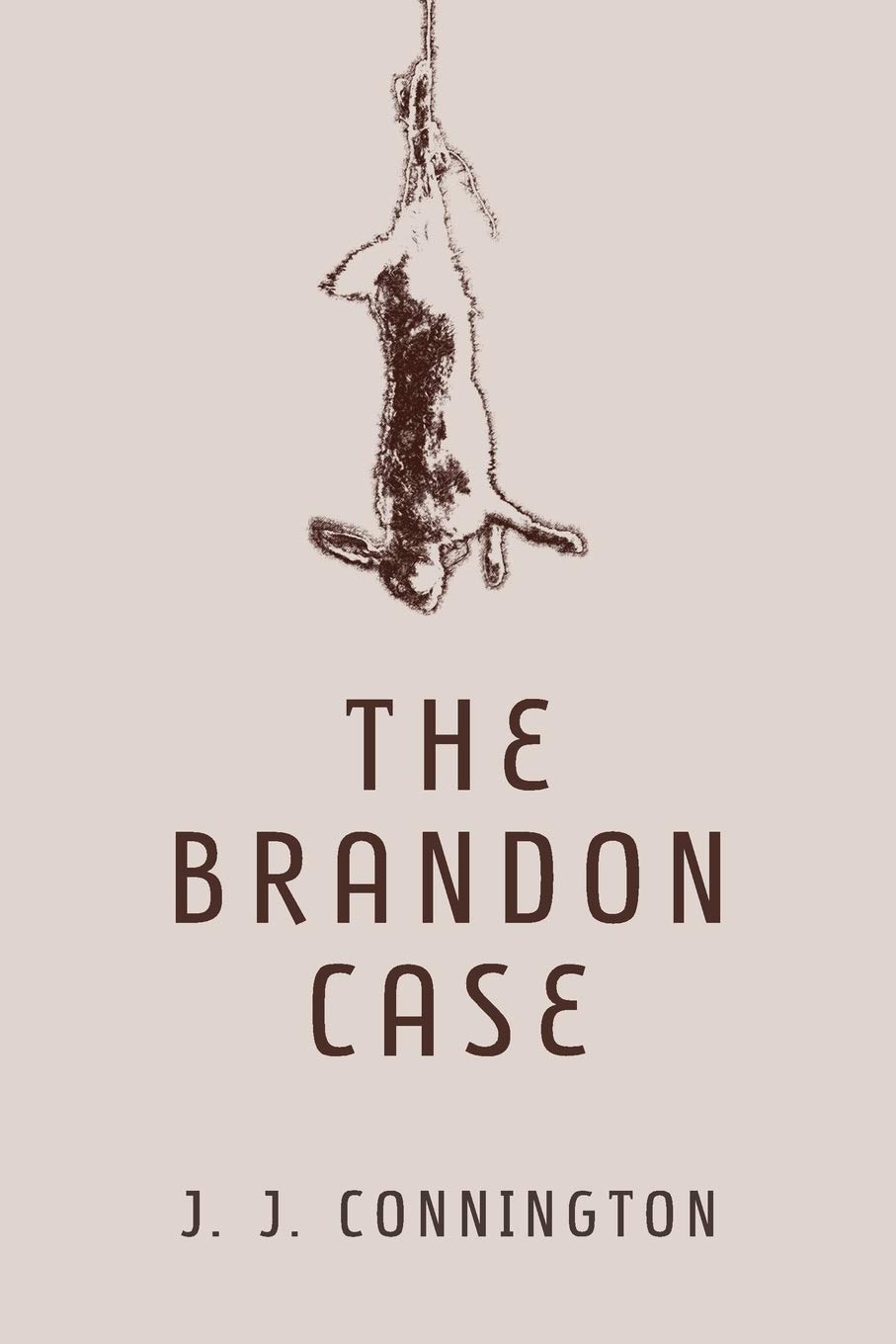
Continue reading#1269: The Brandon Case, a.k.a. The Ha-Ha Case (1934) by J.J. Connington
![]()
![]()
![]()
![]()
![]()
As my grandfather used to say, “When you fall off the horse, get back on the horse”. And that’s why he lost his job and the Health and Safety Officer at that horse riding school. But the fact remains that lately I’ve had some disheartening reading experiences with favoured authors — John Dickson Carr, J.J. Connington, Freeman Wills Crofts, A.A. Fair, Craig Rice, Cornell Woolrich — and so the tempting thing is to leave them alone for a while, wait for that memory to fade, and then return. But, no, I’m not doing that, I’m reading Connington again now, because why not? That’s what the horse is here. It was a metaphorical horse all along.
#1267: “Simple, isn’t it? Simple enough to hang a man.” – Fen Country [ss] (1979) by Edmund Crispin
A posthumous collection occasionally wrong billed as “Twenty-six stories featuring Gervase Fen” (there should really be, at least, a comma after ‘stories’, since series detective Fen isn’t in all of them), Fen Country (1979) was, I believe, the first collection of Edmund Crispin’s short fiction I read. And now I’m back, to get some thoughts on record.
Continue reading#1266: Constable, Guard Thyself! (1934) by Henry Wade
![]()
![]()
![]()
![]()
![]()
I was one of many Golden Age fans who was quite excited when Orion’s now-defunct Murder Room acquired the rights to the novels of Henry Wade. And I was one of many Golden Age fans who signally failed to buy any of those titles and read and review them, which in part resulted in the aforementioned defunctness. But when titles began to vanish from availability, I snapped a couple up, including Constable, Guard Thyself! (1934) on the understanding that it presented an example of my favourite subgenre, the impossible crime. So, now that you can’t buy it for yourself, I’m here to say that, yeah, it’s fine, and that Wade, like J.J. Connington, presents enough of interest in his procedural approach to warrant further reading.
#1264: A Little Help for My Friends – Finding a Modern Locked Room Mystery for TomCat Attempt #27: The Dog Sitter Detective Plays Dead (2025) by Antony Johnston
Ordinarily, I go looking for modern impossible crime novels, under the guise of filtering out something worthwhile for TomCat to try. But the Dog Sitter Detective Plays Dead (2025) by Antony Johnston was, perhaps appropriately, fetched and brought to me.
Continue reading#1263: The Norwich Victims (1932) by Francis Beeding
![]()
![]()
![]()
![]()
![]()
I’ve somehow managed to get this far into the Golden Age without reading any Francis Beeding, the nom de plume jointly adopted by John Palmer and Hilary St. George Saunders, but then it’s only a recent spate of Merlin Classic Crime ebook publications which has made them accessible. So let’s start our acquaintanceship off with The Norwich Victims (1932), one of Beeding’s 30-some novels — an inverted mystery that has been highly praised in many other quarters in the GAD fandom. And I can see why: it’s a genuine inverted tale, for one, and contains some clever ideas that wring much from the apparently uninspiring setup…a staunch lesson to anyone who thinks that knowing the murderer early on in some way hamstrings a mystery plot.