FAQ

#286: A Conscious Regiment of Women? – The Queens of Crime™, Representation, and the Golden Age
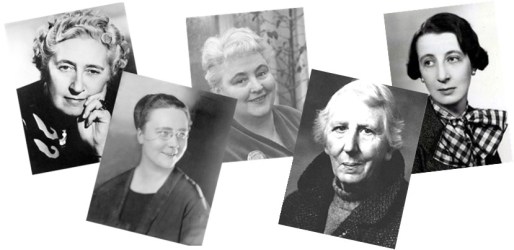
It is tremendously difficult to write about gender these days without appearing to be trying to sneak through some (usually unpleasant) agenda. If anything in the following causes any reader jump to such a conclusion about my intentions, I urge that hypothetical reader to take a glance through any selection of posts on this site — all written by the author of what you’re reading now — to assure themselves that this in no way features in my plans. I am simply, out of curiosity, asking a question that happens to involve gender.
And the question is this: Has Golden Age Detective fiction been subjected to a deliberate feminisation? And, if so, to what end?
Continue reading
#230: Detective Fiction is a Joke…
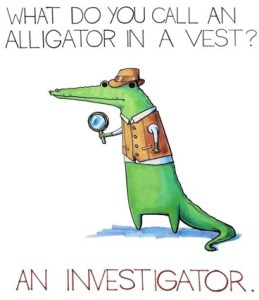
Bear with me here, I want to tell you one of my all-time favourite jokes; remain calm, it is not rude (I’m too much the gentleman for that):
Continue reading
#213: On Audacity and How to Prepare for It, via John Russell Fearn’s Thy Arm Alone (1947)
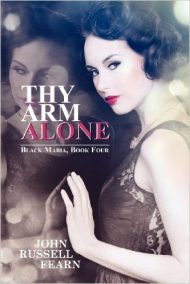
Sometimes someone is so taken with a book that you can’t help but stop and take notice yourself. So when TomCat was full of praise for this impossible crime, it hopped up my TBR pile with the effortlessness of a mountain goat on an escalator. I was promised audacity, and I love a bit of authorly audaciousness where an impossible crime is concerned — indeed, the boldness of such schemes as employed in John Dickson Carr’s The Man Who Could not Shudder (1940) or John Saldek’s Invisible Green (1977) make them firm favourites of mine, and if a book of this ilk has chutzpah enough to make TomCat and John Norris sit up and pay attention, then surely you must be onto a good thing.
Continue reading
#210: The Golden Age of the Golden Age of Detective Fiction…
Okay, here goes nothing…
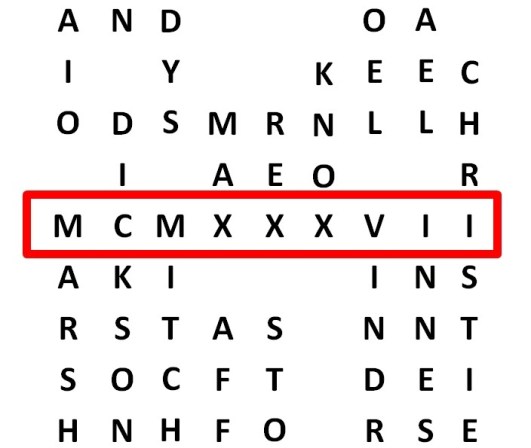
In a recent post about Agatha Christie’s By the Pricking of My Thumbs (1968) I made an off-hand reference to something I’ve come to hold as a sort of metric in my detective fiction reading, calling 1937 the “most Golden Age year”. Some of you have asked me to expand on this, and what follows shall be my attempt to explain my having said as much.
Continue reading
#205: Is it Necessary to Like an Author in Order to Enjoy Their Work?
 I don’t read many living authors — not intentionally, it’s just that the current trend of a lot of fiction doesn’t intersect with my tastes very often — and so I’m saved the concern of how they comport themselves on a daily basis and how this impacts my feelings about them. But following a comment by Dan at The Reader is Warned about a comment made by John Dickson Carr in She Died a Lady (1943), I got to thinking about the above question.
Continue reading
#171: JDC OOP – WTF?
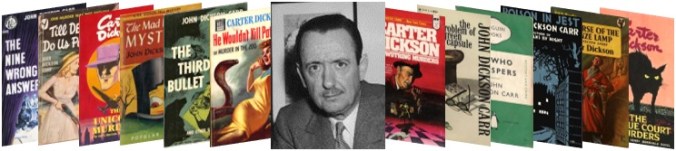
In his lifetime, John Dickson Carr published 76 novels and short story collections, plus a biography of Arthur Conan Doyle and a ‘true crime’ novel predating Truman Capote’s In Cold Blood, The Murder of Sir Edmund Godfrey. Following the closure of the Rue Morgue Press, who had five Carr novels in their books, and the coming disappearance of Orion’s ebook undertaking The Murder Room, who have around 14 or so Carr novels in their ranks, we’re not too far from a point in time where only two Car novels will be available to buy: Orion’s perpetually in-print version of The Hollow Man and the Mysterious Press publication of The Devil in Velvet. So, to return to the question in the title of this post: John Dickson Carr’s out of print — where’s the fuss?
Continue reading
#148: So, Like, What Is an Impossible Crime or a Locked Room Mystery?
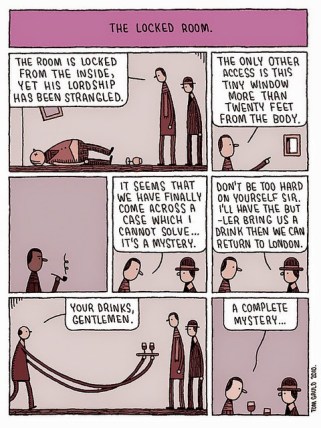
Recent experiences of reading Darkness at Pemberley by T.H. White and What a Body! by Alan Green — oh my days, I’ve only just noticed that they’re both named after colours… — have made me wonder on the above question. See, both are listed here, on a compendium of the best ever locked room mysteries voted on by an international collection of people who know about this stuff, and both are listed here, on a rundown of the favourite locked room mysteries by resident blogosphere expert TomCat…yet personally, in the face of public opinion from such well-informed and respected sources, I’m reluctant to consider either of them as locked room mysteries. Even taking my famously contrary nature out of the equation…what the hell?
Continue reading
#132: When Inspiration Becomes Theft

Zing!
The other day, I posted this dismissal of Raymond Knight Read’s The Third Gunman which is really nothing more than a rewriting of John Dickson Carr’s The Hollow Man, and then John Grant over at his superb Noirish blog posted this look at the 1934 film The Ninth Guest which follows rather closely the premise of Agatha Christie’s And Then There Were None…except the film predates Christie by five years, so technically ATTWN follows it closely, much to my amazement.
Continue reading
#129: Some Reflections on Editing A. Demain Grange’s ‘The Round Room Horror’ (1911)

 The Invisible Event