#1158: The Boathouse Riddle (1931) by J.J. Connington

Boathouse Riddle

star filledstar filledstar filledstar filledstars
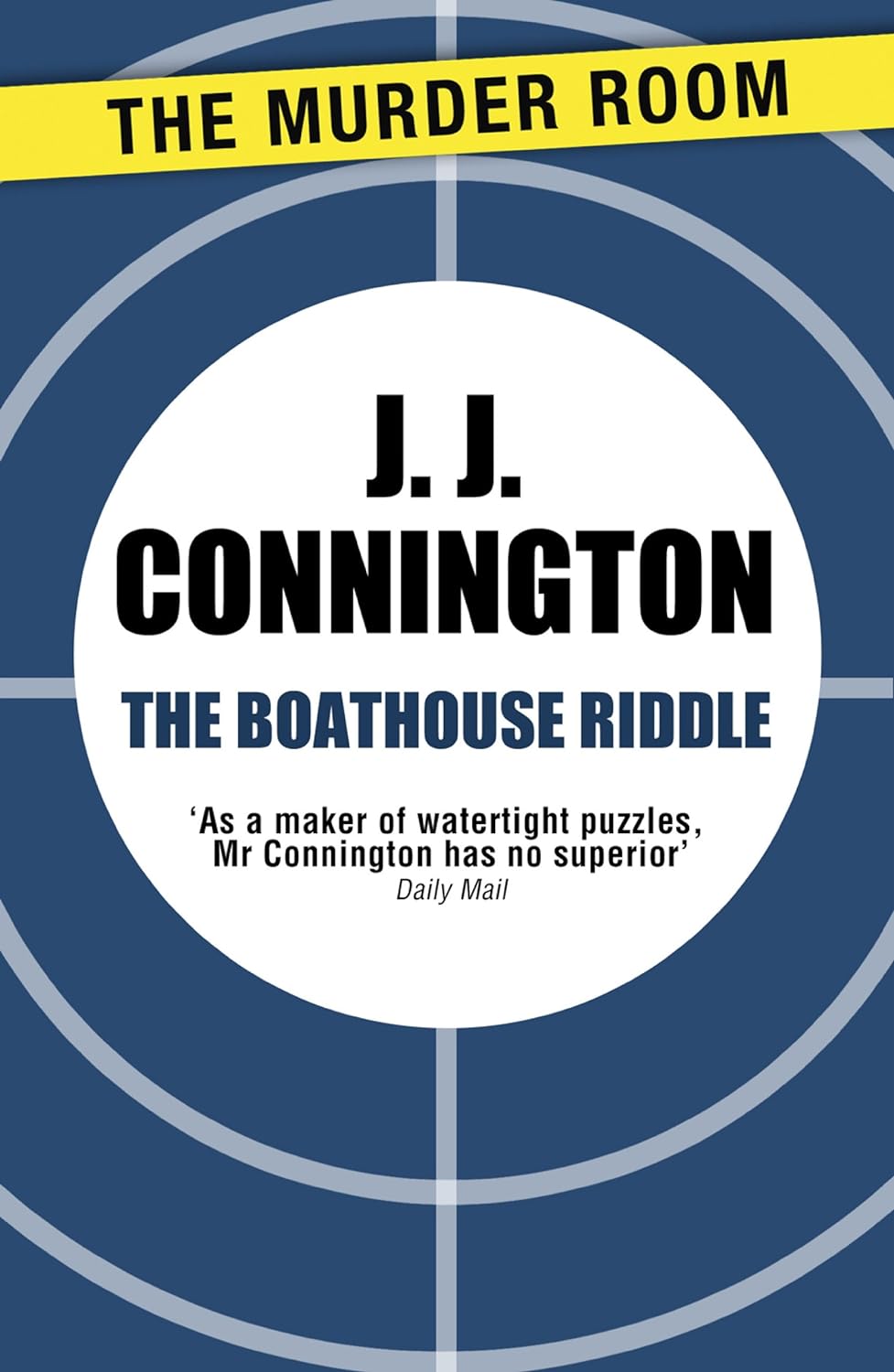
Perhaps sensing limitations in the character after five novels, J.J. Connington seemed to retire Chief Constable Sir Clinton Driffield following Nemesis at Raynham Parva (1929) and wrote two novels of diverging quality featuring the bland Superintendent Ross. But, with Ross possibly not finding traction in either his creator’s mind or in that of the reading public, The Boathouse Riddle (1931) sees the return of Sir Clinton, large as life and unknowable as ever, as a murdered groundskeeper interrupts his holiday on the estate of his friend ‘Squire’ Wendover. And so, with nary a sigh, our detective rolls up his sleeves and gets to work…
Continue reading →

#1155: Blind Man’s Bluff (1943) by Baynard Kendrick

Blind Man's Bluff

star filledstar filledstar filledstar filledstars
I’ve already looked at one story with this title this week, so let’s complete the set, eh? This Blind Man’s Bluff (1943) is the fourth of Baynard Kendrick’s mysteries featuring Captain Duncan Maclain, and the second to be reprinted in the American Mystery Classics range. Having previously enjoyed The Odor of Violets (1941), I’m pleased to report that this is a stronger mystery, with a steadier core plot and enough unusual ideas stirred in to make a third visit with Maclain, should the AMC so wish it, rather appealing. The detective story and the pulp thriller have rarely meshed so well in my — admittedly, limited — experience, and I’m keen for more.

Continue reading →

In GAD We Trust – Episode 32: The Revival of James Ronald [w’ Chris Verner]

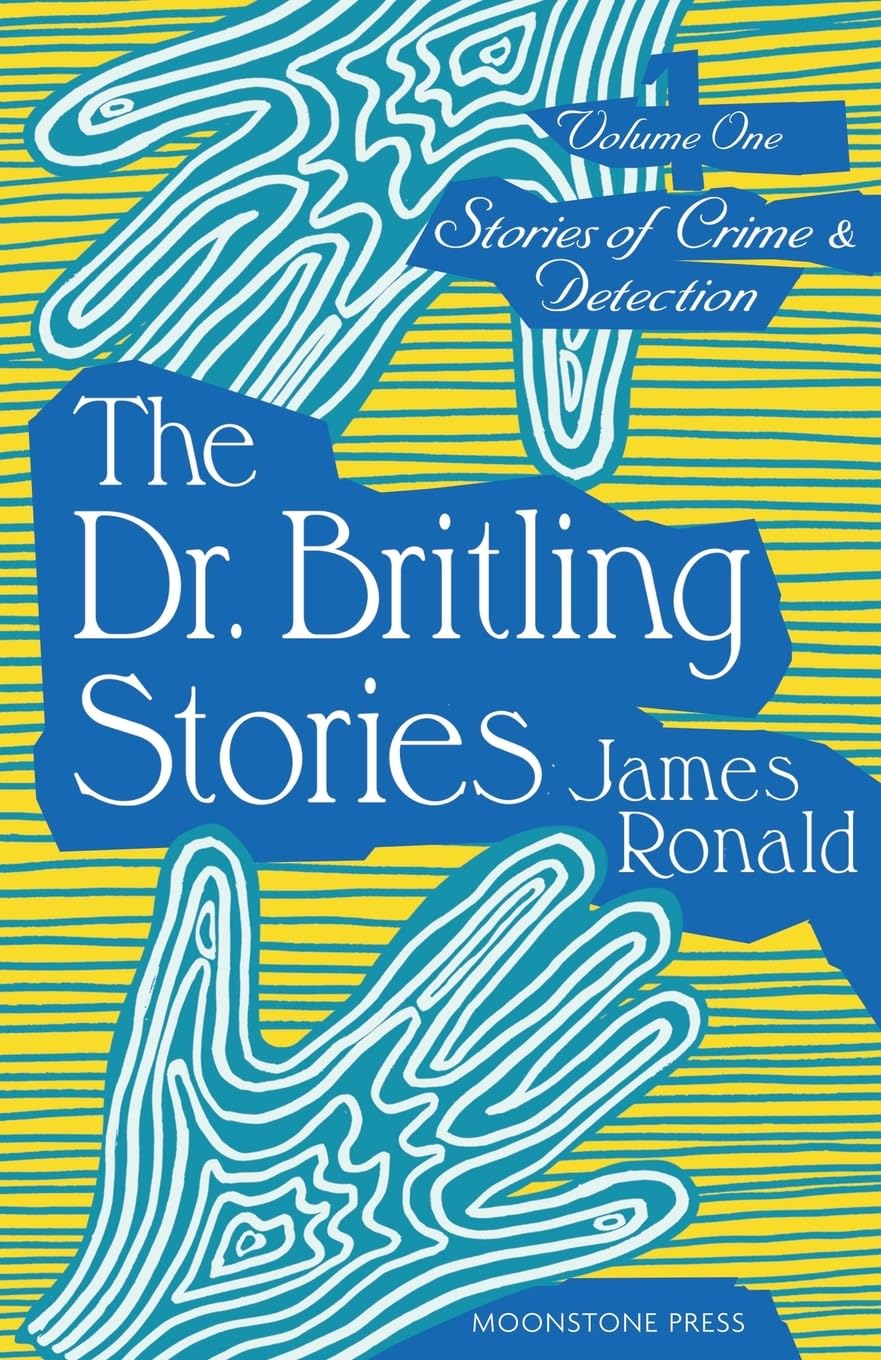
Five and a half years ago I tracked down and read an obscure novelette by long-forgotten British pulp writer James Ronald, which set me on the trail of his far-from-readily-available other works. This week, Moonstone Press published the first two in a series of reprints that will see Ronald’s entire criminous catalogue made available, and series editor Chris Verner is here to tell us all about it.

Continue reading →

#1152: The Sittaford Mystery, a.k.a. Murder at Hazelmoor (1931) by Agatha Christie

Sittaford Mystery

star filledstar filledstar filledstar filledstars
I’ve been struggling to enjoy my reading of late, so it was something of a relief to revisit The Sittaford Mystery (1931) by Agatha Christie and find it so enjoyable.  We’re probably in the lower half of Christie’s second-tier work here, but for a relatively early book it shows a lot of promise, goes about its simple story well, and doesn’t try to get too clever in doing what it does.  Yes, she would go on to write much, much better works in the decade that followed, but taken on its own terms this is a good little mystery which gives a sense of how far the young Agatha had come in her career, and hints at the maven she would soon be recognised as.

Continue reading →

#1150: “I believed the chaos of the world needs order.” – School of Hard Knox [ss] (2023) ed. Donna Andrews, Greg Herren, and Art Taylor

I have a particular fascination with the Knox Decalogue, the list of ‘rules’ for the writing of good detective fiction as complied by Ronald Knox in 1929. It fascinates me for many reasons, not least the way it has been misrepresented down the years and its clear-sighted common sense taken as narrowness by many people who fail to appreciate the genre understanding contained within.

Continue reading →

#1149: Tokyo Express, a.k.a. Points and Lines (1958) by Seichō Matsumoto [trans. Jesse Kirkwood 2022]

Tokyo Express

star filledstar filledstar filledstarsstars
Let those who lament the — vastly overstated — train fixation of Freeman Wills Crofts take note: Tokyo Express (1958) by Seichō Matsumoto contains so much red-hot timetabling action that I half expected it to be written by someone called Bradshaw. And it’s fitting perhaps that such a small, quiet crime — a double suicide on a gloomy beach — should result in a quiet and low-key investigation, but for me there needs to be a little more to show for all the hours spent looking at the precise movements of trains, ferries, and more. The essential culmination of this is clever, but the route we take to get there could have used a few faster, twistier sections of track.

Continue reading →